What voice prompts can be heard during an unsuccessful call
Effective communication is not just about successful conversations, but also about understanding why a call failed. Voice messages, or “prompts,” help businesses quickly identify the reason for a failed call: from a dialed number error to technical nuances on the carrier side. Let’s look at how these notifications work and where they originate.
Often, when a call is unsuccessful, you might hear an informational message about the reason for the failure before the call is disconnected. Such a message is called a “voice notification”. For example, “the subscriber has ended the call” or “the number you have dialed is incorrect”. Let’s understand at which stage of the call these announcements occur and where they come from.
If you hear an announcement in the language of the subscriber’s cellular operator during a call, it is a pre-recorded message by the network provider (for example, lifecell, Kyivstar, Vodafone, etc.) that we simply transmit.
However, there are instances when the call is completed, but the provider does not respond with any announcement. In such cases, we have recorded our own announcements (UniTalk announcements in Russian, Ukrainian, English, and Polish)
- “The subscriber ended the call” – this voice notification is played when the subscriber presses “end” or simply hangs up the phone:
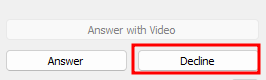
- “The subscriber rejected the call” – this voice notification is played when the called party declines the call without picking up the phone.
- “The subscriber not available” – this voice notification can be heard when more than 40 seconds have passed without the called party answering or rejecting the call.
- “Call direction not available” – this voice notification is played when the number of the called party does not match any rule in the outbound call scenario. This situation can occur if the number is entered in an incorrect format or does not exist at all.
For example:
- “All outgoing lines are busy” – this announcement is played if none of the rules in the outbound call scenario apply for dialing the number. For example, when the operator dials the code 096… and this code is not specified in the scenario, and there are no general numbers for calls according to the rules.
- “Technical work is being in progress at this direction” – there are rare cases when there are some issues with the transit number (the number you are calling through, not to be confused with the number you are calling to), and technical work is being carried out promptly to restore service.
Understanding prompts allows your managers to avoid wasting time on repeated attempts where a number does not exist or to adjust scenario settings in a timely manner. If you frequently hear system messages about busy lines, our support team will help you optimize your call routing.