How a Medical Clinic Cut First Response Time from 20 to 2 Minutes: UniTalk Chat Case Study
In healthcare, every delayed response is more than an inconvenience. It is the moment a patient decides to contact a competitor instead. A multi-specialty clinic (name under NDA) faced exactly this challenge: patients sent messages and waited, sometimes up to 30 minutes. After implementing UniTalk Chat, response time dropped to 2 minutes and chat-to-appointment conversion grew by 18% in the first two months.
Here is how they made it happen.
Before: Scattered Channels and Broken Conversations
The clinic maintained active communication across Instagram, Viber, and Telegram. In theory, this made perfect sense, being available wherever patients prefer to reach out. In practice, administrators juggled three separate apps every day, constantly switching between tabs and devices.
The consequences were predictable:
- Lost messages. During peak hours, some inquiries simply disappeared, especially those arriving simultaneously across multiple channels. No oversight, no safety net.
- Broken context. If a patient first wrote on Instagram and then followed up on Viber, the administrator treated it as a brand new conversation with no history attached.
- Wait times of up to 20 to 30 minutes. For someone trying to book a doctor’s appointment, this was simply too long.
- No analytics. The client service manager had no reliable way to assess workload per administrator or identify where inquiries were being lost.
The priority was clear: reduce first reply time (FRT) and bring the number of missed conversations to absolute zero.
The Solution: One Window for Every Channel
The clinic connected UniTalk Chat, an omnichannel platform for managing all customer conversations. Technical setup and integration took 3 to 5 days. Team training and full adoption required about two weeks, after which all administrators were working confidently in the new interface.
The features that changed day-to-day operations:
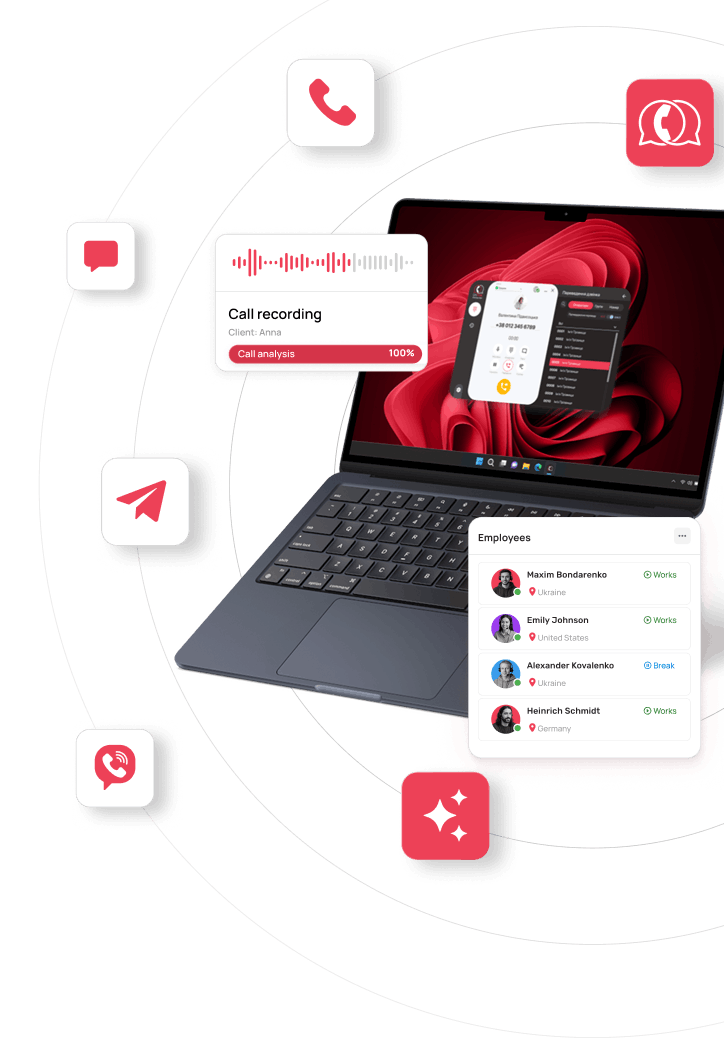
- Omnichannel inbox. All messages from Instagram, Viber, and Telegram arrive in a single interface. No more switching between apps, just one screen with a complete picture.
- Patient conversation history. Administrators immediately see who is writing, from which channel, and what they asked before. Booking an appointment can be done directly within the chat, without leaving the conversation.
- Response templates. Ready-made replies cover the most frequent questions: working hours, test prices, and ultrasound preparation instructions. Responses go out in seconds instead of minutes.
- Automatic conversation routing. Every new chat is instantly assigned to an available operator. No queues, no forgotten threads.
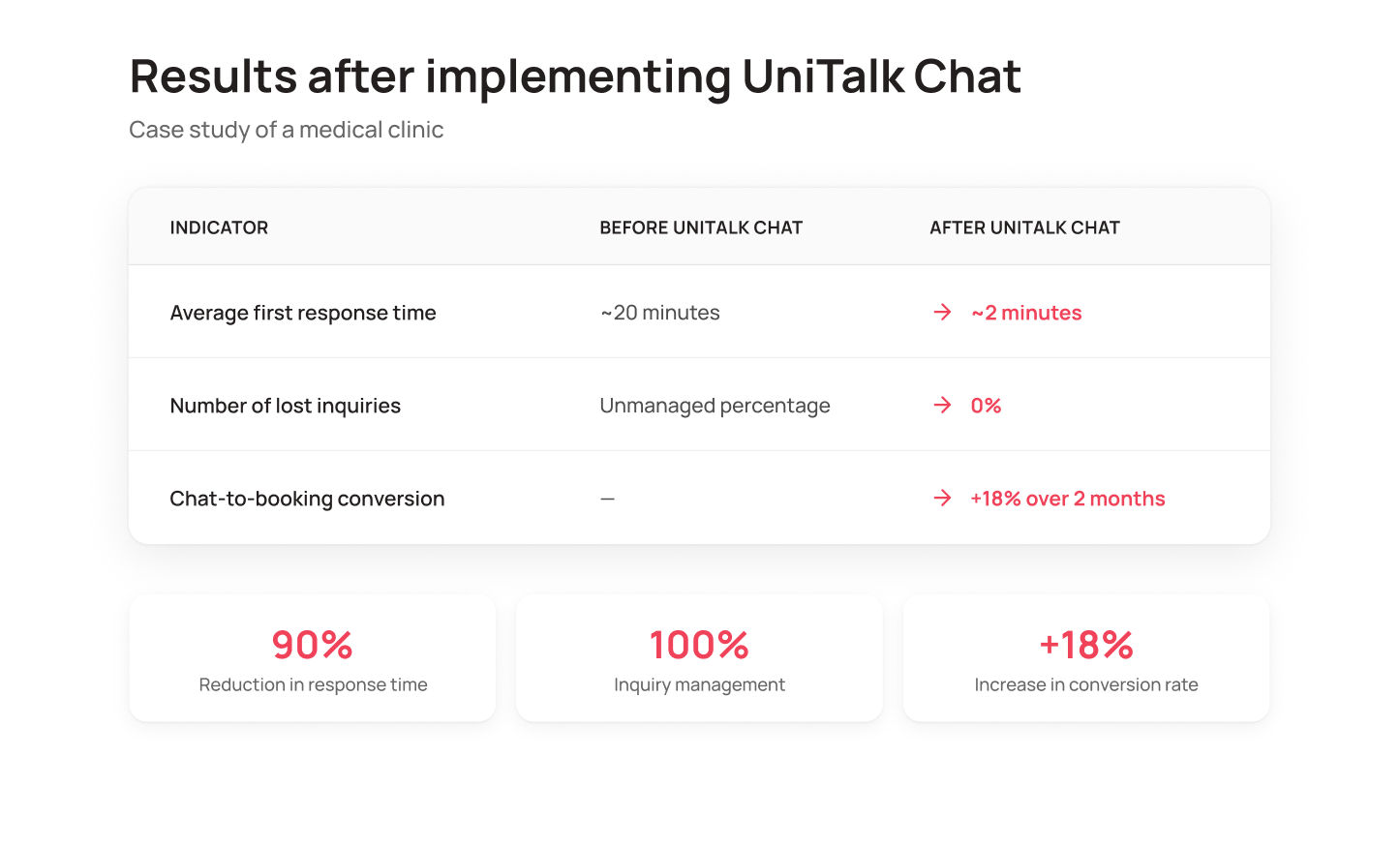
The conversion growth has a simple explanation: patients received a reply while still engaged and did not have time to look elsewhere or postpone their decision.
From the Team
“The team reports a significant reduction in stress. There is no longer any fear of forgetting to reply to someone in direct messages. Templates made routine tasks much easier, and if needed, a complex conversation can be seamlessly handed off to a senior administrator with the full chat history preserved.”
– Head of Client Service, the clinic.
Takeaway: Automation as a Form of Patient Care
In healthcare, speed and empathy in communication are a matter of patient trust. UniTalk Chat allowed the clinic to automate the technical side of the process so administrators could focus on what truly matters, caring for the health and comfort of their patients. Clear analytics gave management the data needed to make informed operational decisions.
The result is not just faster replies. It is a systematic communication process that turns inquiries into appointments.