How to Avoid Losing Customer Trust? Local Virtual Numbers for International Business
Your business is ready to enter the international market: the product is perfect, logistics are set up. There is only one, but critical, obstacle left—a phone call.
When a potential partner in Poland or Germany sees a number with a foreign country code on their screen, they might perceive it as a signal: “We are a small, non-local company.” The consequence is a loss of trust and a decrease in sales effectiveness.
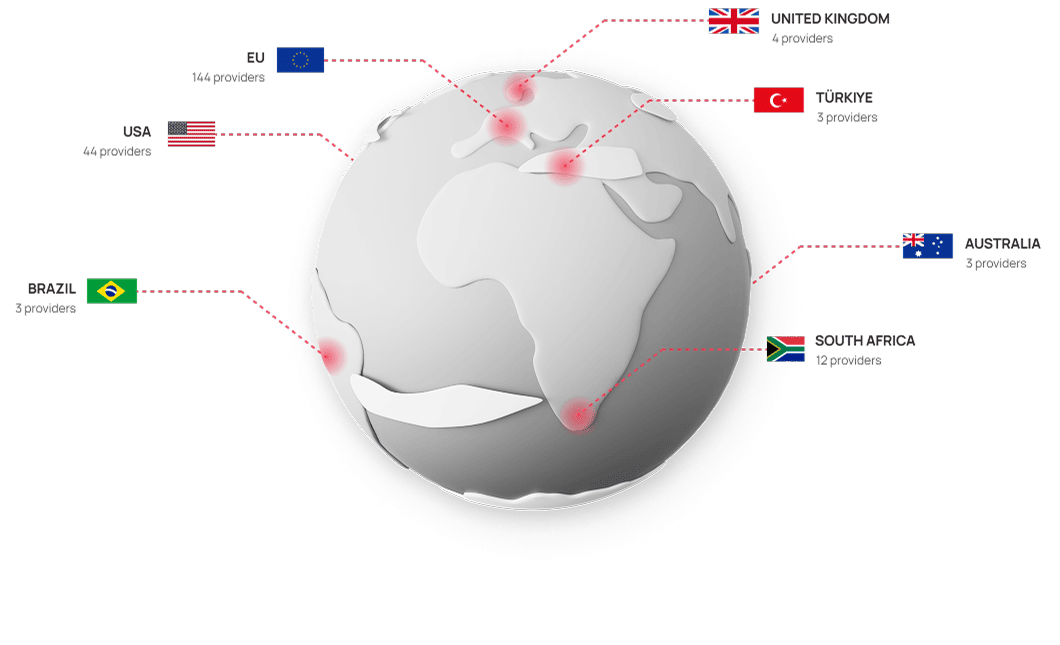
A solution exists, and it is much simpler than opening a physical office abroad. These are Virtual Numbers from UniTalk IP Telephony. We will explain how these tools turn your business into a local partner in 135+ countries (as per the “Позиціонування продукту” “Номери та дзвінки для бізнесу” file).
The Problem: Why a “Non-Local” Number Harms International B2B?
For B2B and sales, trust is the main asset.
If you operate in the EU or US markets, international marketing faces three main challenges:
- Psychological Barrier. Clients are more likely to answer calls from local codes. A foreign code might be ignored as spam or a call from an unknown company.
- Expensive Calls. Using traditional telephony for international calls “eats up” business budgets.
- Lack of Local Numbers. A company without a local number appears less reliable and less integrated into the local telecom market.
The Solution: Virtual Numbers — Your Local Presence
Virtual Phone Numbers (a part of VoIP and SIP technology) are numbers that are not tied to a specific SIM card or office. They operate via the internet, and their code corresponds to the chosen country or city.
So what’s in it for me?
You get numbers in 135+ countries (city, mobile, and Toll-Free (0800) numbers). A client in Berlin sees a German code and answers without hesitation, perceiving you as a local company. This increases the effectiveness of the first contact and boosts sales conversion.
Economy and Flexibility: The Foundation of IP Telephony
Switching to IP Telephony (or VoIP) for international calls is a strategic decision.
- Economy: You abandon expensive international mobile operator tariffs. Communication via VoIP technology is significantly cheaper.
- Flexibility (SaaS): Your team can work from anywhere in the world. You only need the internet for calls. This makes your business location-independent. This is a SaaS solution that scales with you.
How to Ensure Reliability and Control?
Simply having a SIP Number is not enough. To operate effectively at an international level, you need to manage calls and control quality.
1. Stability for Large Volumes (SIP Trunk)
If your call center or sales department makes a large volume of calls daily, you need a guarantee of stability.
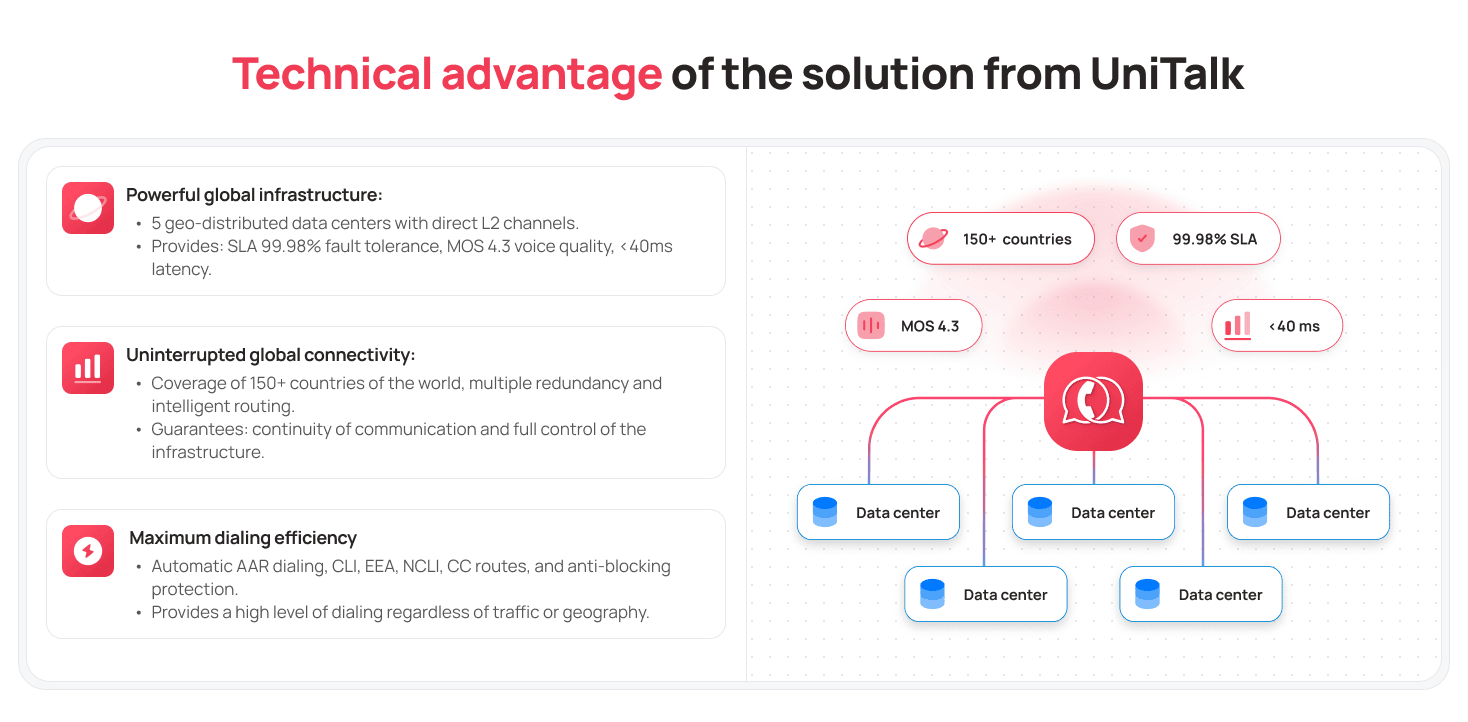
SIP Trunk is a multi-channel connection that ensures lines will not be “busy” during peak loads. Your B2B partners will always be able to reach you. SIP Trunk is synonymous with reliability.
2. Control and Service (Virtual PBX and CRM)
A local number is just the beginning. To build trust, you need to provide the quality of service your client expects.
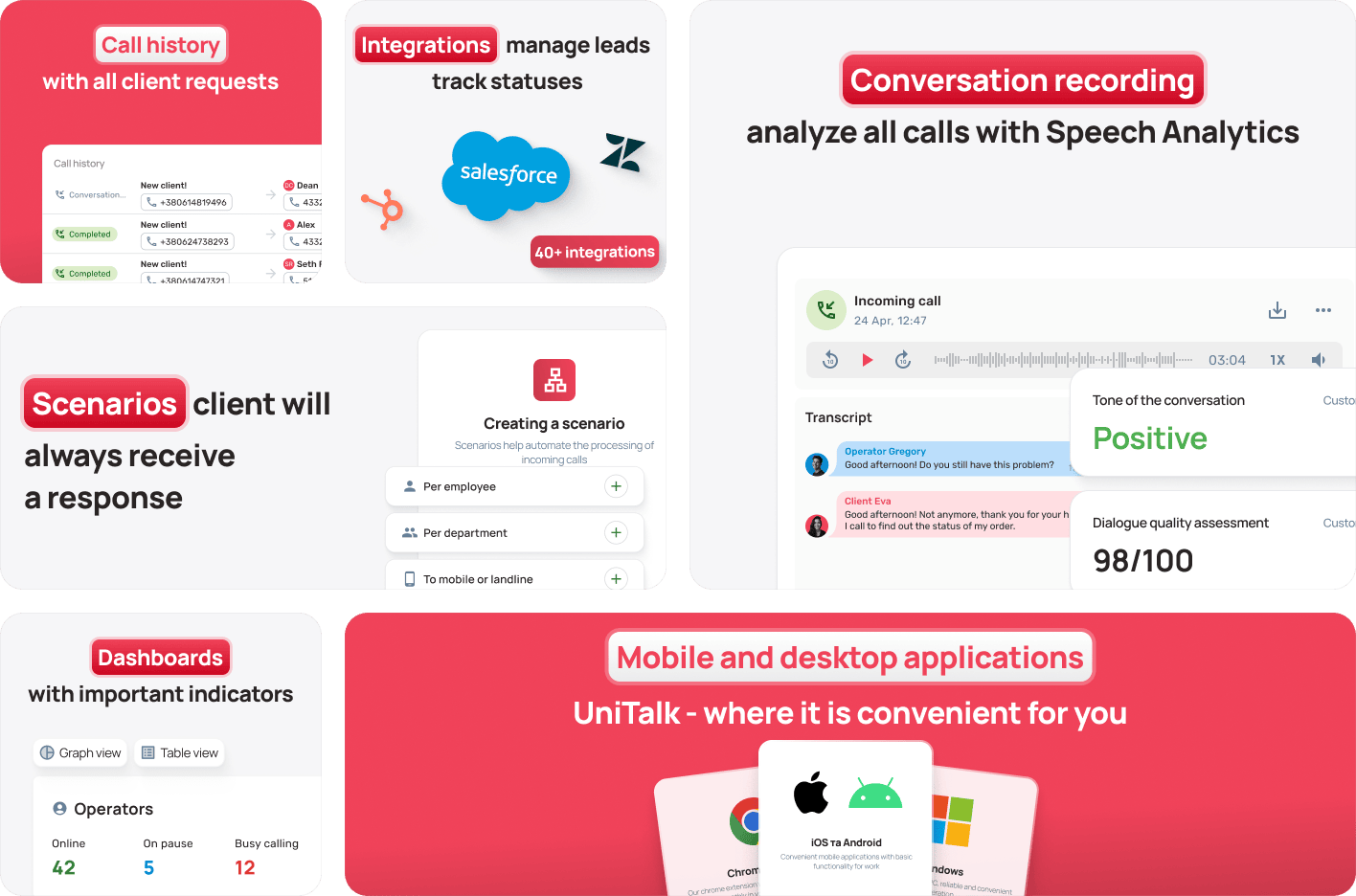
- Virtual PBX (VPBX) is your “brain” for international numbers. It allows you to set up an Interactive Voice Response (IVR) menu and distribute calls among managers. This increases professionalism.
- Integration with CRM: Calls from international numbers should automatically flow into CRM systems. This provides analytics and communication history.
- Call Recording is an essential KPI for quality control. When working in foreign languages, this tool is invaluable.
Conclusion: International Numbers = Global Business
Virtual Numbers for Business are not just a feature. They are a strategic tool that:
- Eliminates the customer trust barrier.
- Significantly reduces international communication costs.
- Provides analytics and control for the head of the department.
By using IP Telephony for business and obtaining a local SIP Number, you instantly become a local player.