What is mobile marketing and how does it work?
Imagine an ordinary morning. You haven’t even opened your eyes yet, but your hand is already reaching for your smartphone to turn off the alarm. A minute later, without even getting out of bed, you check your messengers, look at the weather, and maybe pay for your internet through your banking app. On your way to work, you’re listening to your favorite music, paying for transit with your phone, and ordering coffee through an app to skip the line.
We live in an era when a gadget is no longer just a means of communication. It has become a remote control for our reality. According to the latest «Digital 2025: Ukraine» report by DataReportal, the numbers paint a clear picture confirming that mobile marketing in Ukraine is reaching its peak:
- Mobile connectivity: There are 56.4 million active mobile connections in Ukraine. This represents 147% of the total population. Your customer most likely has two SIM cards and is always connected.
- Internet: 31.5 million people are online (82.4% of the population).
- Social media: The number of social media users has reaches 21.6 million people.
For businesses, these numbers are a clear signal: if a brand isn’t leveraging mobile marketing, it’s losing access to a massive audience. Today, mobile marketing is no longer just an option, it’s a necessity. Let’s take a closer look at what mobile marketing is, how it works, and which mobile marketing tools truly help drive sales.
Let’s explore what mobile marketing is, how it works, which tools actually help drive sales, and why it’s difficult for a business to grow without a Mobile First strategy.

What is mobile marketing?
Answering the question “What is mobile marketing,” we can simply say: it is a way to interact with your audience through any mobile device. But if we dig deeper, mobile marketing is a strategy that takes context into account: small screens, touch control, GPS, and the camera.
Many people think mobile marketing is just a smaller version of a website. But the main difference is intimacy. A smartphone is the most personal device. That’s why effective mobile marketing must be useful.
How does mobile marketing work in practice?
Mobile marketing is based on the «here and now» principle.
- Need: A person is walking down the street, feels hungry, and searches for «restaurants nearby» in Google Maps.
- Offer: They see an ad for your establishment. Why? Because their geolocation is enabled, and the system recognizes that they are 100 meters from your location.
- Action: They receive a notification with a promo code for lunch, open the menu, and place an order.
This chain shortens the journey from desire to purchase to just a few taps on the screen, proving that mobile marketing is all about instant value.
Why mobile marketing is important for business
Today, having a mobile strategy is the baseline for any company’s growth. Let’s look at the key reasons why mobile marketing should become a priority.
1. Mobile-First Indexing by Google
This is the most compelling technical argument. Google officially uses Mobile-First Indexing, which means the search engine primarily evaluates the mobile version of your website. It is this version that determines your search ranking. If your site works well on a desktop but loads slowly or has «broken» layouts on a smartphone, Google will lower your ranking across the board.
2. Dominance of mobile traffic
In most industries (retail, services, delivery) mobile traffic accounts for 70% to 90% of visits. People choose products while commuting or just before falling asleep. If you ignore mobile marketing in Ukraine, you are effectively losing 9 out of 10 potential customers right at the start.
3. Micro-moments
We pick up our phones hundreds of times a day to solve immediate tasks: «where to buy flowers», «how to get there», or «iPhone price». In these seconds, a brand must be right there with a ready-made solution. By using various types of mobile marketing, you meet your customer’s needs at the very moment they arise.
4. Unified Customer Experience
Users rarely buy instantly: they might see an Instagram ad on their phone, research the product on a website using a laptop, and finally place an order through an app to claim an extra discount. Mobile marketing connects these actions, allowing you to «reach» the customer with notifications at every stage. Many companies encourage app installations because mobile marketing through apps demonstrates top-tier retention (LTV).
Core mobile marketing tools and channels
Mobile marketing is a comprehensive range of tools. To build an effective system, it’s important to understand the different types of mobile marketing and use them in combination. Let’s take a closer look at each channel.
SMS marketing
Many consider it an outdated format, but SMS marketing is the only channel that works without an internet connection.
Essence: Sending short text messages.
Advantages:
- Reliability: Works on any mobile device, regardless of connection quality.
- Attention: Messages have a 98% open rate and are usually read within 3 minutes.
UniTalk’s solution: Our SMS messaging service allows you to use an alphanumeric sender ID (your brand name instead of numbers), which increases customer trust. We also use direct operator routes to ensure instant delivery of critical notifications, such as verification codes. By choosing mobile marketing tools from UniTalk, you receive a delivery guarantee.
Tip: Use cascading messaging. The system first attempts to send the message via Viber (which is more cost-effective), and if the customer has no internet connection, the message is automatically sent as an SMS. This approach optimizes your mobile marketing budget.
Push notifications
These are short messages that appear on the device screen on top of all other windows. They are perfect for re-engaging your audience. The key rule is not to overuse them, so your mobile marketing doesn’t turn into spam.
Types of push notifications:
- Web Push: Browser-based notifications (Google Chrome, Safari). They are delivered even if the user has closed your website. These work especially well for news platforms or blogs to notify users about new articles.
- Mobile App Push: Notifications sent directly from apps. This is one of the most powerful mobile marketing tools for e-commerce and retail.
Features:
- Rich Media: You can add images or buttons to push notifications, which increases click-through rates.
- Segmentation: You can target specific groups—for example, sending a reminder only to those who added items to their cart but didn’t complete the purchase.
- Cost: This is a relatively free channel (you pay for the technology, not for each individual message).
Key Rule: Don’t overuse push notifications. Sending them every 5 minutes will make users disable notifications, causing you to lose this valuable mobile marketing channel.
Mobile applications
Your own app is an investment in loyalty. While a website is primarily for attracting new clients, an app is designed to retain existing ones.
Why a Business Needs an App:
- Direct Access: Your brand icon is always visible on the user’s smartphone screen, increasing brand recognition.
- Convenience: Apps load faster than websites, offering a smoother interface optimized for thumb-friendly navigation.
- Personalization: The app stores purchase history, clothing sizes, and customers’ favorite products or dishes.
- Functionality: You can use the device’s camera (for scanning barcodes), GPS (for store navigation), or FaceID (for quick login).
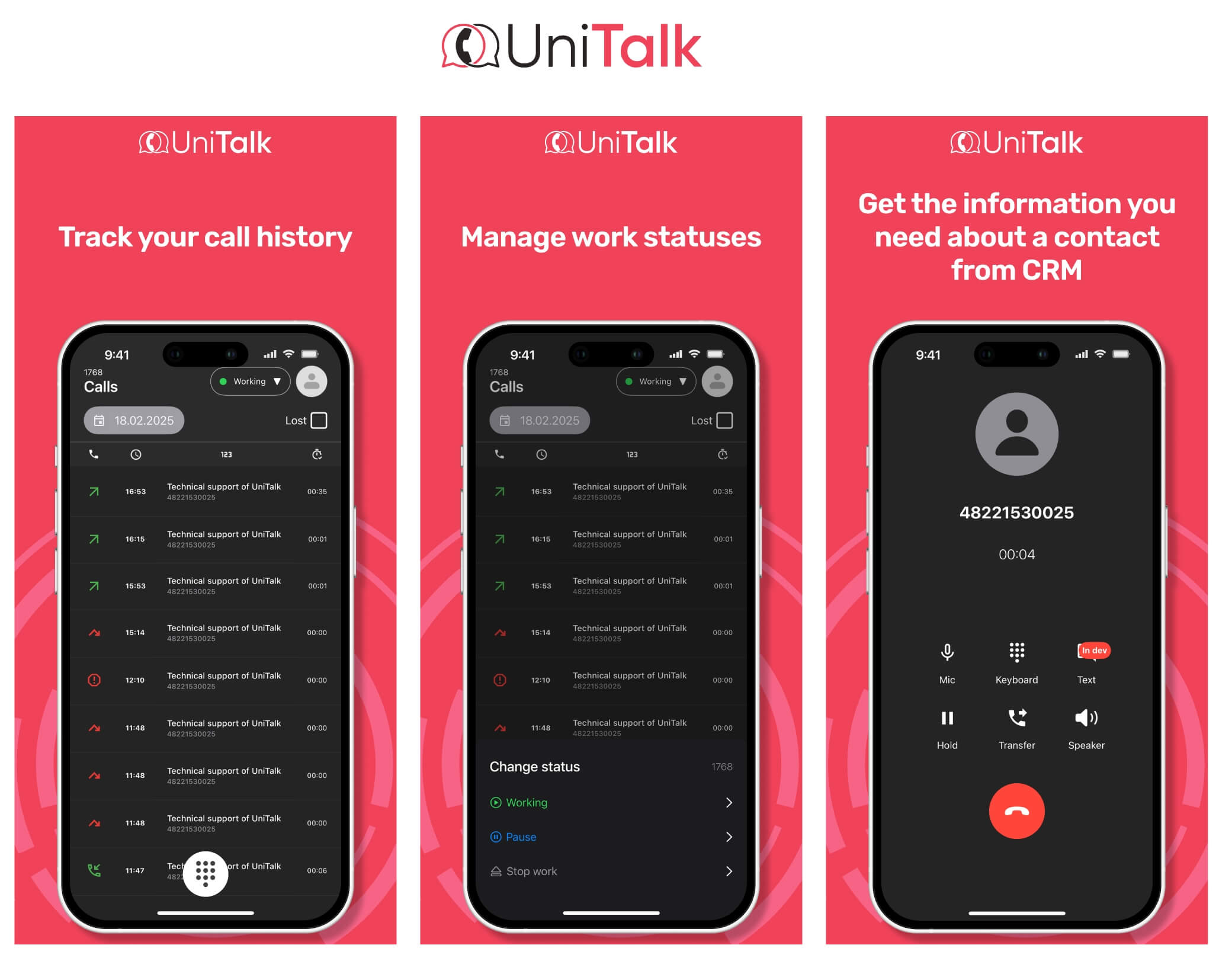
UniTalk Example: We developed the UniTalk app for businesses. It allows executives and managers to manage telephony, listen to call recordings, and view statistics directly from their smartphones. This provides the freedom to work from anywhere in the world.
Mobile advertising
These are paid advertisements optimized specifically for smartphones.
Formats:
- In-App advertising: Banners or video ads displayed within other applications (games, utilities). Effective for promoting your own apps.
- Mobile search: Google ads that appear exclusively on mobile devices. They often include a «Call» button, allowing customers to contact you with one click without visiting the website.
- Banners: Responsive graphic blocks on websites. It is important that they do not overlap the main content and include a large, clear call-to-action button. This tool allows you to use different types of mobile marketing for precise targeting. For example, you can show a banner to users who have already shown interest in similar products, visited specific website sections, or added items to their shopping cart. This makes mobile ads highly relevant and significantly increases the conversion rate.
Social media
With an audience of 21.6 million people, social media is an essential tool for mobile marketing in Ukraine.
Formats: Vertical video is currently dominating the scene (TikTok, Instagram Reels, YouTube Shorts). All mobile marketing is built entirely on dynamic pacing and UGC content.
Strategy:
- Dynamics: You have 2 seconds to capture the viewer’s attention. Content must be vibrant and include captions (many people watch without sound).
- UGC (User-Generated Content): Encourage users to film reviews of your product. Authentic live testimonials perform better than professional advertising.
- Commerce: Instagram and Facebook allow you to tag products directly in photos (Shopping Tags). Users can see the price and move to purchase without leaving the social network.
The key is to adapt content for the smartphone screen (9:16 format) so that it fills the entire display and looks professional; otherwise, mobile marketing on social media simply won’t be effective.
Messengers
Ukraine is a country of messengers. We use Viber, Telegram, and WhatsApp not only to chat with friends and colleagues, but also to read news and receive updates from brands about new products and promotions. For businesses, this is a great opportunity to communicate with customers in the environment where they already spend their time.
Tools:
- Chatbots automate responses to frequently asked questions 24/7 and reduce the workload on customer support teams.
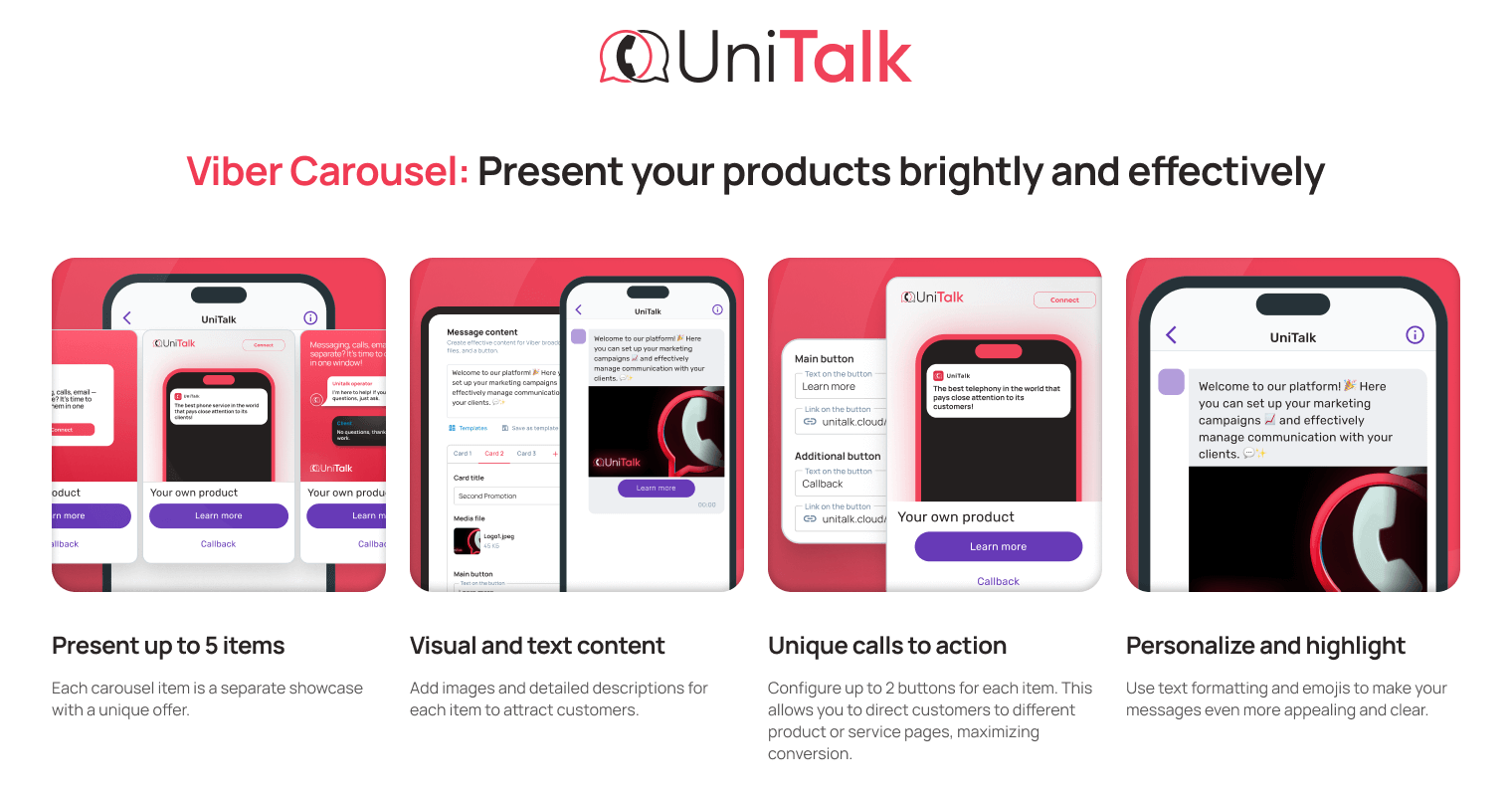
- Viber broadcasts allow businesses to send messages of up to 1,000 characters, add images, and include call-to-action buttons, making communication more visible and effective. Additionally, Viber carousels can be used – a format that turns a message into a mini showcase featuring multiple products that users can scroll through directly within the messenger.
UniTalk Solution:
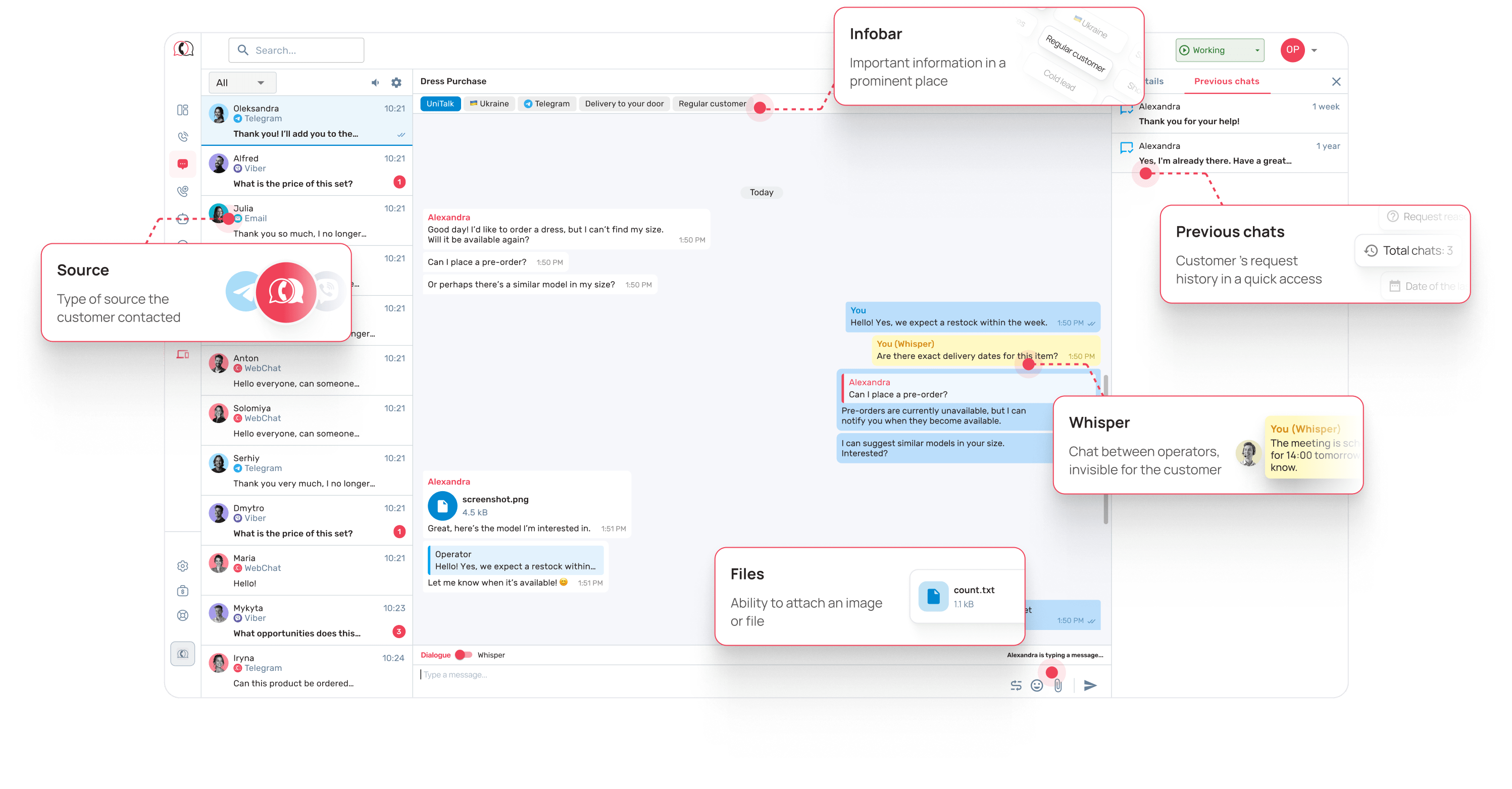
UniTalk Chat consolidates messages from Telegram, Viber, Instagram, and the website chat into a single interface. It preserves the entire dialogue history, allowing your managers to see each customer as a single profile, even if they reach out through multiple different channels.
Geolocation marketing
Leveraging GPS data unlocks incredible mobile marketing tools for local businesses (cafés, stores, salons).
Tools
- Geofencing: You set a virtual perimeter (a “fence”) around your point of sale – for example, within a 500-meter radius. When a user with your app enters this zone, the system automatically sends a notification: «You’re close by! Drop in for a coffee with a 20% discount».
- Beacons: These are small Bluetooth sensors placed inside a store. When a customer walks past a specific shelf, the beacon sends information about a promotion for that exact product directly to their phone.
This approach allows businesses to reach customers at the exact moment they are physically ready to make a purchase.
These are the most precise mobile marketing tools available for local businesses today.
Email marketing
Email has also become a part of mobile marketing. Over 60% of emails are opened on smartphones, often on the go. Mobile email marketing requires large buttons and concise subject lines.
The core requirement is responsiveness:
- Layout: The email must automatically adapt to the screen width. No horizontal scrolling.
- Fonts: Text must be legible without zooming (minimum size 16px).
- Buttons: CTA buttons should be large and bright, easy to tap with a finger. Ensure sufficient spacing around them.
- Subject line: Keep it concise. Mobile screens display fewer characters than desktop monitors. Place the most important information at the beginning.
QR codes
QR codes have become a bridge connecting the offline world with the online one. Nearly everyone has a smartphone camera, and scanning a code takes just a second.
Mobile marketing use cases:
- Restaurants: A QR code on the table opens to a contactless menu, integrated payments, and the option to leave a tip.
- Retail: A code on the product packaging can link directly to a video tutorial, a reviews page, or a warranty form.
- Lead Generation: A code on a business card or flyer can open a chat with a manager on WhatsApp or Telegram.
- Analytics: You can «embed» UTM parameters into a QR code to track exactly which flyer brought the customer.
Advantages and disadvantages of mobile marketing
Mobile marketing has its strengths, but there are certain nuances that need to be considered.
Advantages
- Instant delivery. You can share news within seconds. If you have a limited-time offer, SMS or push notifications are the best way to promote it quickly.
- Payment Convenience. Technologies like Apple Pay and Google Pay have eliminated the need to take out a card and enter digits. Purchases are completed with a fingerprint or face scan, significantly increasing conversion rates.
- Precision. A smartphone knows a lot about its owner: location, interests, and behavior. This makes it possible to deliver highly targeted offers.
- Easy sharing. Interesting content can be easily shared with a friend via a messenger app directly from a phone.
- Cost-effectiveness of mobile marketing. Reaching customers through Viber or push notifications is often cheaper than a click in search advertising, especially in competitive niches.
Disadvantages
- Personal space. A phone is a private space. Overly intrusive mobile marketing is perceived as spam.
- Adaptation to different devices. There are thousands of smartphone models on the market with various screen sizes, resolutions, and OS versions. Consequently, content must be tested to ensure it displays correctly on all devices and does not disrupt the user experience.
- Attention economy. You only have a few seconds to capture a customer’s attention. Long texts are inconvenient to read on a smartphone screen, so every message must be concise, clear, and provide immediate value.
Mobile marketing use cases
Let’s look at how Ukrainian companies use these technologies and build their mobile marketing strategies.
Case 1: E-commerce and the «Abandoned Cart»
Based on our observations of the e-commerce market, major players use a multi-step customer re-engagement system.
- If you add a item to your cart and leave, the app will send a Web Push notification as a reminder.
- After some time, you may receive a Viber message with a photo of the forgotten item and a «Checkout Now» button.
- The next day, an Email may arrive with a selection of similar products.
This kind of systematic mobile marketing helps regain the attention of customers who got distracted.
Case 2: Monobank – Emotional Notifications
Monobank has transformed boring banking notifications into small moments of joy. This approach makes mobile marketing something customers look forward to. It shows how mobile marketing in Ukraine is reshaping banking standards. Instead of a dry «Funds debited» message, users receive push notifications filled with humor, memes, or cats: «You’ve spent too much on food again 😸» or «Cashback has landed!»
This approach does more than just entertain; it builds a emotional connection with the brand, increasing loyalty, and turnig notifications into welcomed updates rather than annoying interruptions.
Case 3: Glovo – Context and Weather
Glovo uses weather data to be helpful to the customer «here and now». For example, as soon as it starts raining in a user’s area, they receive a push notification:
«Don’t get wet! Order a hot soup to your home — we’re already on our way».
This is an excellent example of how mobile marketing tools can solve a customer’s problem in the moment.
Mistakes in mobile marketing
To make your mobile marketing effective, avoid these mistakes:
- Non-responsive website
If a user has to pinch-to-zoom to read text or scroll horizontally to see the full page, they will leave for a competitor. Buttons and links must be finger-friendly. - After-hours messaging
Receiving a promotional SMS at 2 AM is frustrating. It triggers immediate irritation. To ensure your mobile marketing doesn’t wake your customers in the middle of the night, use the UniTalk scheduler. - Overly complex forms
Filling out long forms on a mobile phone is cumbersome. Keep only the most essential fields or use quick registration via Google or Facebook. Mobile marketing thrives on simplicity. - Link leads to the wrong place
If your SMS promotes a specific sneaker model on sale, the link should take the user directly to that model, not the homepage. Don’t make customers search for what you promised them.
Key mobile marketing metrics
How do you know if your strategy is working? Here are the key metrics you should be tracking.
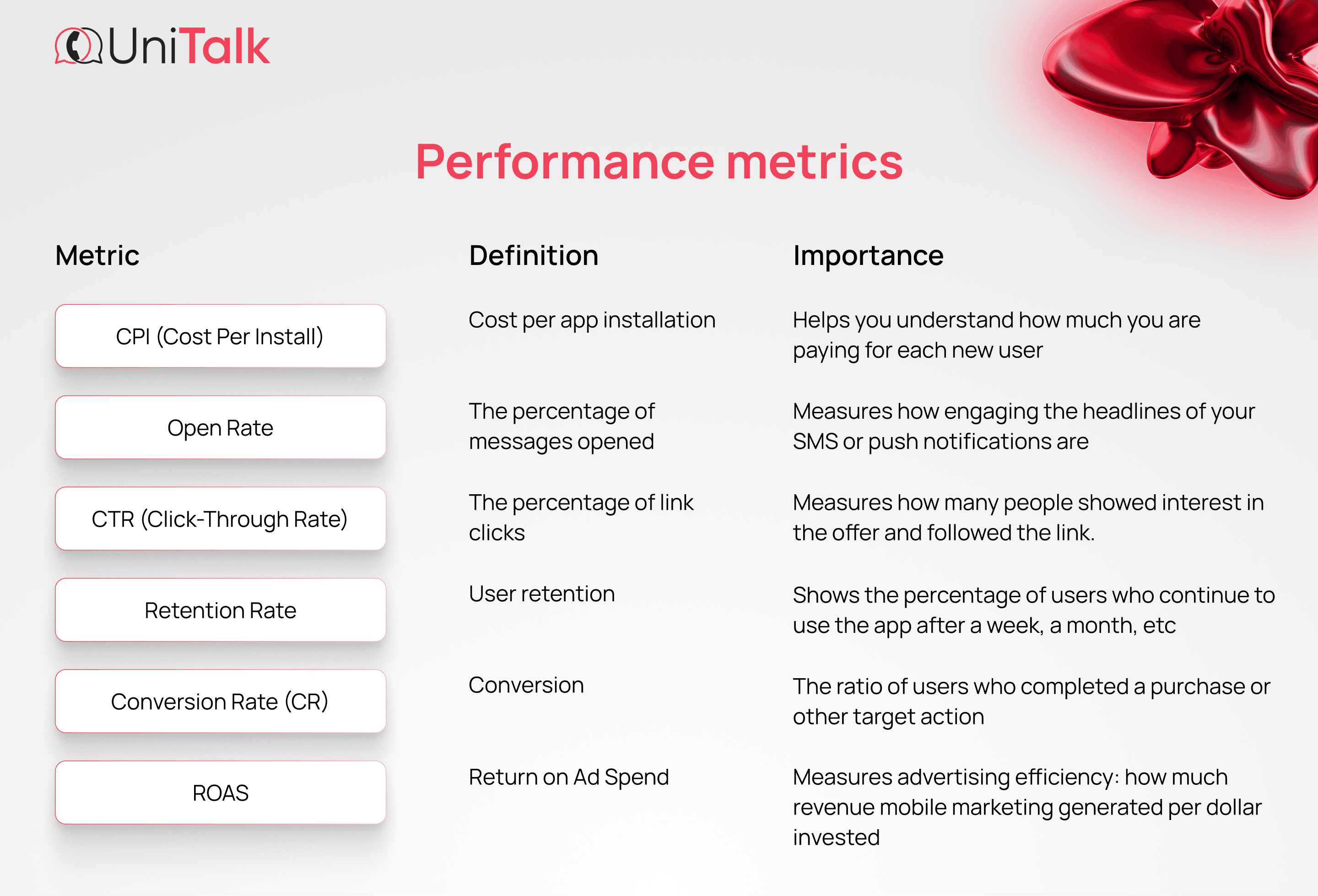
Important Note: In mobile advertising, users often skip the website and click the phone number directly in the ad. To track these leads, use UniTalk Call Tracking. It shows exactly which ad triggered the call. Without this data, analyzing the effectiveness of mobile marketing tools becomes difficult.
Conclusion
Mobile Marketing in 2026 is no longer just a trend – it is a necessity. Your customers spend nearly all their time with a smartphone in hand; if you aren’t there, you don’t exist to them. Mobile marketing in Ukraine is growing, and you need to stay on trend.
To succeed, follow the Mobile First principle: create products and content that are convenient and optimized primarily for mobile users.
Where to Start?
- Check your website. It should open easily and be readable on a mobile device.
- Build your contact database. Implement basic mobile marketing tools. Start with simple SMS or Viber campaigns using UniTalk.
- Unify your messengers. Having all messages in one interface helps you avoid missing leads and respond to customers faster.
Be where your customers are – in their smartphones. Make interactions with your brand fast, convenient, and valuable, and they will keep coming back again and again.
UniTalk: Manage your communications. Manage your results.
Mobile marketing includes any communication method through mobile gadgets: SMS and Viber mailings, push notifications, mobile applications, in-app advertising, QR codes, mobile-optimized emails, and voice bots.
Digital marketing is a broad term for all digital channels (including TV and computers). Mobile marketing is a part of digital marketing specifically targeting mobile devices. It accounts for their unique features: small screens, touchscreens, and geolocation.
Almost all of them. Retailers (order notifications), taxi and delivery services (customer communication), beauty salons (reminders), banks (transaction confirmations), and restaurants. If your customer has a phone, this channel is right for you.
Start by checking your website—it must be mobile-friendly. Next, connect UniTalk Chat for messaging apps. Set up simple SMS notifications (for example, “Thank you for your order”) and begin building your customer database.