How Small Businesses Lose Clients Without Even Noticing
Monday, 9:00 AM. A manager opens their phone and sees seven unread messages from the weekend. They start replying one by one. By the time they get to the last client, it’s already 10 AM. That client has already found someone else.
Nothing technically went wrong. But the client left not because of a bad product or high prices. Because of how communication was handled.
A personal SIM, a notebook, and a Telegram account — a perfectly normal start
Most small businesses start exactly this way. The owner personally replies to messages, keeps notes in a notebook or Google Sheet, and takes calls on their personal phone. This isn’t a mistake — it’s a rational starting point when the team is small, clients are few, and one person holds everything in their head.
The problem comes later. When the client base grows, managers are hired, the number of channels expands, but the approach stays the same. That’s when the «invisible» losses begin.
Where client requests actually get lost
Here are the scenarios that repeat across most small businesses.
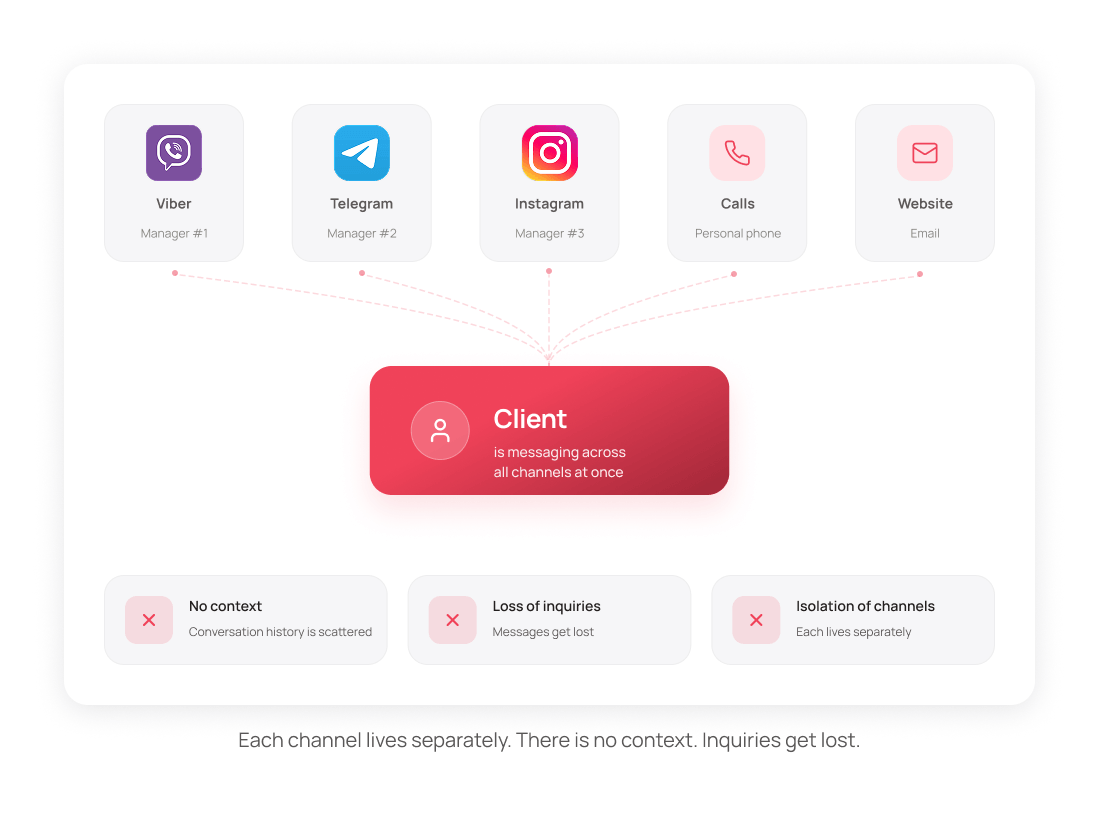
Different channels, different people. One manager handles Instagram, another takes calls, a third works in Telegram. A client messaged on Instagram, didn’t get a timely reply, called in, and the manager on the phone had no idea about the previous conversation. They start from scratch. The client is frustrated.
After hours as a dead zone. Clients write in the evening, on weekends, between meetings — whenever it’s convenient for them, not for the manager. If there’s no auto-reply and the message goes nowhere, the person simply moves on. They won’t wait until morning if there’s another option right there.
The manager left and took the client base with them. If client contacts were stored in their personal phone, conversations in their personal accounts, and agreements only in their head, when they leave the business loses more than just an employee. The new manager starts from zero, and the client feels forgotten.
No visibility into how many requests actually come in. When channels are scattered, it’s nearly impossible to count how many people reached out and how many got a response. The business simply can’t see its own losses.
Small failures that cost serious money
None of these situations looks like a crisis in the moment. «One message got lost, no big deal». «That client didn’t call back». «The manager was a little slow to respond».
But added up over a month, this can account for 20–30% of all requests that never turned into a sale. The ad budget was spent, the effort was made, but the results aren’t there.
What this looks like in practice
A travel agency came to us just before the start of the season. Three managers, Viber on one phone, Telegram on another, Instagram on a tablet. At peak season, the agency was receiving 50–70 requests per week. A manager spent up to an hour a day just checking all the channels to figure out whether anything important had slipped through. And things still slipped through.
Clients during peak season don’t wait. They open several tabs at once and buy from whoever responds first. A two-hour delay at the height of the season costs a sale. With an average order value of 25,000–35,000 UAH, even 5–7 such losses per week add up to a significant amount.
After connecting UniTalk Omni, all channels came together in one interface. Managers stopped switching between devices, after-hours requests stopped getting lost, and for the first time the team lead had a clear picture: how many requests were coming in, how many were being handled, and where the delays were happening.
«I didn’t even know how many clients we were losing before. Now I can see the full picture for the first time and actually do something about it»,
travel agency director.
What omnichannel communication is and why it matters for business
Omnichannel is an approach where all client communication channels work as a single system rather than separate tools. A client messages on Telegram, then calls, then submits a form on the website, and each time they get a response from a team that remembers the context of every previous interaction.
In practice, this means a manager works in one interface where all channels are collected. No switching between tabs, no asking clients «where did you write to us?».
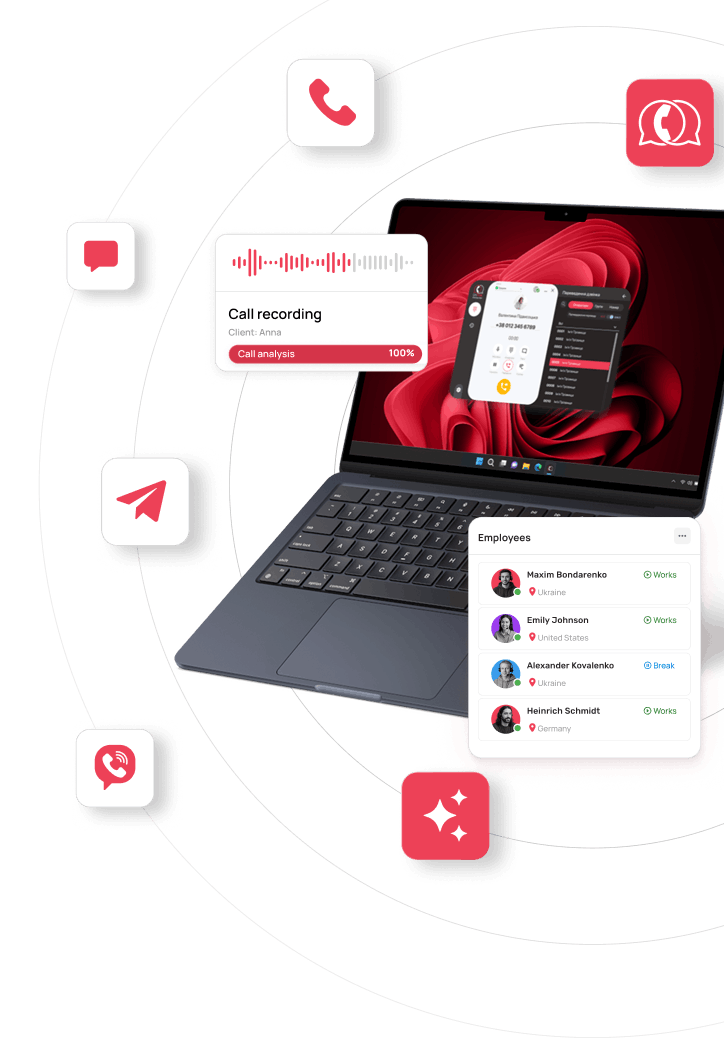
UniTalk Omni is built on exactly this logic. Calls, chats, Viber, Telegram, Instagram, email, SMS — all in one working environment. Plus analytics, automation, and CRM integration. Not a collection of separate tools, but a single system where client communication becomes a manageable process.
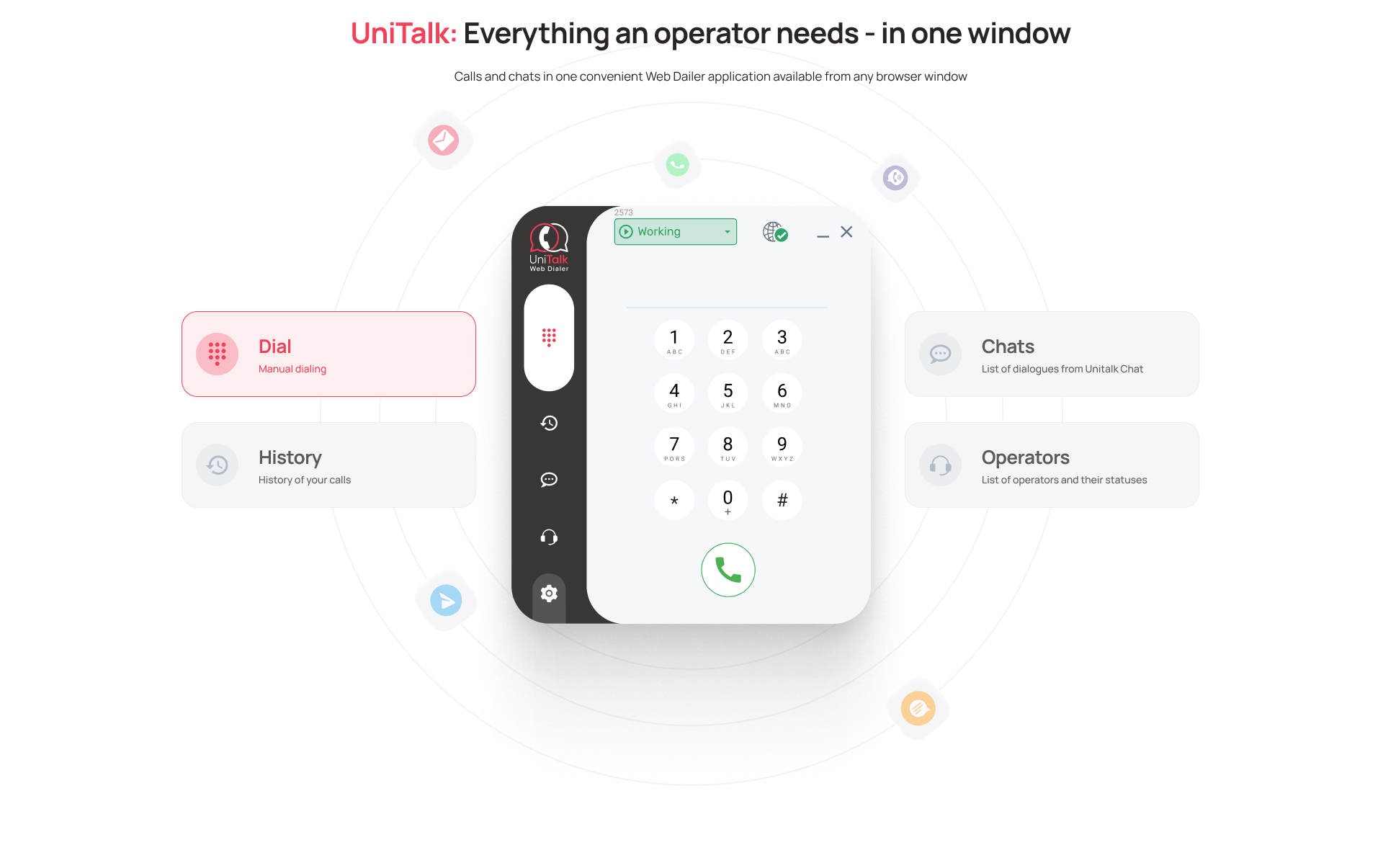
Here’s what it looks like:
- A manager opens one interface and sees all new requests from every channel. Nothing gets lost between tabs.
- If a client follows up through a different channel, the manager sees the previous conversation and doesn’t start from scratch.
- After hours, the system automatically responds to the client and saves the request. The next morning, the manager sees a queue, not chaos.
- At any point, a team lead can check: how many requests came in, how many were handled, and where the delays are.
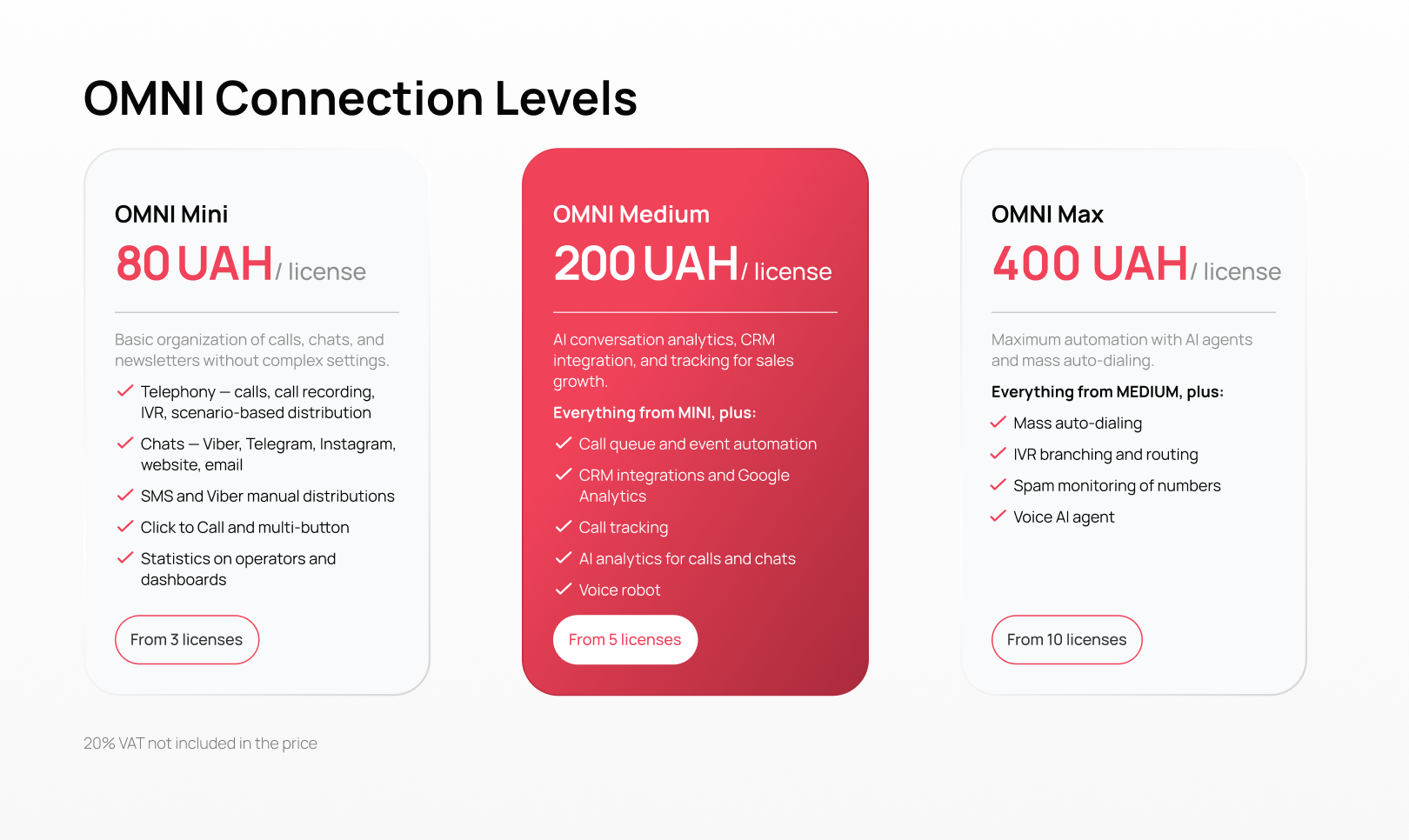
The base plan, Omni Mini, starts at 100 UAH per month per license. It includes calls, chats (Viber, Telegram, Instagram, website, email), SMS campaigns, and basic analytics. That’s a small price to stop losing requests.
Not every business is ready for a system, and that’s okay
If you’re currently getting 3–5 requests a week and personally handling everything, it may genuinely not be the right time. A communication management system makes sense where there’s volume and a team to handle it.
But if you’re already sensing that things are slipping through, it’s hard to track who responded and when, and every new manager needs everything explained from scratch. That’s a sign the approach is worth changing.
If you’d like to see how this works in practice, book a free demo of UniTalk Omni. We’ll walk you through it using your own example, no pressure, no lengthy presentations.