Why Telephony Is No Longer Enough for Business
Today, customers don’t just call. They message on messengers, leave requests on your website, respond to newsletters, come back through Instagram, or clarify details in Viber.
For the customer, it’s one interaction with a company. For a business without a system – it’s several separate channels where inquiries, context, and response speed can easily get lost.
Managers need a convenient process for handling inquiries. Managers need transparency across the team. Marketing needs data on inquiry sources and how well they’re handled. CRM needs structured information – not scattered fragments from different services.
So the question is no longer whether a company has telephony. The question is whether the business can manage all customer communication: calls, chats, messages, analytics, follow-up touchpoints, and data transfer to CRM.
Telephony Is Still the Foundation. But It’s Just One Channel
Telephony still matters. Customers use calls to get consultations, clarify terms, place orders, and resolve urgent issues.
UniTalk Virtual PBX helps receive calls, route them between managers, record conversations, handle missed calls, and view basic statistics.
But the customer journey rarely ends with a single call.
A customer might first see an ad, then send a message in a chat, then call, receive an SMS or Viber notification, and return a few days later with a follow-up question. If telephony works separately from everything else, the business only sees part of that journey.
Telephony provides connection. But managing customer communication requires a system.
Omnichannel Has Become a Customer Expectation
Many companies already have telephony, messengers, a website chat, and newsletters. But having channels doesn’t mean the business is working omnichannel.
If calls live in one service, chats in another, newsletters separately, and CRM only receives partial information – the team works in fragments. Managers switch between tools, management has no full picture, and marketing doesn’t understand what happens to leads after the first contact.
Omnichannel starts when all channels work under a single logic: inquiries aren’t lost, context is preserved, data flows into CRM, and management sees not isolated actions but the communication process as a whole.
What Businesses Actually Need to Get Results
For communication to impact sales, service, and repeat inquiries, a business needs more than telephony and more than a set of separate tools. It needs a system that manages the entire customer interaction process – from the first inquiry to follow-up work in CRM.
At UniTalk, that system is UniTalk OMNI.
OMNI brings together calls, chats, messages, newsletters, processing scenarios, analytics, automation, and CRM interaction into a single working logic. It’s a system where the business doesn’t just receive inquiries – it sees how they’re handled, who’s responsible, what’s happening in communication, and what data is passed on.
OMNI doesn’t replace CRM. CRM remains the system for managing clients, deals, and tasks. OMNI integrates into that process and strengthens it: providing quality communication channels, preserving inquiry context, and transferring structured data without manual entry.
For managers – fewer context switches and more context. For leadership – team transparency and clear analytics. For marketing – the connection between inquiry sources and real results. For the business – the ability to scale communication without losing control.
What’s Already Inside UniTalk OMNI
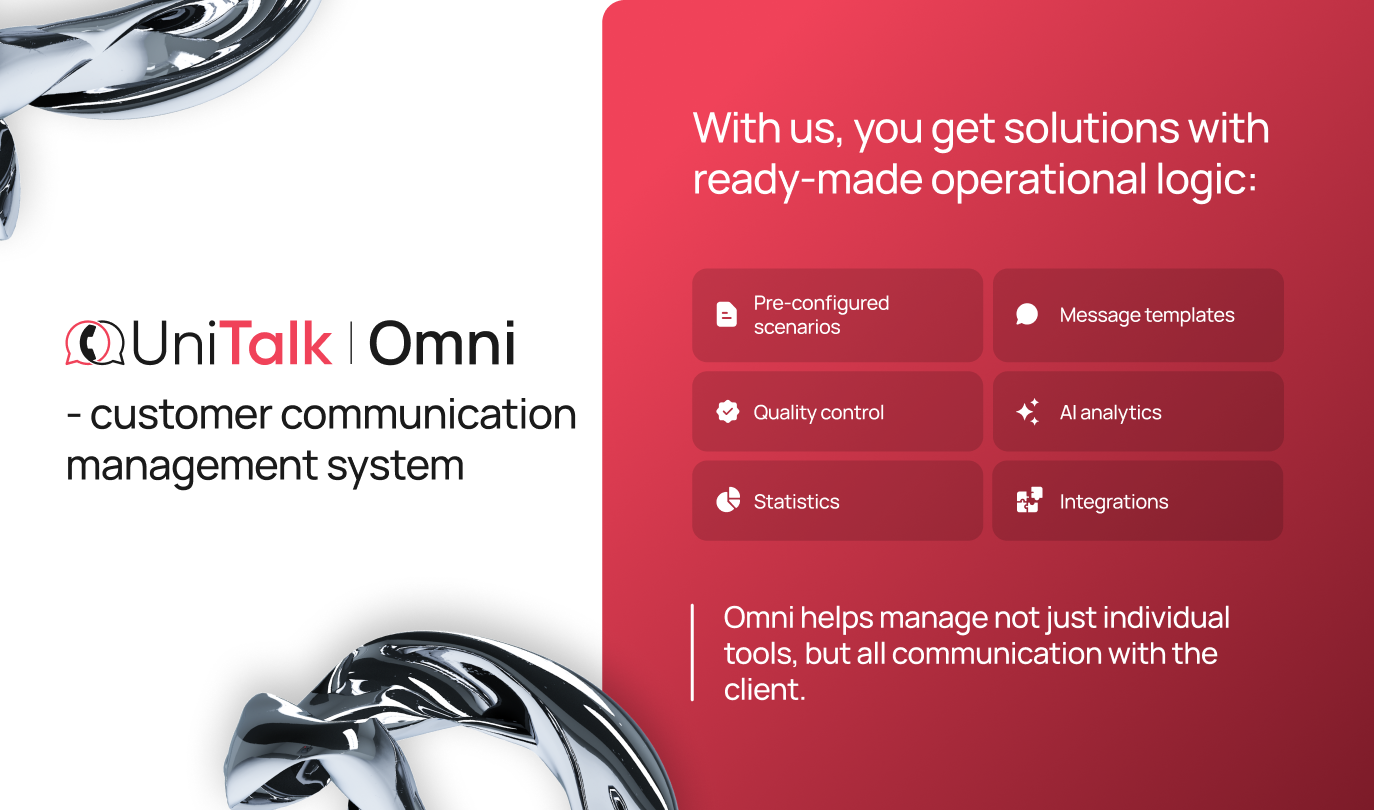
OMNI isn’t an empty platform you need to build yourself. The system already includes everything needed for customer communication.
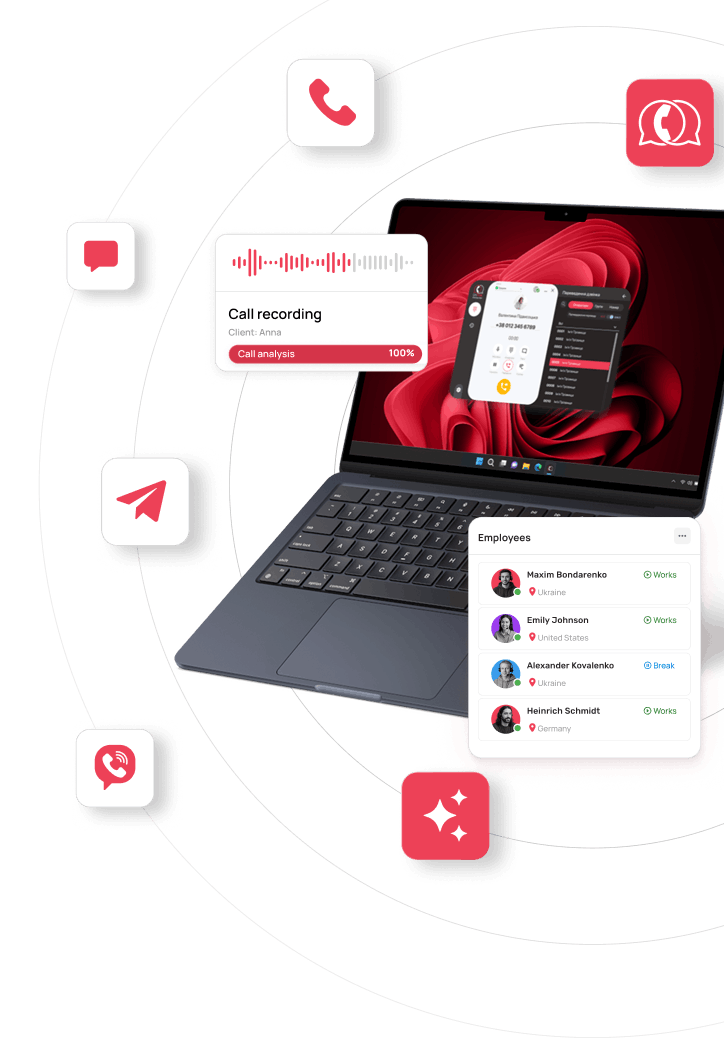
Virtual PBX – voice communication management: call routing, conversation recording, handling missed calls, basic statistics.
UniTalk Chat – text inquiries from Telegram, Viber, Instagram, website, and email in one interface. Managers stop switching between tabs, respond faster, and preserve the context of every conversation.
SMS and Viber mailings – staying connected after the first inquiry: confirmations, reminders, follow-up touchpoints, and personalized offers.
AI Speech Analytics – automatic call quality assessment. Helps identify problematic conversations, recurring objections, and team growth opportunities – without manually listening to every call.
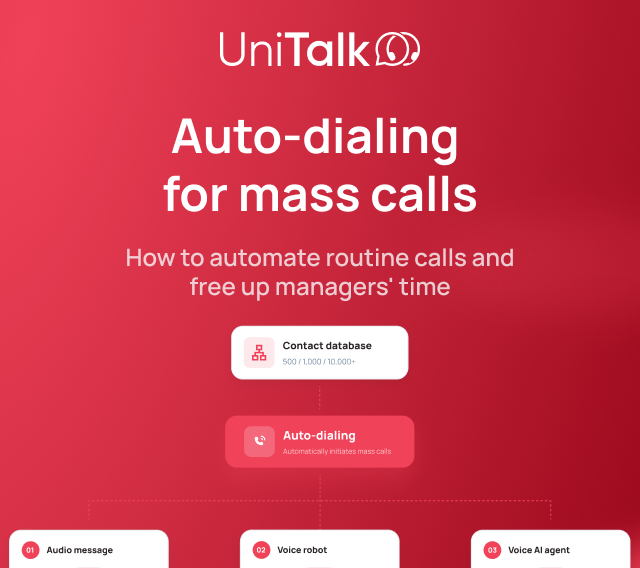
Voice AI Agent – automation of routine calls: initial lead qualification, order confirmation, answers to common questions, escalation of complex cases to managers. Works 24/7 without team involvement.
CRM Integration – OMNI integrates with CRM and transfers structured data: on inquiries, calls, messages, conversation outcomes, and next steps. CRM gets fuller context instead of incomplete fragments from different services.
Together, these capabilities form a system where the business sees the full customer journey: where the inquiry came from, who handled it, what happened in the communication, and what needs to happen next.
UniTalk OMNI Tiers
Different businesses need different levels of the system.
OMNI Mini – for businesses that need to bring calls, chats, and messages into a single workflow, process inquiries faster, and gain basic visibility.
OMNI Medium – for businesses that need to track communication quality, work with CRM integrations, call tracking, AI analytics, and follow-up communication.
OMNI Max – for businesses that are growing and want to scale communication through more complex scenarios, automation, AI tools, and a Voice AI Agent.
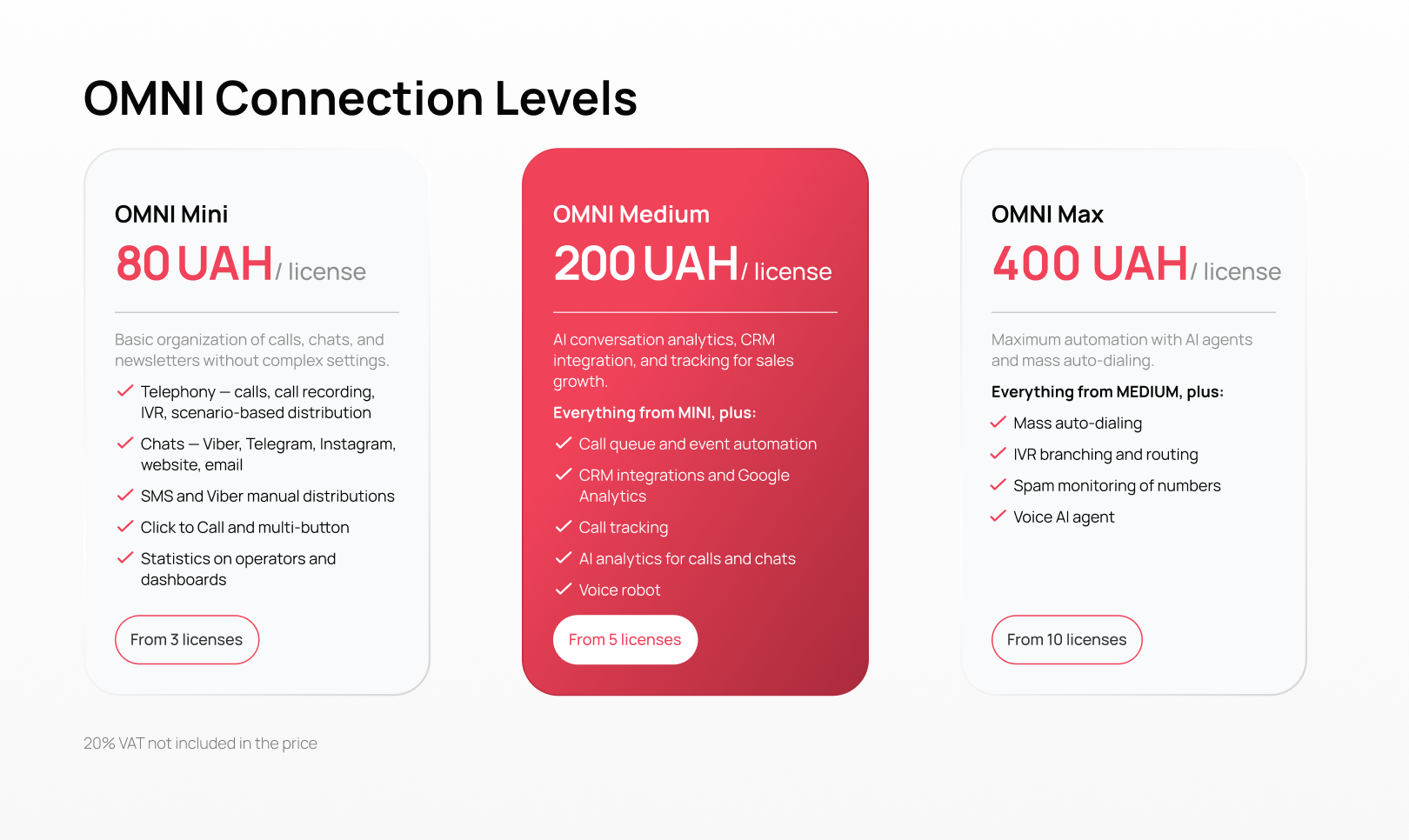
This approach means you don’t have to implement everything at once. A business can start at the right level and expand the system as the team, inquiry volume, and process complexity grow.
Conclusion
Telephony remains an important foundation of business communication. But the modern customer journey no longer ends with a call.
Customers reach out through multiple channels and expect fast responses, preserved context, and quality interaction at every stage. Leadership needs a clear view of the team’s work. Marketing needs data. CRM needs complete context – not fragmented pieces of information.
Telephony gives you connection. Omnichannel gives you a unified customer experience. A communication management system gives you control, transparency, and the ability to scale.
The business that wins isn’t the one with the most channels. It’s the one that manages all communication as a single, unified process.