Top 10 Contact Center Headsets in 2026
An operator wears a headset for 8-10 hours every single day. If the earpieces press too hard, the microphone picks up noise from the open space, or a customer keeps asking “sorry, can you repeat that?”, it’s not a small thing. It’s lost time, a frustrated customer, and an operator who’s already counting down to the next break before lunch.
We put together 10 models worth considering for different work scenarios and scored each one against the same criteria, so you can compare them side by side and pick what fits your budget and needs.
Why choosing a headset isn’t just about “can you hear me”
A cheap headset from a random marketplace and a professional model built for a contact center don’t differ by the logo on the box or the price tag. The difference shows up in every single call: how clearly the operator hears the customer, how often they need to ask someone to repeat themselves, how quickly they get tired, and what impression the conversation leaves behind.
Your choice of headset affects:
- Call quality. Clear audio without background noise or dropouts makes the conversation comfortable for the customer and builds trust in the company.
- Operator productivity. A headset that presses or chafes makes operators get distracted more often, take more breaks, and tire faster, which affects both the volume and quality of handled calls.
- Comfort throughout the shift. Over 8-10 hours, even a small difference in weight or design becomes noticeable. A poor fit can cause headaches, fatigue, and general discomfort.
- Customer experience. If someone has to ask “what did you say?” more than once because of bad audio, even a genuinely helpful conversation leaves a worse impression.
That’s exactly why, before jumping into the ranking, it’s worth going over what to actually look for when choosing a headset.
What to look for when choosing a contact center headset
Before diving into the ranking, it’s worth understanding which characteristics actually affect work comfort and call quality. These are the terms you’ll run into most often in professional headset specs.
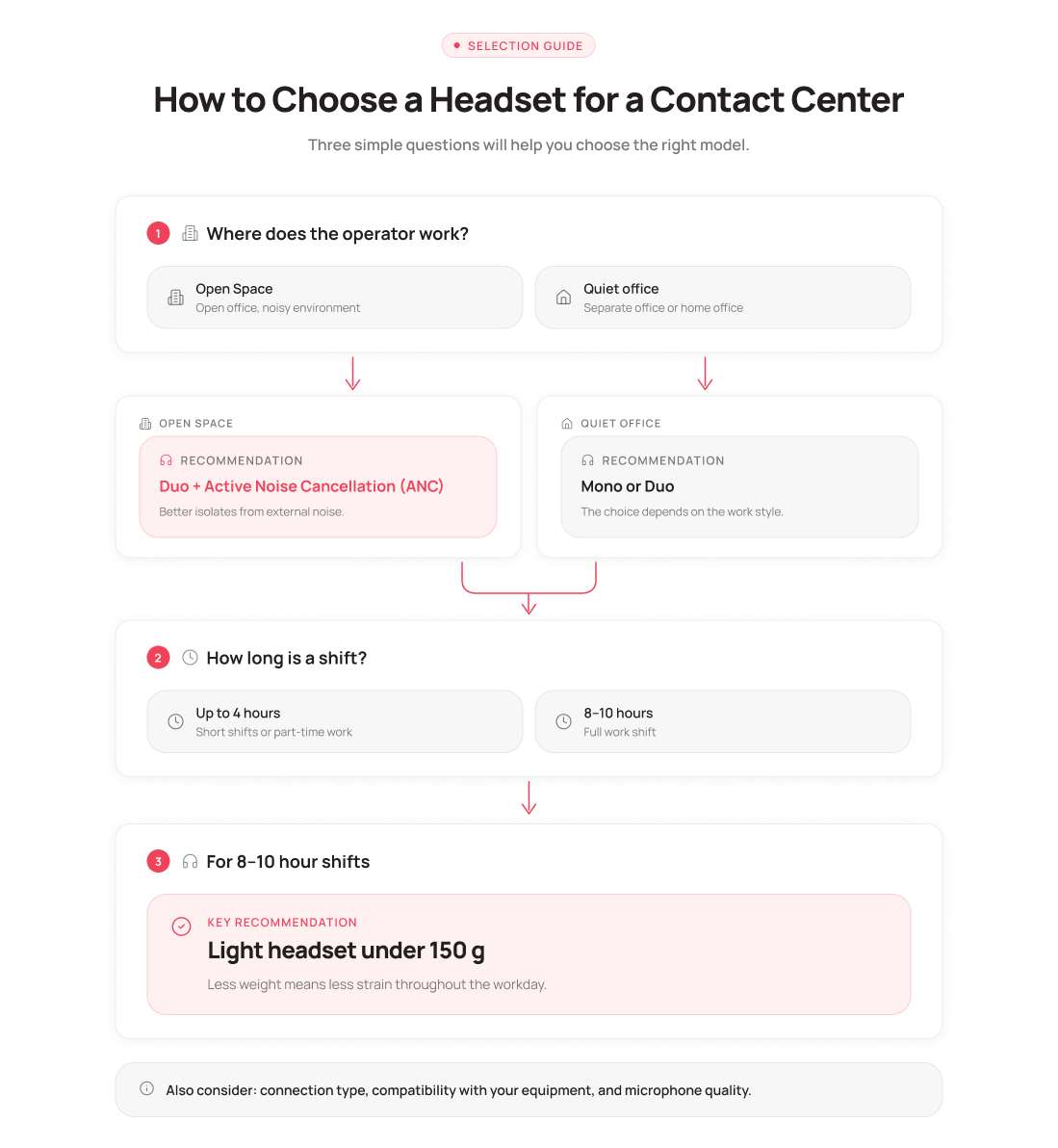
Mono or stereo (duo). A mono headset covers one ear, a stereo (binaural) headset covers both. Mono is more convenient if an operator needs to hear both a colleague and a customer at the same time, for example in a small office. For noisy contact centers and open-plan offices, stereo models are usually the better pick, since they isolate sound better and help operators focus on the call.
USB or 3.5mm jack. USB is plug-and-play: connect the headset to a computer and you’re ready to work, no setup required. A 3.5mm jack is more common on laptops, mobile devices, or general-purpose headsets. If operators mostly work from a PC or use a softphone, USB is usually the more convenient option.
Passive or active noise cancellation. Passive noise cancellation relies on physical isolation: tightly sealed ear cushions reduce outside noise. Active noise cancellation (ANC) uses microphones and signal processing to further suppress ambient sound. A quiet office is usually fine with passive isolation, while in an open-plan space the difference ANC makes is noticeable.
Why headset weight matters. The difference between a 70g and a 190g headset is barely noticeable in the first few minutes, but it becomes clear by the end of a shift. If an operator works 8-10 hour days, it’s worth prioritizing lighter models, ideally under 150g.
Why a professional headset beats consumer headphones. Consumer headphones aren’t built for 8-10 hours of continuous wear, lack a noise-cancelling microphone, and wear out faster under daily heavy use. A professional contact center headset is built to last years of daily work, not a few months of casual home use.
The criteria behind this ranking
To make this ranking genuinely useful rather than just another list of popular models, we scored each headset against seven criteria that matter most for an operator’s daily work.
- Voice transmission quality. How clearly the customer hears the operator during a call.
- All-day comfort. Whether it’s comfortable to wear the headset for 8-10 hours without fatigue.
- Noise cancellation. How effectively the microphone filters out background noise, especially in open-plan offices.
- Build quality. Whether the headset holds up to daily heavy use.
- Ease of connection. Whether the headset works right out of the box or needs extra setup.
- Compatibility with existing systems. Whether the model works with IP telephony, softphones, and popular business communication platforms.
- Value for money. Whether the features justify the price.
Ranking: top 10 contact center headsets
The ranking covers models for different scenarios, from small teams to large contact centers.
| # | Model | Price | When to choose it |
|---|---|---|---|
| 🥇 | Fanvil HT302-U | 1 392 UAH | If you need a professional headset without overpaying |
| 🥈 | Snom A100D | ≈3 500 UAH | If comfort matters more than extra features |
| 🥉 | Jabra Evolve2 40 | ≈5 800 UAH | If you handle both calls and video meetings |
| 4 | Poly Blackwire 5220 | ≈6 500 UAH | If operators work full shifts |
| 5 | Jabra Biz 2300 Duo | ≈7 500 UAH | If you’re equipping a large contact center |
| 6 | Yealink UH42 Dual | ≈4 000 UAH | If Microsoft Teams is your main tool |
| 7 | Poly EncorePro HW520 | ≈3 500 UAH | If you’re running IP telephony |
| 8 | Yealink UH36 | ≈3 500 UAH | If budget is tight but you still need a professional headset |
| 9 | EPOS Impact 860 | ≈7 700 UAH | If operators work in an open-plan office |
| 10 | EPOS Impact SC 665 | ≈13 500 UAH | If you need a headset built to last for years |
The short version:
- for most contact centers — Fanvil HT302-U;
- for maximum comfort — Snom A100D;
- for open-plan offices — EPOS Impact 860;
- if you use Microsoft Teams — Yealink UH42 Dual;
- for an all-purpose headset — Jabra Evolve2 40.
A closer look at each model
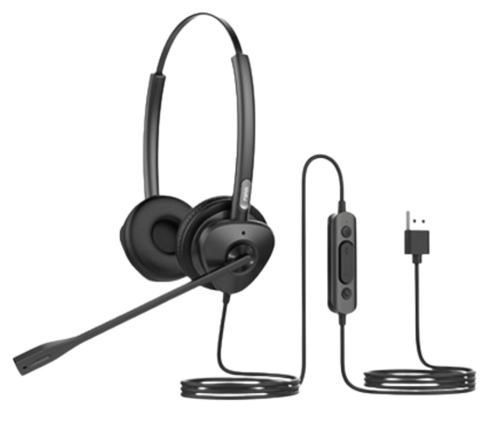
🥇 Fanvil HT302-U (Dual): best value for money
The Fanvil HT302-U (Dual) brings together everything an operator needs for daily work: solid audio quality, a comfortable fit, and simple setup. That’s exactly why it takes the top spot for value for money.
Specs:
- USB-A connection, plug-and-play;
- dual speaker (Dual), weighs about 95g;
- noise-cancelling microphone (ENC);
- lightweight build;
- in-line call control remote.
Pros:
- delivers a professional feature set without paying extra for things you don’t need;
- connects without installing drivers or extra software;
- light enough to stay comfortable through a long shift;
- microphone filters out basic background noise.
Cons:
- good audio, but not premium-tier, so for VIP support or complex calls it’s worth looking further up the list;
- no official Microsoft Teams certification;
- plastic build is less durable than premium-segment models.
Best for: support teams, sales departments, contact centers, and remote employees who need a reliable everyday headset.
Average price: 1,392 UAH
🥈 2. Snom A100D: best sound quality and comfort
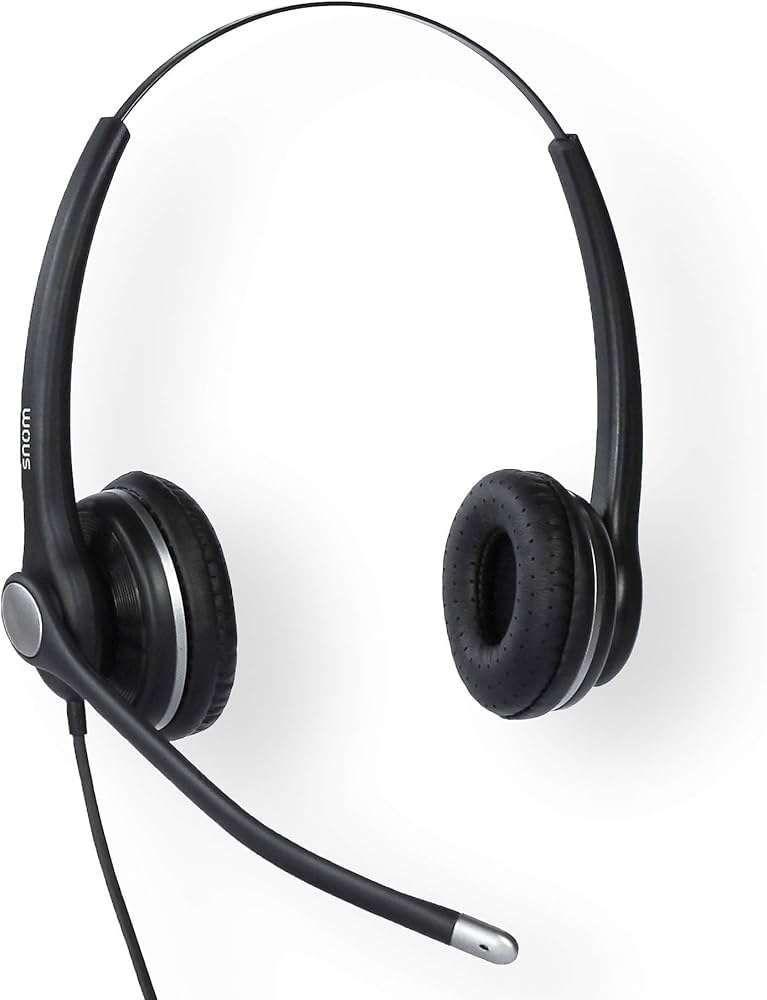
The Snom A100D bets on the two things that matter most for operator comfort: voice quality and low weight. That makes it a strong fit for teams that spend a lot of time on the phone with customers.
Specs:
- HD sound, wideband voice transmission;
- weighs just 79g;
- passive noise cancellation;
- Quick Disconnect connector for fast disconnection from a desk phone.
Pros:
- one of the lightest models in the ranking, so it holds up well over long wear;
- clear, high-quality voice transmission on calls;
- good isolation from background noise thanks to the ear cushion design.
Cons:
- costs more than entry-level contact center headsets;
- passive noise cancellation falls short of active models in a noisy open-plan office;
- no official Microsoft Teams certification.
Best for: VIP support operators, sales teams, and contact centers where voice quality and comfort during long calls are the priority.
Average price: ≈3,500 UAH
🥉 3. Jabra Evolve2 40: best all-purpose headset
An all-purpose headset for teams that use it not just for calls, but also for video meetings and everyday work at a PC.
Specs:
- USB-A or USB-C connection;
- wired stereo version weighs about 188g;
- passive noise cancellation (3-microphone system);
- a separate version with Microsoft Teams certification.
Pros:
- solid audio quality with no notable weak points;
- comfortable even during long wear;
- works well for calls and video meetings alike.
Cons:
- noticeably pricier than entry-level and mid-range models;
- if you only need it for calls, some of its features may go unused.
Best for: teams that combine customer calls with internal video meetings, and companies willing to invest in a proven brand.
Average price: ≈5,800 UAH
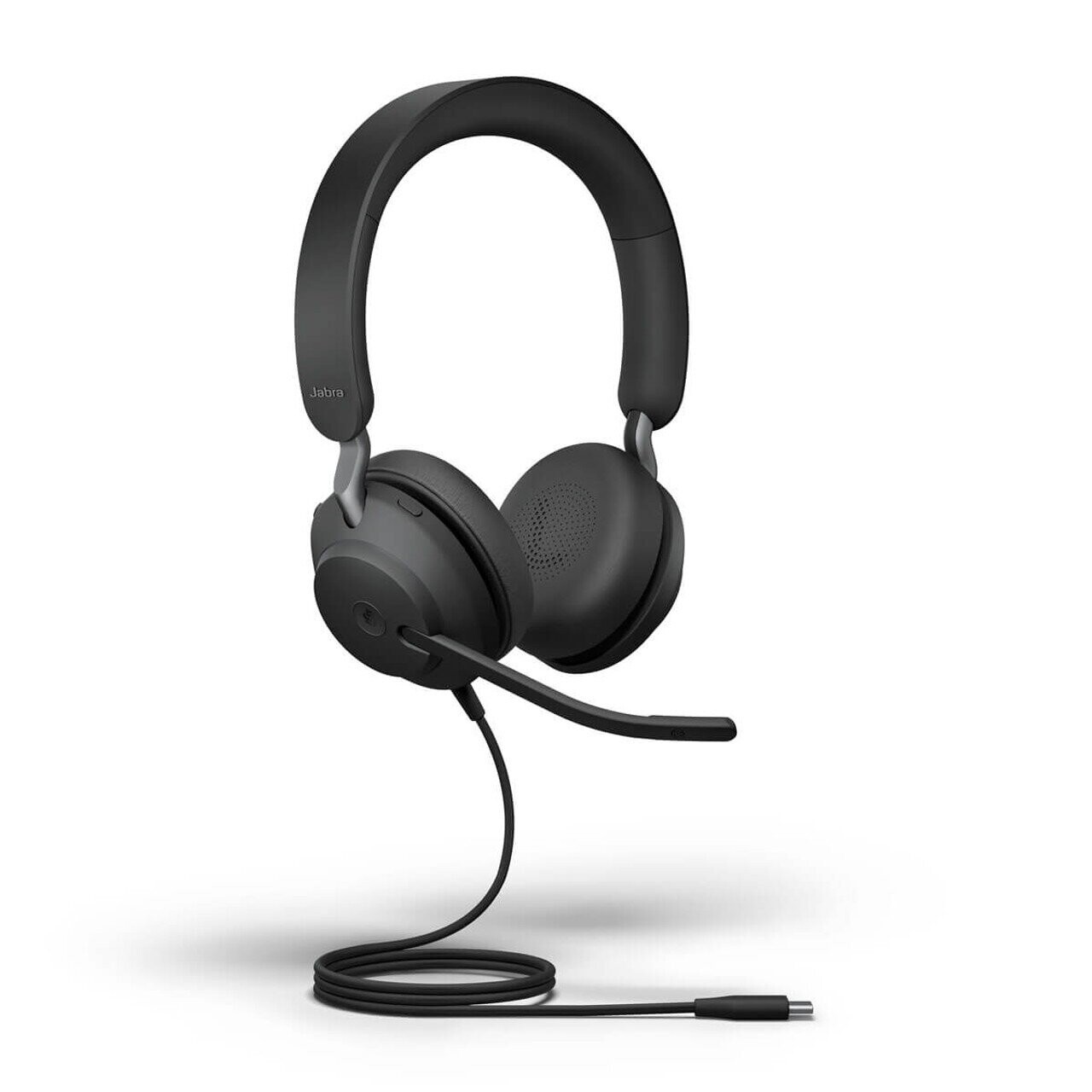
4. Poly Blackwire 5220: most comfortable for long shifts
Built specifically for long shifts: soft ear cushions and a thoughtful fit address most complaints about discomfort.
Specs:
- triple connection: USB-C, USB-A, and 3.5mm;
- weighs about 165g;
- passive noise cancellation via snug-fitting ear cushions;
- Microsoft Teams and Zoom certification.
Pros:
- well-suited to long shifts thanks to soft ear cushions and a comfortable fit;
- flexible connectivity works with softphones, desk phones, and mobile devices alike;
- sturdy build without feeling fragile.
Cons:
- noise cancellation is solid but not the best in its category;
- priced above the market average.
Best for: contact centers where operators work full shifts and spend most of the workday wearing the headset.
Average price: ≈6,500 UAH
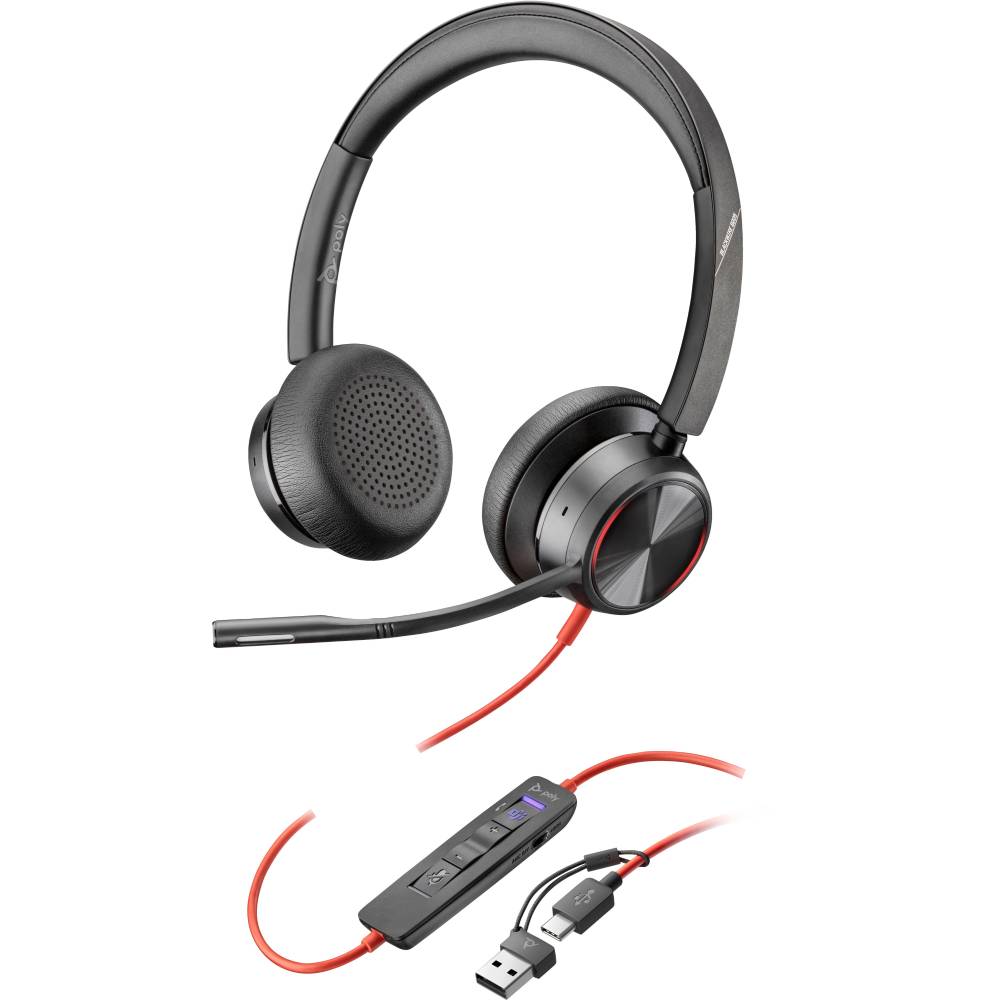
5. Jabra Biz 2300 Duo: best for large contact centers
A time-tested model, one of the more popular headsets specifically in contact centers with large operator teams.
Specs:
- Quick Disconnect (QD) connection, needs an adapter or amplifier for USB;
- weighs about 68g;
- active microphone noise cancellation (NC) with PeakStop protection against sudden loud sounds;
- reinforced headband construction.
Pros:
- highly durable even under intensive daily use;
- easy to maintain, since a broken cable can be replaced separately without buying a new headset;
- widely used across contact centers of all sizes.
Cons:
- good audio, but not top-tier for its price segment;
- needs a separate QD cable or adapter to connect to a PC, so there’s no out-of-the-box USB mode.
Best for: large contact centers, where what matters isn’t a single headset but the total cost of owning equipment for 50-100+ operators.
Average price: ≈7,500 UAH
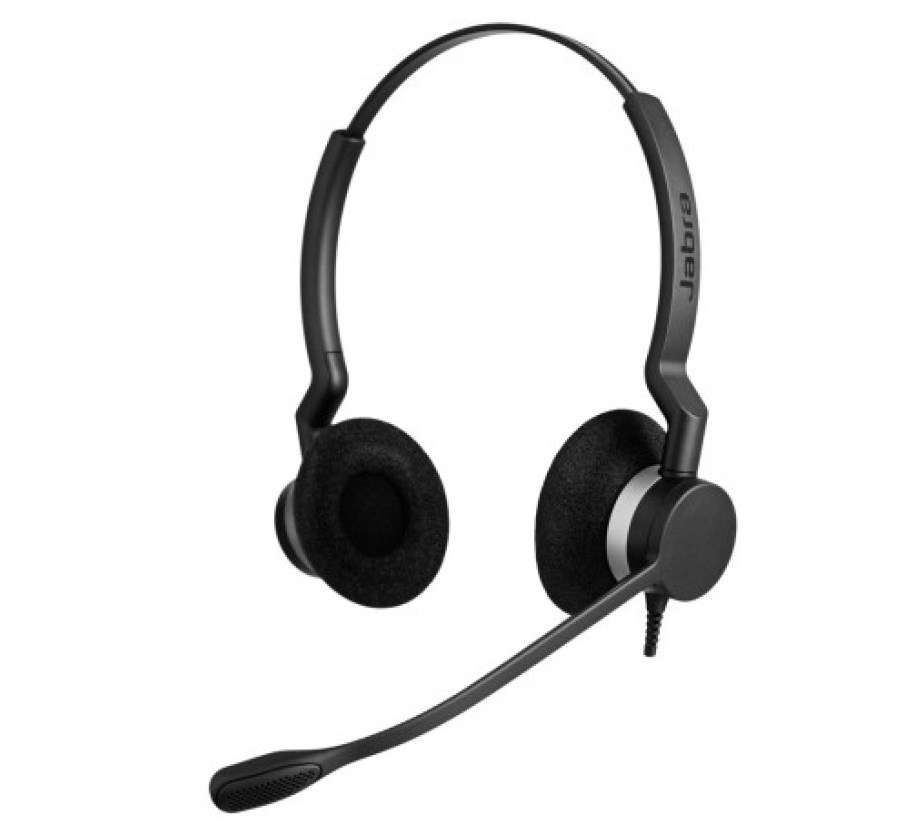
6. Yealink UH42 Dual: best for Microsoft Teams
A headset built specifically for the Microsoft Teams ecosystem, with matching control buttons and certification. It’s the successor to the UH37, which Yealink has discontinued.
Specs:
- USB-C connection with a USB-A adapter;
- dual version weighs about 139g;
- active noise cancellation (Acoustic Shield 3.0, AI microphone) plus passive ear cushion isolation;
- official Microsoft Teams certification with a dedicated button on the headset.
Pros:
- control calls and status directly from the headset in Teams;
- a good balance of sound quality, comfort, and features;
- a natural fit for teams already working in the Microsoft ecosystem.
Cons:
- the Teams certification only pays off if your company actually uses the platform;
- for pure IP telephony without Teams, there are better value options.
Best for: contact centers and support teams that communicate through Microsoft Teams alongside phone calls.
Average price: ≈4,000 UAH
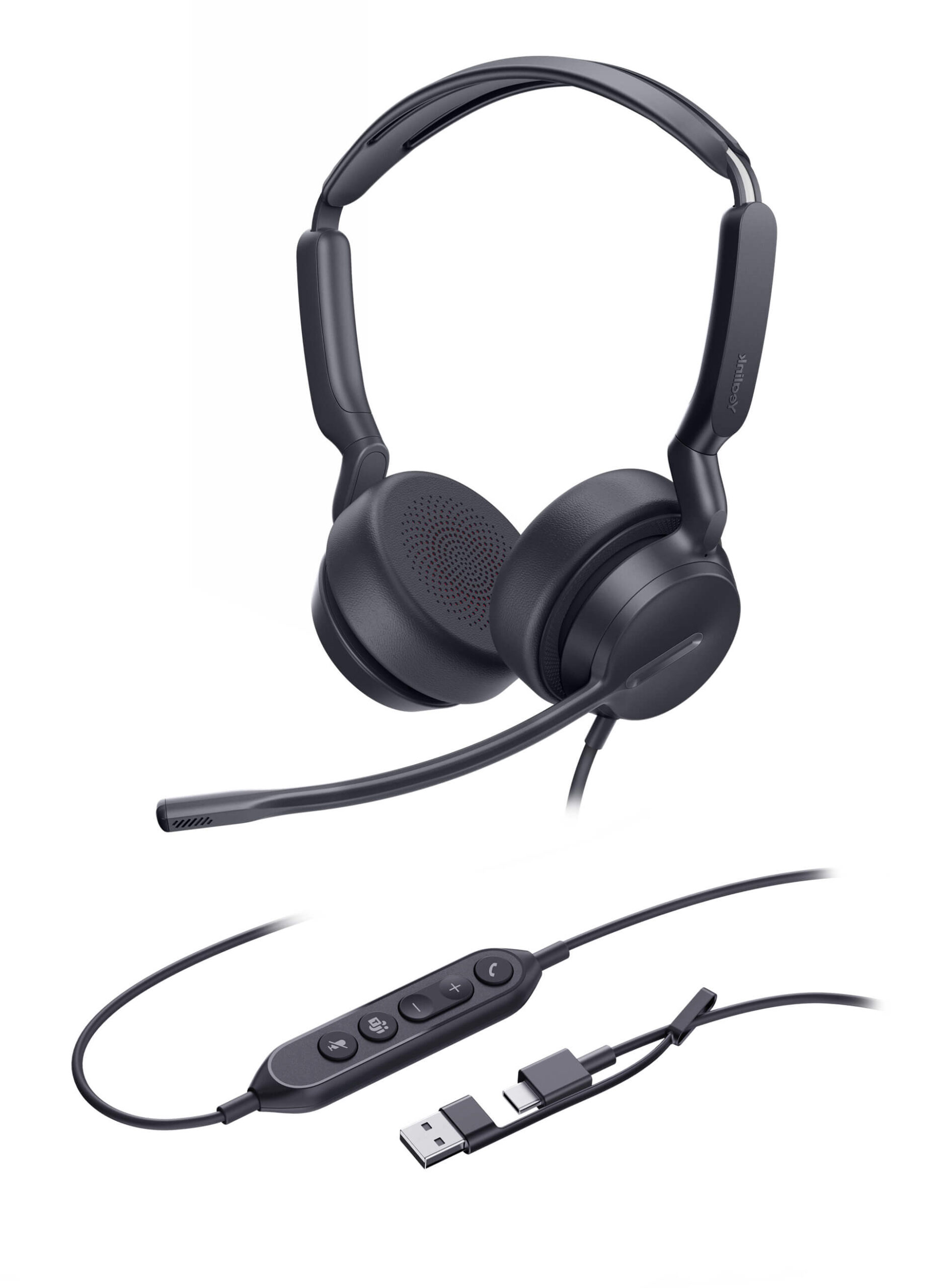
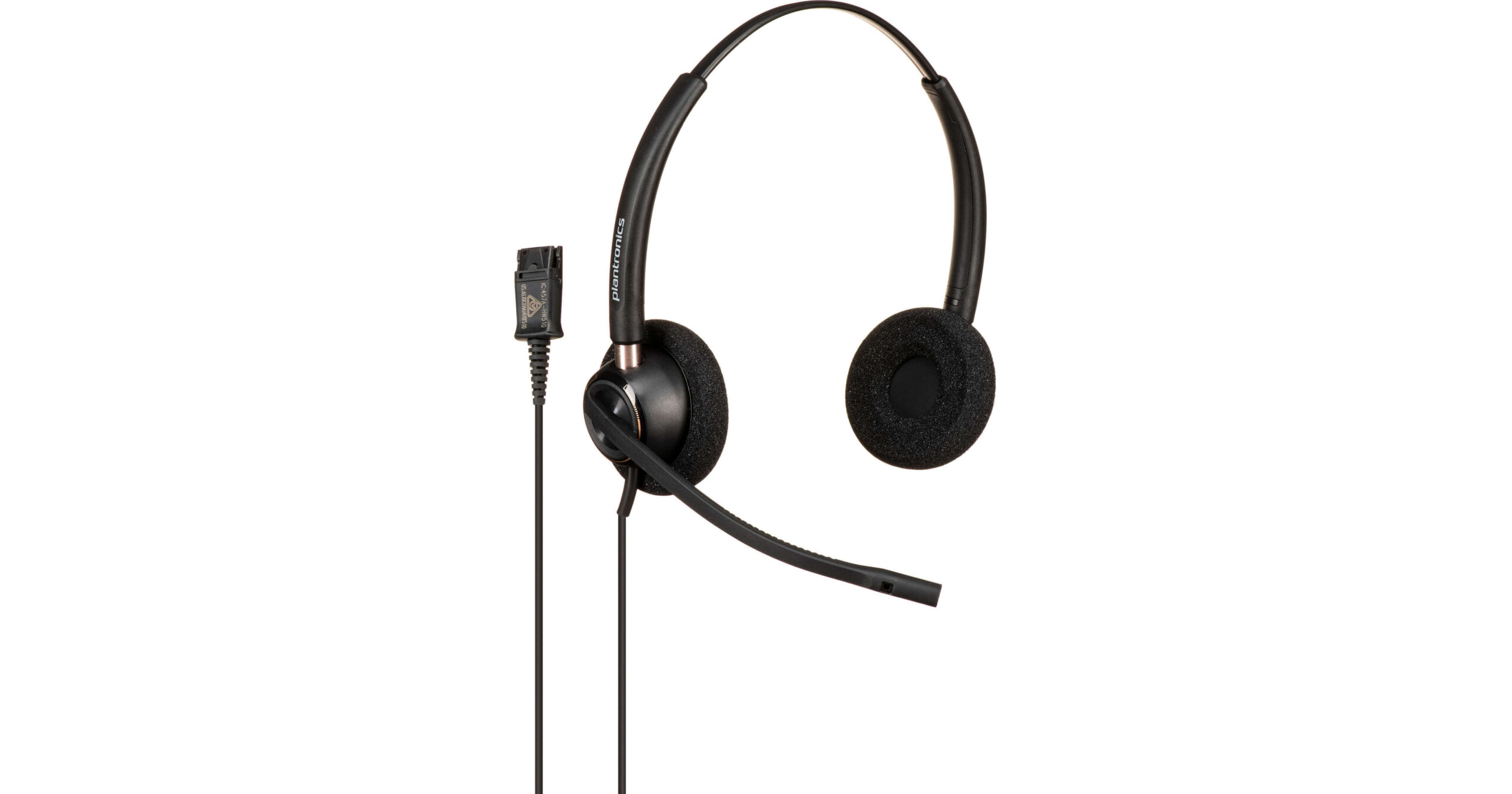
7. Poly EncorePro HW520: best for IP telephony
Built specifically for IP telephony and traditional contact center desk phones.
Specs:
- Quick Disconnect (QD) connection, needs a DA85-type USB adapter for PC use;
- weighs about 74g;
- active microphone noise cancellation;
- compatible with a wide range of IP phones via Poly’s proprietary cables.
Pros:
- stable performance specifically with IP telephony thanks to the universal QD connector;
- comfortable to wear through a shift;
- integrates easily into existing IP telephony infrastructure.
Cons:
- doesn’t connect directly to a computer without a separate USB adapter;
- design is built for function, not looks.
Best for: contact centers whose core infrastructure runs on IP telephony rather than softphones or cloud-based systems.
Average price: ≈3,500 UAH
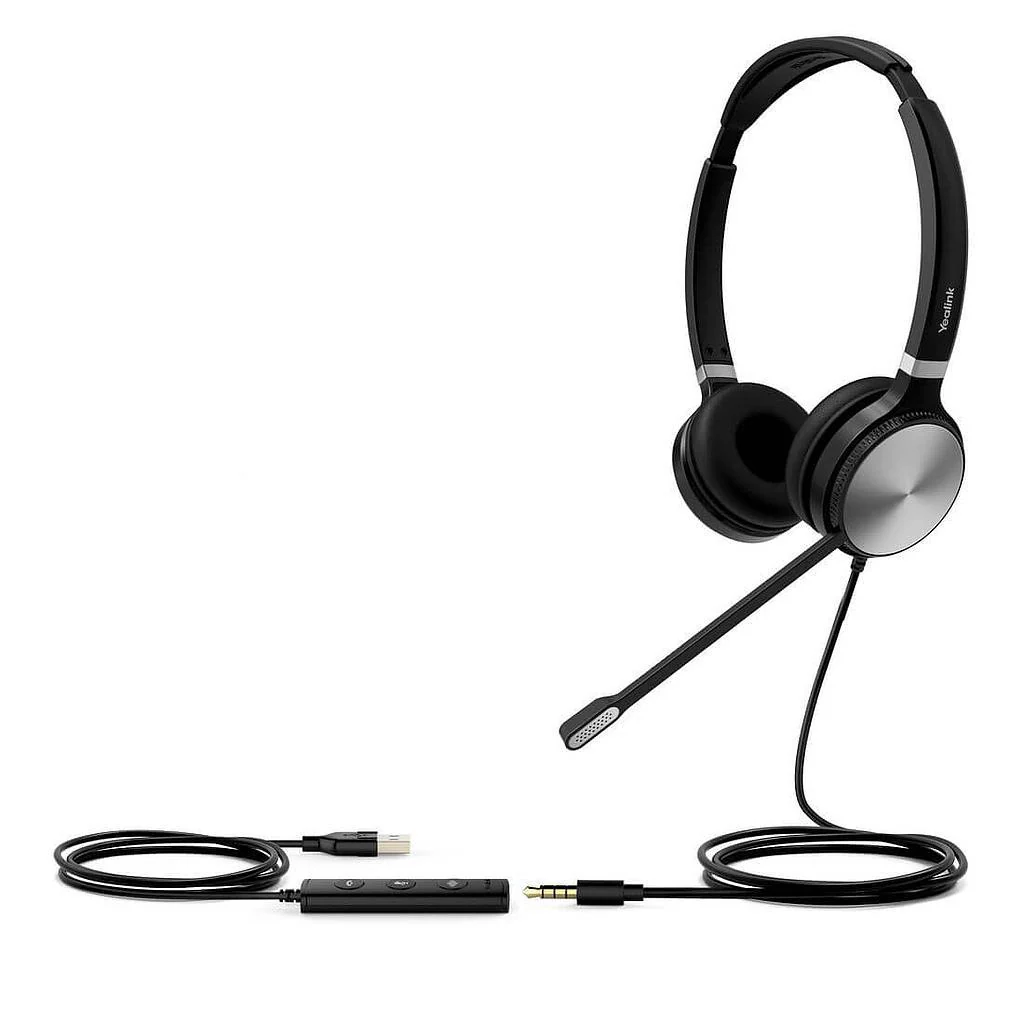
8. Yealink UH36: an affordable professional option
For teams that need a professional headset without paying for features not every company actually needs.
Specs:
- USB-A and 3.5mm connection at the same time;
- dual version weighs about 155g;
- passive noise cancellation plus a noise-cancelling microphone;
- Microsoft Teams certification.
Pros:
- solid value for the price;
- good enough audio quality for everyday calls;
- works with both PCs and mobile devices without extra setup.
Cons:
- weaker noise cancellation than most models in this ranking, so it’s not the best fit for a loud open-plan office;
- less durable build compared to the Jabra Biz 2300 Duo or Poly models.
Best for: small contact centers and support teams making the move to professional-grade equipment.
Average price: ≈3,500 UAH
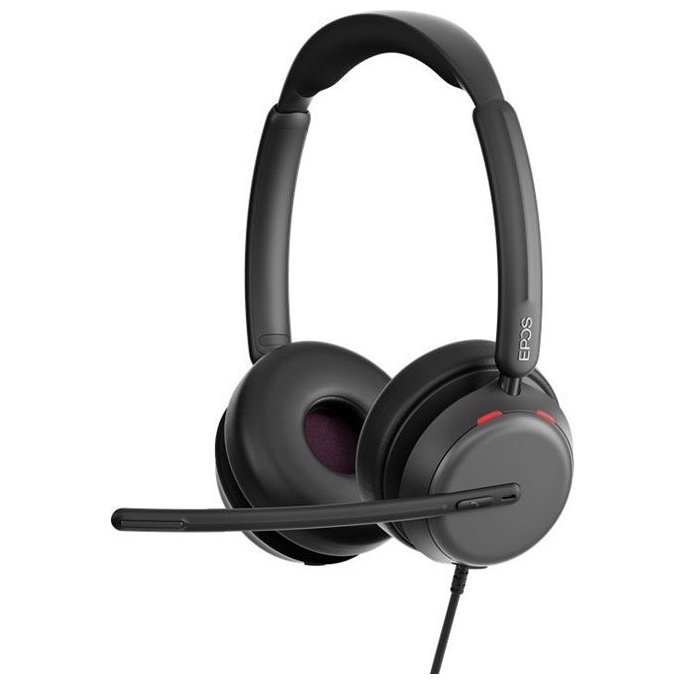
9. EPOS Impact 860: best noise cancellation
If operators work in a loud open-plan office and customers keep commenting on background noise, this is built for exactly that problem.
Specs:
- USB-C connection with a USB-A adapter;
- weighs about 159g;
- active noise cancellation (ANC) with EPOS AI technology;
- Microsoft Teams certified version available.
Pros:
- one of the most effective noise cancellation systems in this ranking;
- customers hear the operator clearly even in a loud open-plan office;
- quality materials and build.
Cons:
- priced above the market average;
- for quiet offices or small teams, paying extra for this level of noise cancellation isn’t always worth it.
Best for: contact centers in open-plan offices, where background noise from nearby operators genuinely gets in the way of calls.
Average price: ≈7,700 UAH
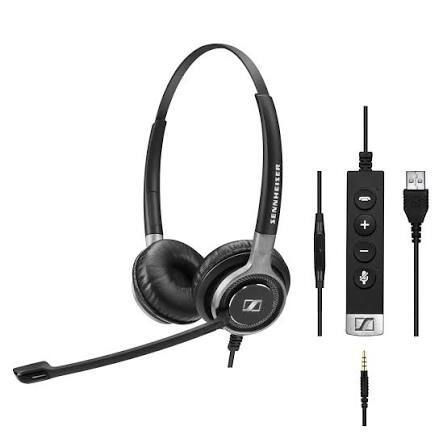
10. EPOS Impact SC 665: premium headset for open-plan offices
The top model in this ranking, for companies betting on equipment durability and operator comfort.
Specs:
- 3.5mm connection;
- weighs about 59g thanks to a stainless steel and aluminum housing;
- active microphone noise cancellation;
- Microsoft Teams certification.
Pros:
- combines quality audio, effective noise cancellation, and a rugged build;
- built to last for years thanks to its metal construction and Kevlar-reinforced cable;
- well-suited to large contact centers in open-plan offices with high service standards.
Cons:
- priced higher than most models in this ranking;
- for smaller teams or tighter budgets, there are options with better value.
Best for: large contact centers and companies that prioritize customer service quality, where equipment budget isn’t the deciding factor.
Average price: ≈13,500 UAH
Technical specs: comparison table
| Model | Connection | Mono/Stereo | Weight | Noise Cancellation | Teams Certified | Best For | Price |
|---|---|---|---|---|---|---|---|
| Fanvil HT302-U | USB-A | Stereo | ≈95g | ENC (mic) | No | Support & sales | 1 392 UAH |
| Snom A100D | QD (desk phone) | Stereo | ≈79g | Passive | No | VIP support | ≈3 500 UAH |
| Jabra Evolve2 40 | USB-A / USB-C | Stereo | ≈188g | Passive | Yes (separate version) | All-purpose use | ≈5 800 UAH |
| Poly Blackwire 5220 | USB-C / USB-A / 3.5mm | Stereo | ≈165g | Passive | Yes | Long shifts | ≈6 500 UAH |
| Jabra Biz 2300 Duo | QD (adapter needed) | Stereo | ≈68g | NC (mic) | Not directly | Large contact centers | ≈7 500 UAH |
| Yealink UH42 Dual | USB-C (USB-A adapter) | Stereo | ≈139g | Acoustic Shield 3.0 | Yes | Microsoft Teams | ≈4 000 UAH |
| Poly EncorePro HW520 | QD (USB adapter needed) | Stereo | ≈74g | NC (mic) | Not directly | IP telephony | ≈3 500 UAH |
| Yealink UH36 | USB-A + 3.5mm | Stereo | ≈155g | Passive + ENC | Yes | Small teams | ≈3 500 UAH |
| EPOS Impact 860 | USB-C / USB-A | Stereo | ≈159g | ANC | Yes | Open-plan offices | ≈7 700 UAH |
| EPOS Impact SC 665 | 3.5mm | Stereo | ≈59g | NC (mic) | Yes | Premium segment | ≈13 500 UAH |
Weight, connection type, and certification data are based on manufacturers’ official technical specifications.
Which headset is right for you
Instead of scrolling through the ranking top to bottom, it’s easier to start from your own scenario:
| Scenario | We recommend |
|---|---|
| You need a professional headset without overpaying | Fanvil HT302-U (Dual) |
| Operators work 8-10 hour shifts and comfort is the priority | Snom A100D |
| You need an all-purpose headset | Jabra Evolve2 40 |
| Operators work in an open-plan office | EPOS Impact 860 |
| Your team’s main tool is Microsoft Teams | Yealink UH42 Dual |
| Your infrastructure runs on traditional IP telephony | Poly EncorePro HW520 |
| Budget is tight but you need a professional option | Yealink UH36 |
| You’re equipping a large team | Jabra Biz 2300 Duo |
| You need maximum durability | EPOS Impact SC 665 |
A headset is just one part of the contact center
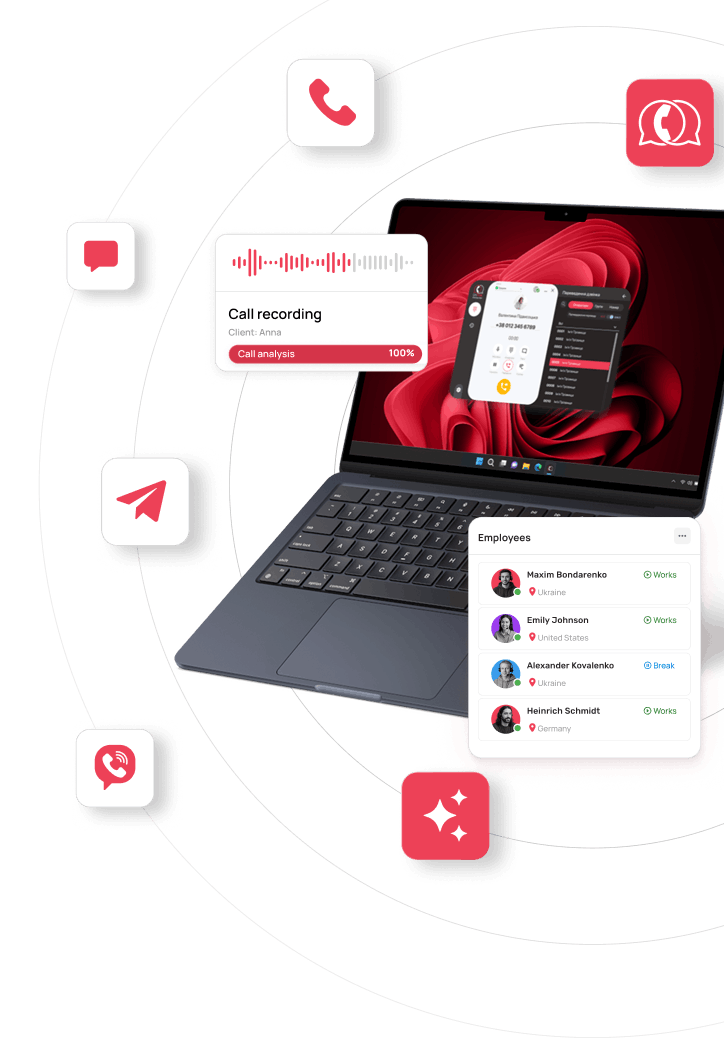
A good headset improves call quality, but it doesn’t organize the process itself: which operators are free right now, how many calls are waiting in queue, how long a customer has been on hold. That’s the job of a contact center management system: it routes calls between operators, shows workload in real time, and collects analytics for every conversation.
UniTalk Contact Center (UCC) is exactly that kind of system: it helps businesses organize contact center operations, improve operator efficiency, and build a managed call-handling process. UCC doesn’t replace telephony or headsets, it organizes the team’s work around them, so both tools complement each other.
Conclusion
A headset is a work tool that operators use every single day. That’s why it’s worth evaluating on more than just price, comfort, voice quality, and compatibility with your equipment all matter too. Getting it right means less fatigue for operators, better call quality, and lower replacement costs down the line.
If you’re choosing equipment alongside UniTalk telephony, our specialists can help you pick a headset that fits your workflow and suggest a compatible model for your setup.
There’s no one-size-fits-all answer, it depends on your scenario. For most contact centers, the Fanvil HT302-U (Dual) is a strong starting point for value, while teams with higher audio demands, like VIP support, should consider the Snom A100D.
A professional model is built for 8-10 hours of continuous daily wear, includes a noise-cancelling microphone for clear voice transmission, and holds up to years of heavy use. Consumer headphones simply aren’t built for that.
Models with active noise cancellation and a stereo design, like the EPOS Impact 860 or EPOS Impact SC 665. They isolate background noise from nearby operators more effectively.
If your contact center operates in an open-plan office with a lot of operators, active noise cancellation makes a noticeable difference in call quality. Smaller teams or private offices can usually get by with passive isolation.
Among the models covered here, official Teams certification is available for the Jabra Evolve2 40 (separate version), Poly Blackwire 5220, Yealink UH42 Dual, Yealink UH36, EPOS Impact 860, and EPOS Impact SC 665.