“We’re still too small for a system”: why it’s better to set up your communication from day one
At a company of three to five people, a manager negotiates with a client over personal Telegram because it’s faster, and calls through the work phone system because that’s how it’s set up. To the client, it’s one conversation. For the company, its pieces can end up scattered, and nobody sees the full picture. While the team is small, this doesn’t feel like a problem: the owner remembers who agreed to what. But right now a habit is forming that will be hard to change later. Let’s look at what’s worth building into your communication before the team starts to grow.
When communication problems still look like minor issues
In a small team, communication problems are simply harder to notice.
With two or three managers, the owner can still easily keep track of which client is at which stage. A missed call in the evening feels like a small thing, not a systemic loss. A conversation that started as a call and continued on Viber doesn’t feel disjointed, because the same manager remembers both halves.
The cost of these lost details is hard to see in any report, especially while the team is still small. It builds up with every new client and every new manager who joins.
A manager leaves — and takes the negotiation history with them
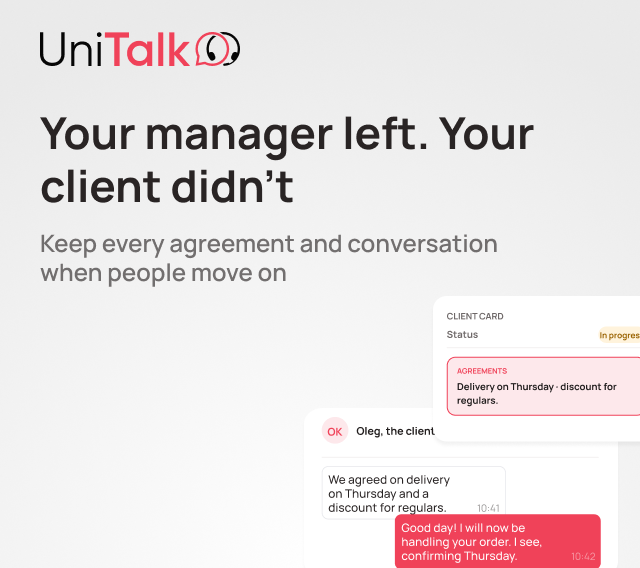
A manager who handled negotiations on their personal phone quits. Along with them, the company loses the contacts and the context of agreements the manager built up while working with that client.
The new manager starts the conversation from scratch. The client notices right away and isn’t always willing to explain, again, what they already explained once. In the worst case, they simply go somewhere their history is already remembered.
The cost of that loss is higher than it looks. According to Harvard Business Review, increasing customer retention by just 5% can boost a company’s profit by 25–95%. So this isn’t about one lost conversation — it’s about a client the company could lose along with the context of the entire relationship.
We wrote in more detail about protecting your client base from this kind of loss in our article on the manager who took client contacts with them.
“Cheaper from the start” isn’t about your software budget
The main mistake is in how business owners hear this phrase. They hear “you need to buy a system” and think about cost. But it’s not just about the price of the software.
When communication with the very first client is captured in one place, it becomes the standard way of working — not one manager’s personal habit.
New hires find it easier to get up to speed: they immediately see the history for every client and understand how to handle requests, instead of learning on the fly by asking colleagues who’s responsible for what. That shortens onboarding time and cuts down on mistakes in the first few weeks.
Customers get a consistent experience regardless of who responds to them. That shapes how they see the company and whether they’ll reach out again.
And most importantly: managers stop wasting time hunting for information across chats and browser tabs. That leaves more time for actual client work, and the team can grow without the communication getting proportionally messier.
When communication is built around each manager’s personal habits from the start, any later change means retraining the whole team. That’s harder and more expensive than building one shared approach to communication from day one.
4 elements of communication that’s ready to scale
Whatever tool you use, a structure that’s ready for team growth comes down to four things:
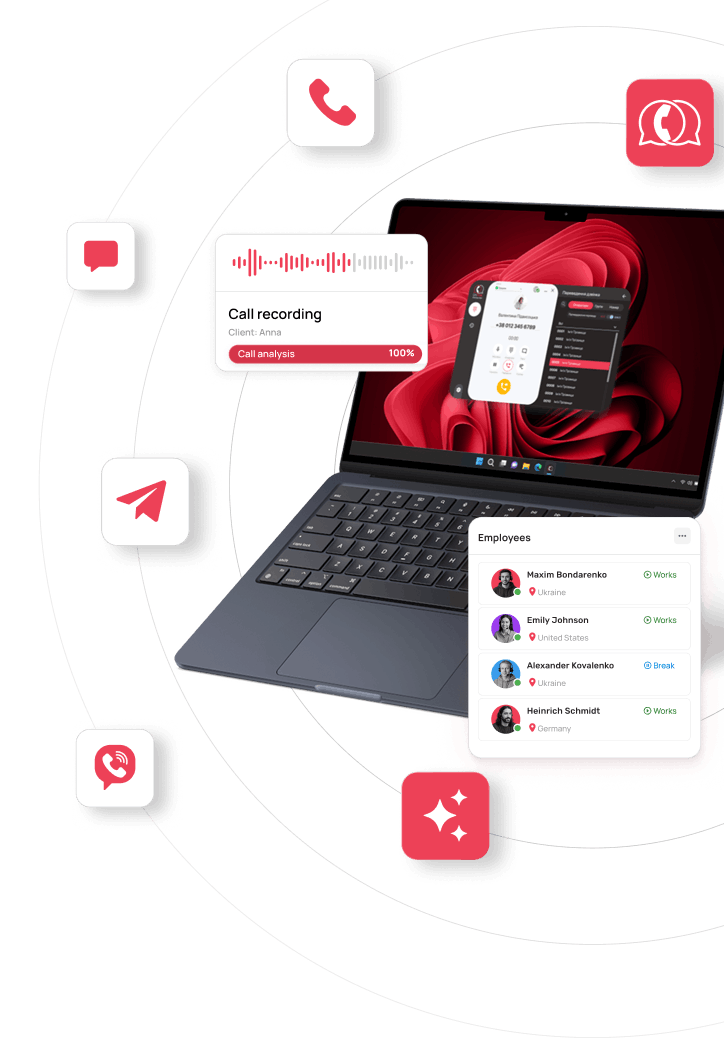
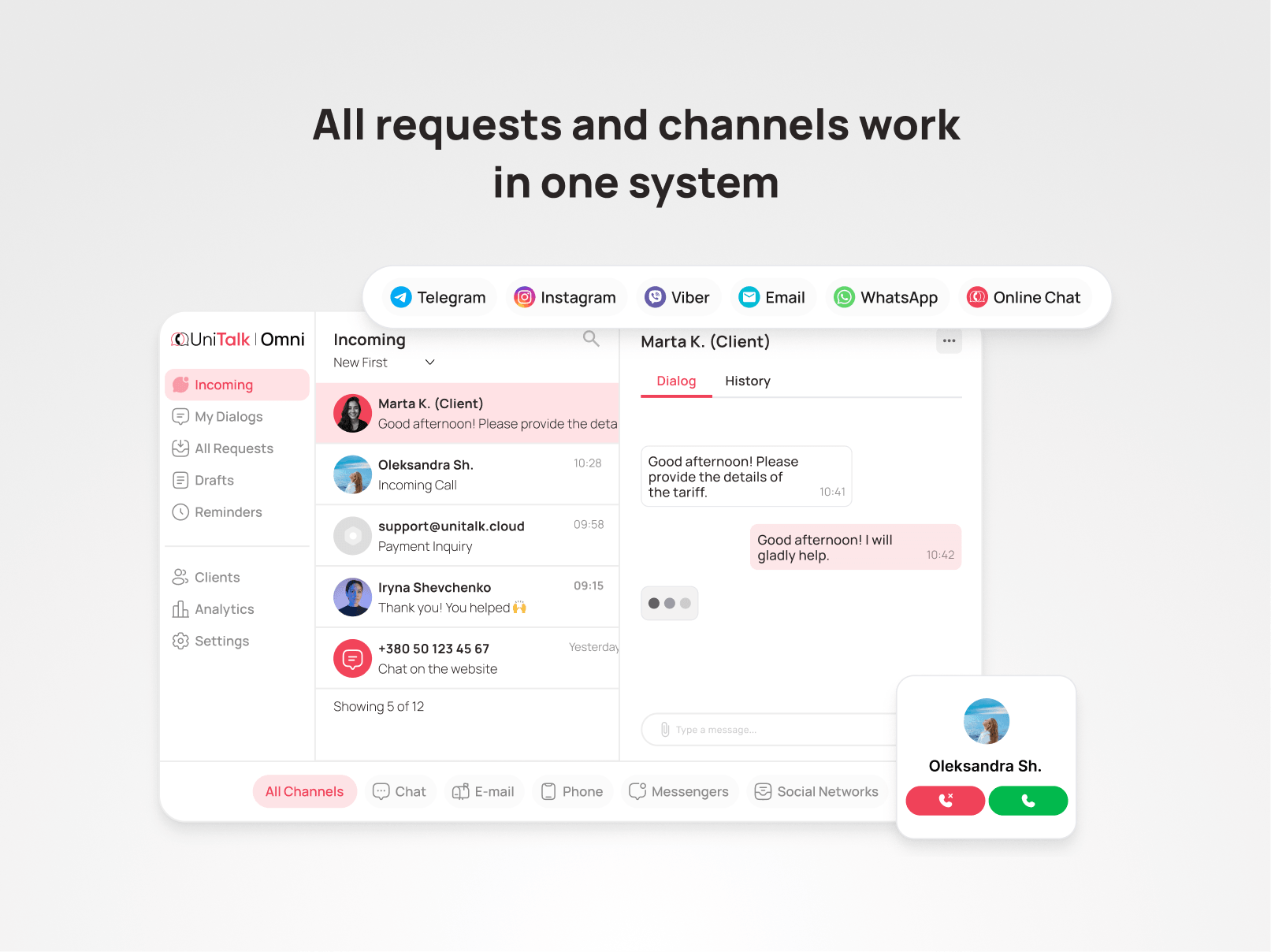
- All channels live in a shared workspace. Calls, messengers, and chats don’t stay in managers’ personal accounts.
- Context is captured centrally. A client’s conversation history doesn’t disappear along with a manager who goes on leave or quits.
- There’s basic visibility into workload. How many requests come in, how many go unanswered, and where they come from.
- There’s a clear way of working. Everyone on the team knows who owns a request, how it’s handled, and what happens next.
What happens to communication as the team grows
Team growth on its own doesn’t create order in communication. If every manager works out of their own chats and keeps history in personal accounts, new hires just add more scattered channels to the mix.
That’s why it’s worth building the system while the team is still just two or three managers. Not because a small business already needs complex processes, but because this is the easiest point to make one shared way of working the norm for the whole team.
As the team grows, you don’t have to rebuild communication from scratch. New people simply plug into a way of working that already makes sense.
We wrote in more detail about growing your team and volume without rebuilding everything from scratch in our article on scaling a business without switching platforms.
Which system to choose when you’re starting out
The good news: you don’t need to roll out something big and feature-heavy from day one. What matters is that from your very first clients, you have a shared workspace, saved context, visibility into requests, and a clear way of working.
It matters less which plan you start on. What matters more is setting up the system right away, while the team is small and there are no habits to break yet. Moving to a higher plan later doesn’t mean switching to a different system — it just adds new capabilities to a workspace you already know.
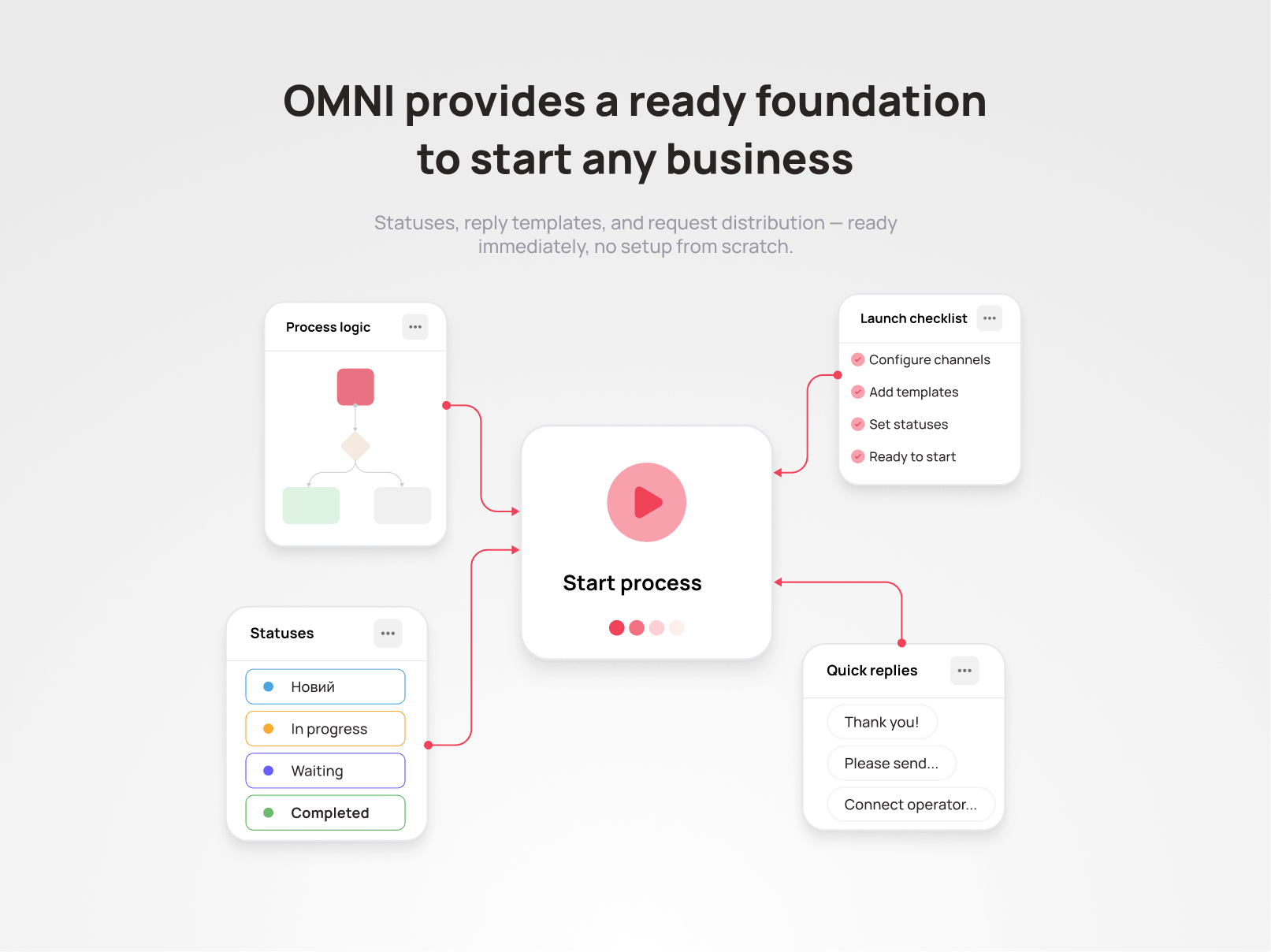
This is where Omni fits into the picture. For a small business, that doesn’t mean rolling out a complex system with dozens of settings. Omni gives you a ready-made foundation: a shared workspace for calls and chats, scripted request handling, saved context, and visibility into what’s happening with each request. As the business grows, you can add new scenarios, automation, analytics, and CRM integration on top of that foundation.
Signing up for Omni takes up to 2 minutes, and basic channel setup takes another 10–15 minutes.
If you already have a CRM, Omni doesn’t replace it. Your CRM stays the source of truth for the client and the deal, while Omni adds the communication context on top. You can connect that integration later, once your team is ready for it.
UniTalk is the single solution for managing customer communication. The Mini plan starts at 80 UAH per license, with a minimum of 3 licenses. For a small team, that’s enough to start with the basics and expand the system as the business grows.
The quality of communication is felt by the client just as much as by the company. It doesn’t matter to the client which manager responds. What matters is that the company sees the context, handles the request through a clear scenario, and doesn’t make them repeat what they’ve already said. That’s how communication stops depending on individual people and becomes part of how the business operates.
The bottom line
You don’t need to build a complex system for a team of three. You just need to avoid building in things you’ll have to tear down once you’re a team of ten.
What looks minor at the start becomes a problem at the next stage. That’s why it’s worth building communication so it can grow along with the business.