Omnichannel: What It Is and Why It Matters for Business
A customer sees a clinic’s ad in their feed, messages the front desk on Instagram to check if there’s an open slot for a procedure, and calls right away to book it. A couple of hours later, they message again on Direct to reschedule. For the customer, this is one continuous conversation. For the business, if the channels aren’t connected, it looks like three separate inquiries from three “different” people: whoever answers the phone has no idea the customer already wrote on Instagram, and ends up asking again for details the customer just explained in the chat.
That’s exactly why simply being present on several channels isn’t enough anymore. Let’s break down what omnichannel really means, how it differs from multichannel, what benefits it brings, and how to put this approach to work in your own company.
Key takeaways
- Omnichannel brings calls, chats, social media, and email together into one system with a shared customer history.
- It’s not the same as multichannel. You can have the same number of channels, but in omnichannel they’re connected, while in multichannel each one runs on its own.
- Companies with a strong omnichannel strategy retain 89% of customers on average, compared to roughly 33% for those without integrated channels.
- An omnichannel approach increases average order value and customer LTV through personalization and seamless transitions between channels.
- Implementation doesn’t start with buying software, it starts with bringing customer data together in one place.
- The biggest mistakes when shifting to omnichannel: disconnected systems, no unified customer profile, and no clear ownership of the process.
- This is especially true in Ukraine, where audiences actively use several channels at once, Telegram, Viber, Instagram, and phone calls, so a business can’t afford to rely on just one of them.
What Is Omnichannel?
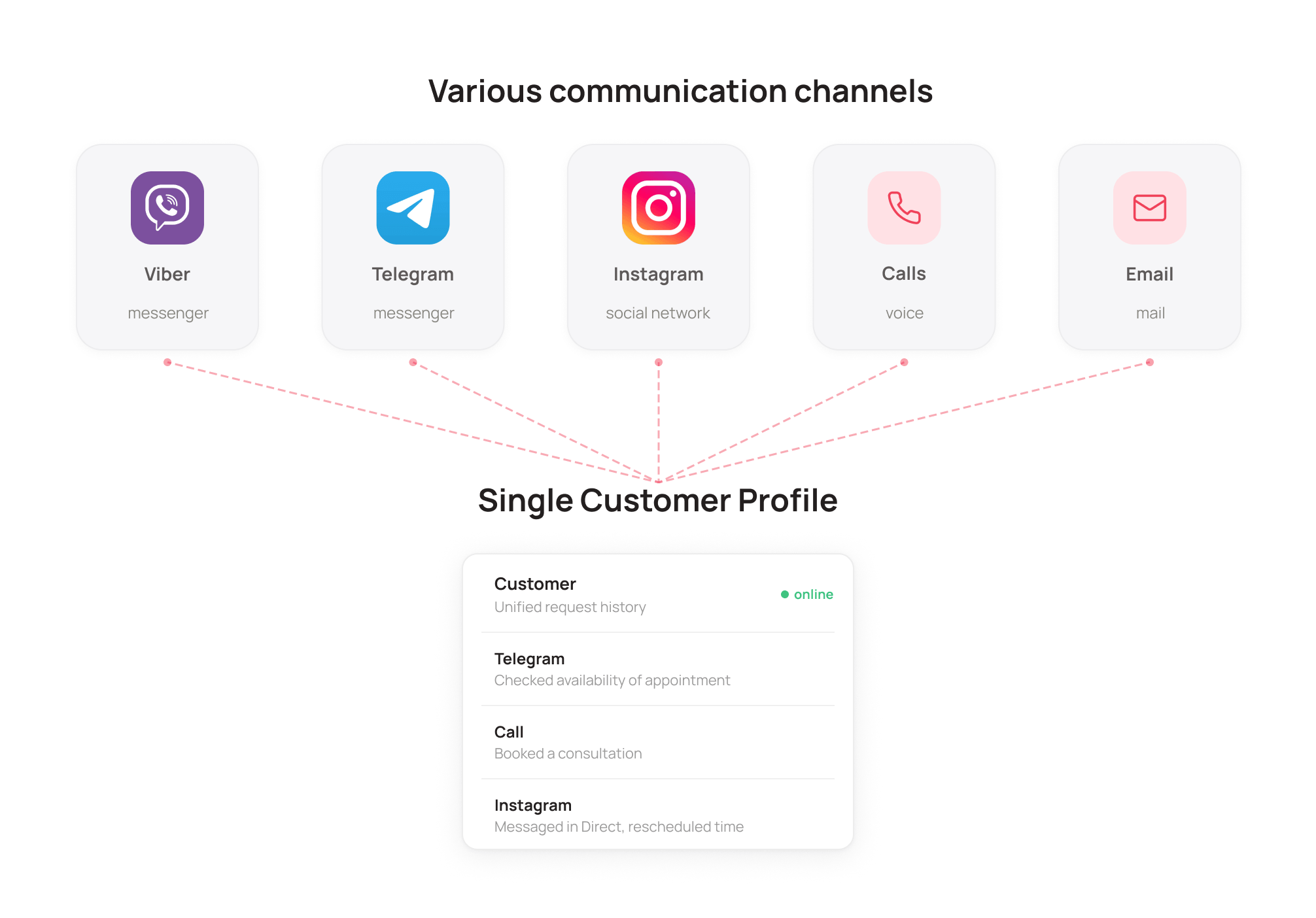
Omnichannel (sometimes shortened to just “omni-channel”) is an approach to working with customers where every communication channel feeds into one system with a shared history of inquiries, bookings, and conversations. A call to the front desk, a message on Instagram, and a booking made through the website stop being separate episodes and become part of one continuous conversation with the same customer.
To the customer, this looks simple: they write wherever is convenient, without re-explaining their situation every time they reach out. For the business, that simplicity hides real technical work: data from every channel has to flow into one customer profile, and staff need access to that history no matter which channel they’re handling.
Marketers also talk about “omnichannel marketing” specifically: it’s the same principle applied to promotion, where the offer, price, and tone of voice stay consistent across every channel, so customers get the same level of service no matter how they reach out.
What’s the Difference Between Omnichannel and Multichannel?
Multichannel means a business is present on several channels at once: a website, an Instagram page, a phone line, an inbox. But each channel runs on its own, and customer data doesn’t move between them. A clinic’s front-desk staff might never find out a customer already messaged on Instagram, and the sales team might miss an inquiry left on the website altogether.
The difference shows up clearly in a simple example: in a multichannel setup, a customer might call, then message on Telegram, then submit a form on the website a month later, and the business ends up treating these as three separate, unrelated inquiries. Omnichannel, unlike multichannel, syncs these channels into one system where the full history is saved and available at any point of contact.
| Criterion | Multichannel | Omnichannel |
|---|---|---|
| Communication channels | Several separate channels | Several channels combined into one system |
| Customer history | Stored separately in each channel | Shared, visible across every channel |
| Switching channels | Customer has to explain the situation again | Customer picks up right where they left off |
| Analytics | Tracked per channel | End-to-end, across the whole customer journey |
| Typical example | Website, social media, and phone line operate independently | A manager sees both the Instagram conversation and the website order history for the same customer |
How an Omnichannel Approach Works
Technically, omnichannel rests on three connected processes: a unified database, channel synchronization, and personalization.
A Unified Customer Database
At the core of omnichannel is a single customer profile: one record holding calls, conversations across every messenger, bookings, and support tickets. A CRM or CDP system usually plays this role, pulling in data from every channel automatically. When communication exists separately from the CRM, part of the customer context gets lost or has to be copied over by hand, which works directly against the whole point of going omnichannel.
It’s worth being clear that omnichannel isn’t just about having a CRM. A CRM stores customer and deal data, while the communication itself, inquiry routing, processing logic, quality control, and coordination between channels, remains a separate job that a CRM doesn’t handle.
Synchronizing Communication Channels
Channels shouldn’t just run in parallel, they need to share context in real time. An inquiry, for instance, should be routed by clear logic rather than at random: by topic, by an agent’s skill set, by the customer’s language, or by current team workload. What matters here isn’t multichannel presence itself, but the logic behind how inquiries get distributed among agents. Without it, even well-configured channels end up behaving like separate, disconnected queues.
This is especially visible in Ukraine: according to Gradus Research’s “Media Consumption 2025” study, 92% of Ukrainians use Telegram weekly, and that number keeps climbing, while Viber, the clear market leader just a few years ago, now sits in second place. In practice, that means a chunk of customers have already switched to a different messenger, and a business that keeps both channels in sync doesn’t lose the ones who simply changed habits.
Personalizing the Interaction
Once a system can see a customer’s full history, it can offer relevant next steps: a reminder about an upcoming booking, a suggestion for a fitting service, or a different script if the customer has run into an issue before. This is what people mean by omnichannel interaction: the conversation is built around the person, not around the channel.
Omnichannel Is More Than Just Channels
Plenty of companies assume omnichannel simply means having Telegram, Viber, phone, and Instagram all connected. In reality, that’s not enough. If inquiries land with different agents without context, get lost between departments, or get handled by inconsistent rules, the customer still ends up with a fragmented experience.
That’s why modern omnichannel isn’t just about combining channels, it’s a consistent way of managing communication as a whole: routing inquiries, applying handling standards, controlling quality, and tracking analytics end to end.
The Benefits of Omnichannel for Business
These benefits look different depending on your role in the company. A business owner cares about control without chaos and scattered spreadsheets. A sales manager cares about a team that’s easy to manage and a clear history behind every deal. A marketer wants to know which ads actually drive calls and inquiries. Everyone has different priorities, but everyone needs the same foundation: one shared history of communication with the customer.
Higher Sales and Average Order Value
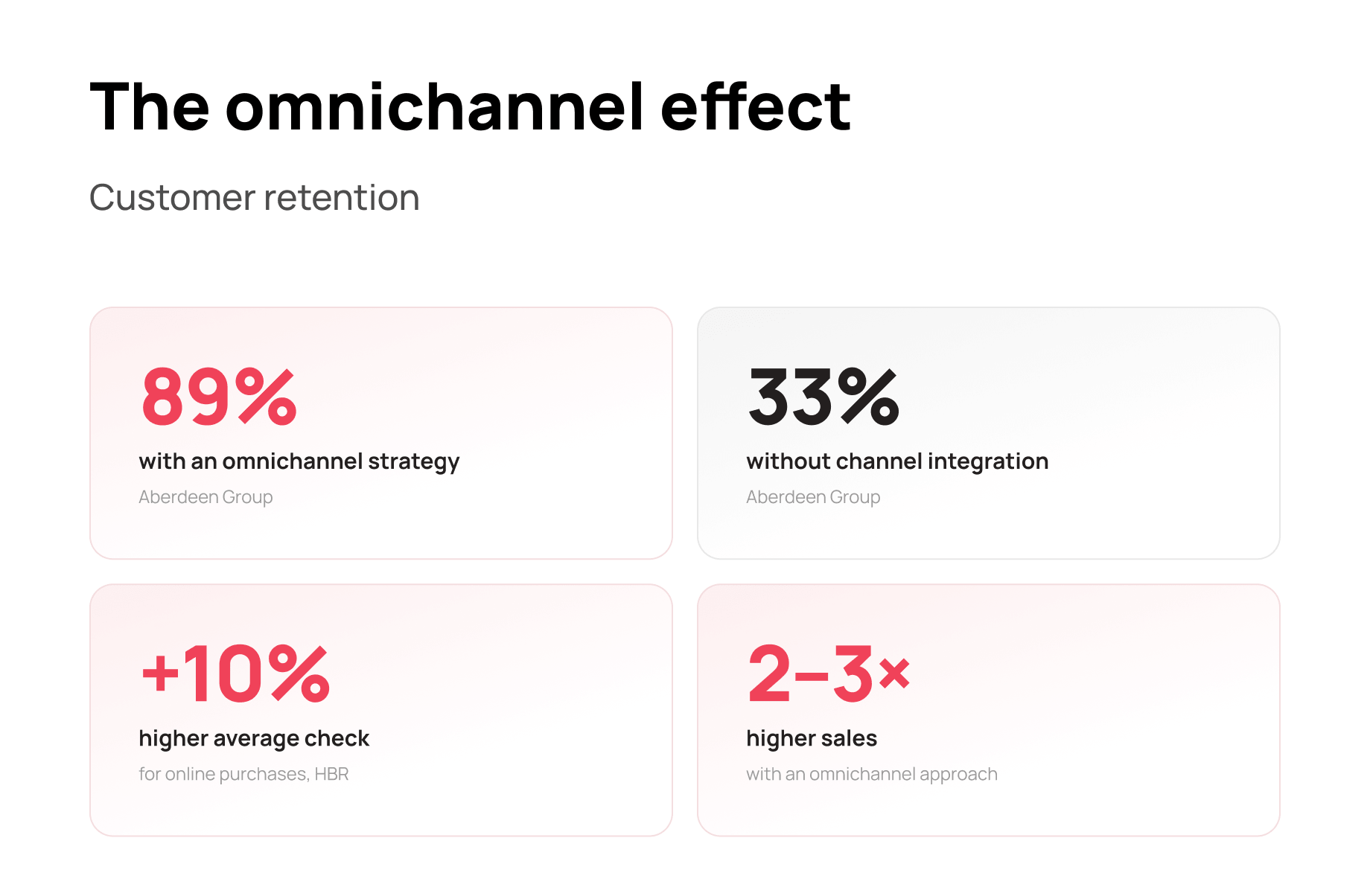
According to a Harvard Business Review study covering 46,000 shoppers, customers of omnichannel retailers spent 4% more in-store and 10% more online on average. By various estimates, sales through omnichannel engagement run two to three times higher than when channels operate separately with no shared data.
Ukrainian e-commerce is already moving in this direction. According to the Khoroshop platform, 71% of Ukrainian online stores maintained or grew their order volumes in 2025 despite declining purchasing power, and 60% of online purchases in the country are now made from a smartphone, with every fourth order at major retailers coming through a mobile app rather than the website. A business whose website, app, and messengers operate like three different worlds risks losing orders right at the seams between those channels.
Stronger Customer Loyalty
According to the analytics firm Aberdeen Group, companies with a mature omnichannel strategy retain 89% of customers on average, compared to about 33% for those without integrated channels. The logic is simple: customers don’t have to repeat themselves or adapt to an inconvenient channel, so they have less reason to switch to a competitor. That matters even more in Ukraine, where audiences are spread across multiple channels, so if a business only responds on one of them, some customers simply won’t hear back at all.
More Efficient Support
When a support agent can see a customer’s full history, they resolve issues faster and skip the redundant clarifying questions. It’s also easier for managers to monitor quality: dashboards and AI-driven speech analytics show how many inquiries were handled, where delays happen, and which topics keep coming up. That’s especially valuable for teams juggling conversations across Viber, Telegram, and Instagram at once, since without a shared dashboard, a manager simply can’t check every channel separately.
Protecting Against Customer Churn
According to a PwC report, 59% of customers cut ties with a brand after several bad experiences. In fragmented systems, that risk is higher: an inquiry can easily get lost between channels or get handed to an agent with no context. An omnichannel approach lowers that risk because every inquiry has a clear owner and a visible history.
Real-World Examples of Omnichannel in Action
- Rozetka. A customer finds a product on the website or in the app, places the order online, and picks it up at one of the pickup points anywhere in the country. For the shopper, it’s one continuous process regardless of which channel they used, not two separate businesses sharing a brand name.
- Nova Poshta. The service runs across several channels at once: a mobile app, a website, chatbots on Viber and Telegram, a contact center, and the branches themselves. A customer creates a shipment in the app, checks its status through the chatbot, gets a delivery notification, and reaches out to a live agent if needed. For the customer, it’s one service process, not several disconnected touchpoints.
- Medical clinics. A patient might find a clinic through its website, ask follow-up questions on a messenger, book an appointment by phone, and get a reminder about the visit on Viber. For that experience to stay smooth, a business needs to keep every communication channel in sync and preserve the context of the interaction.
How to Implement Omnichannel in Your Company
- Map your customer’s journey. Find out which channels your audience actually uses: calls, messenger chats, social media, email, the website.
- Bring your channels into one system. Connect calls, chats, and email to a single platform instead of a patchwork of separate tools.
- Build a unified customer profile. Every employee should be able to see the full history of inquiries, no matter which channel the customer used this time.
- Set up inquiry routing. Calls and messages should reach the right agent based on topic, language, or prior contact, not by chance.
- Add analytics and quality control. This is how you find out where inquiries slip through the cracks and which approaches actually work.
- Train your team. The new way of working matters more than the software itself: people need to understand why statuses get logged and customer records get filled in.
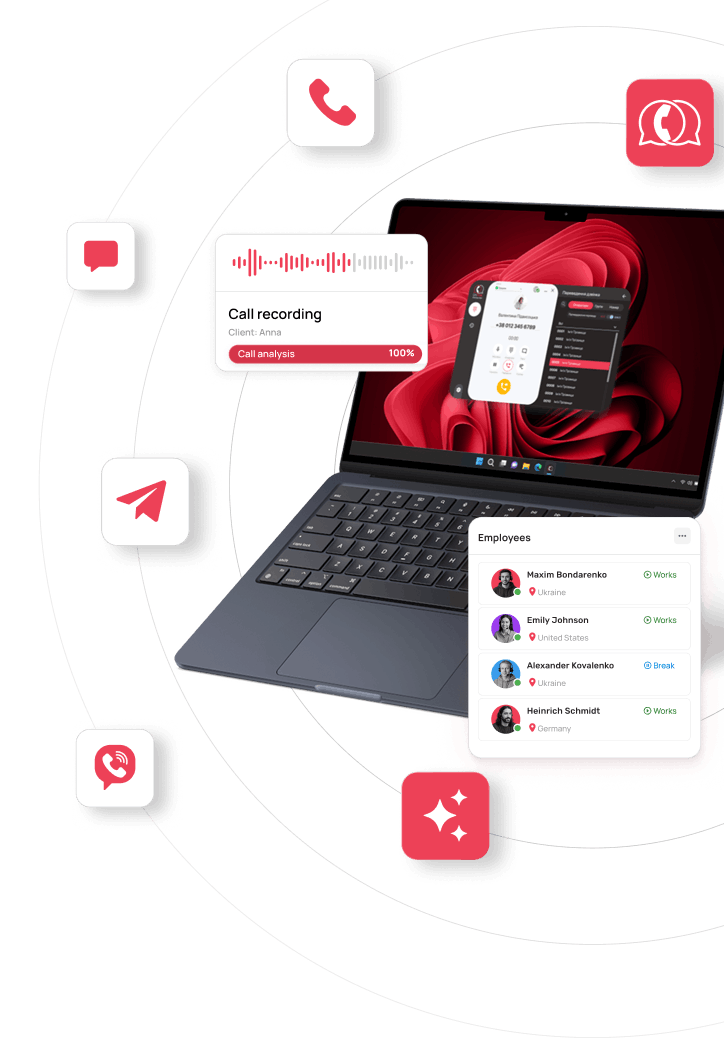
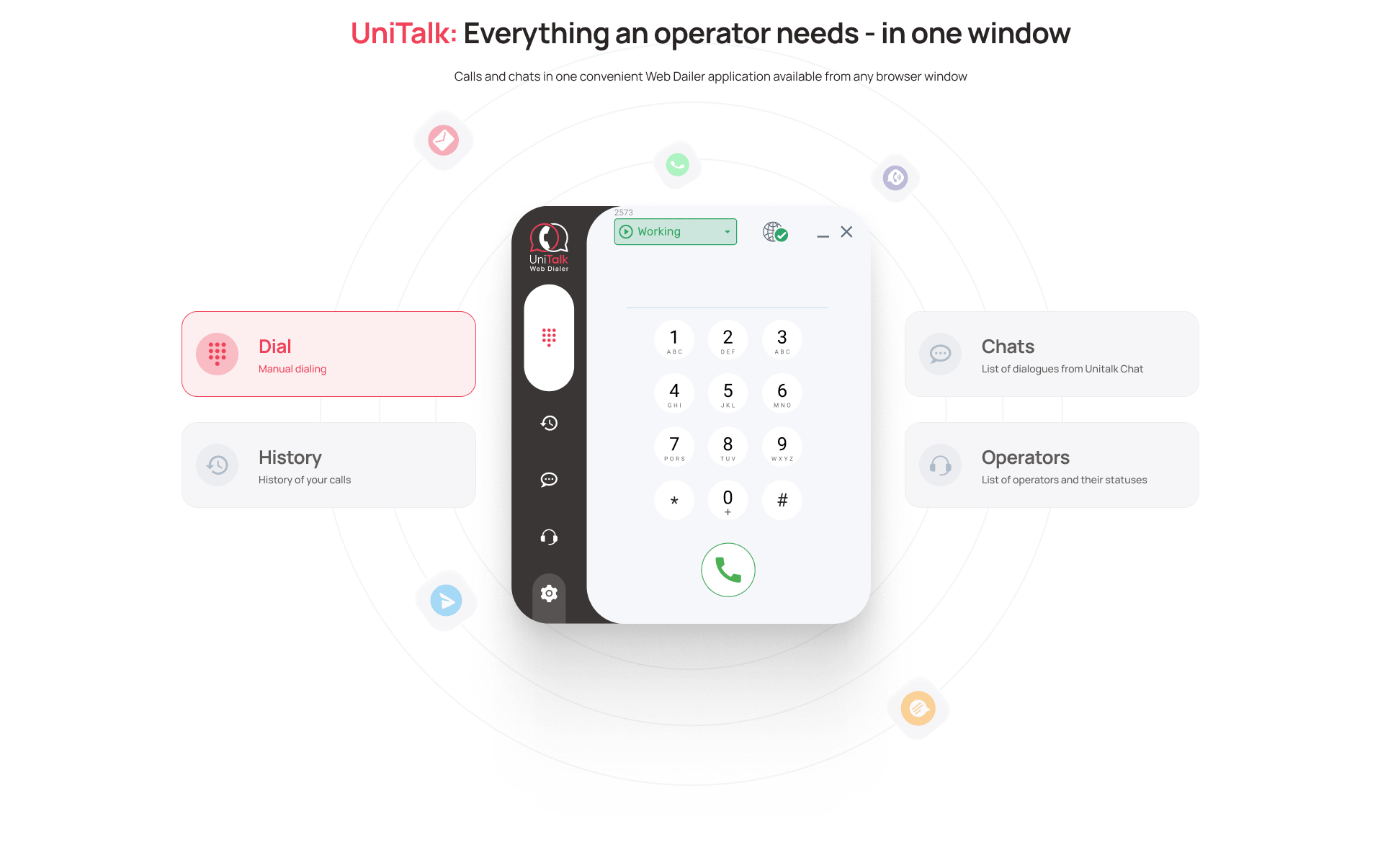
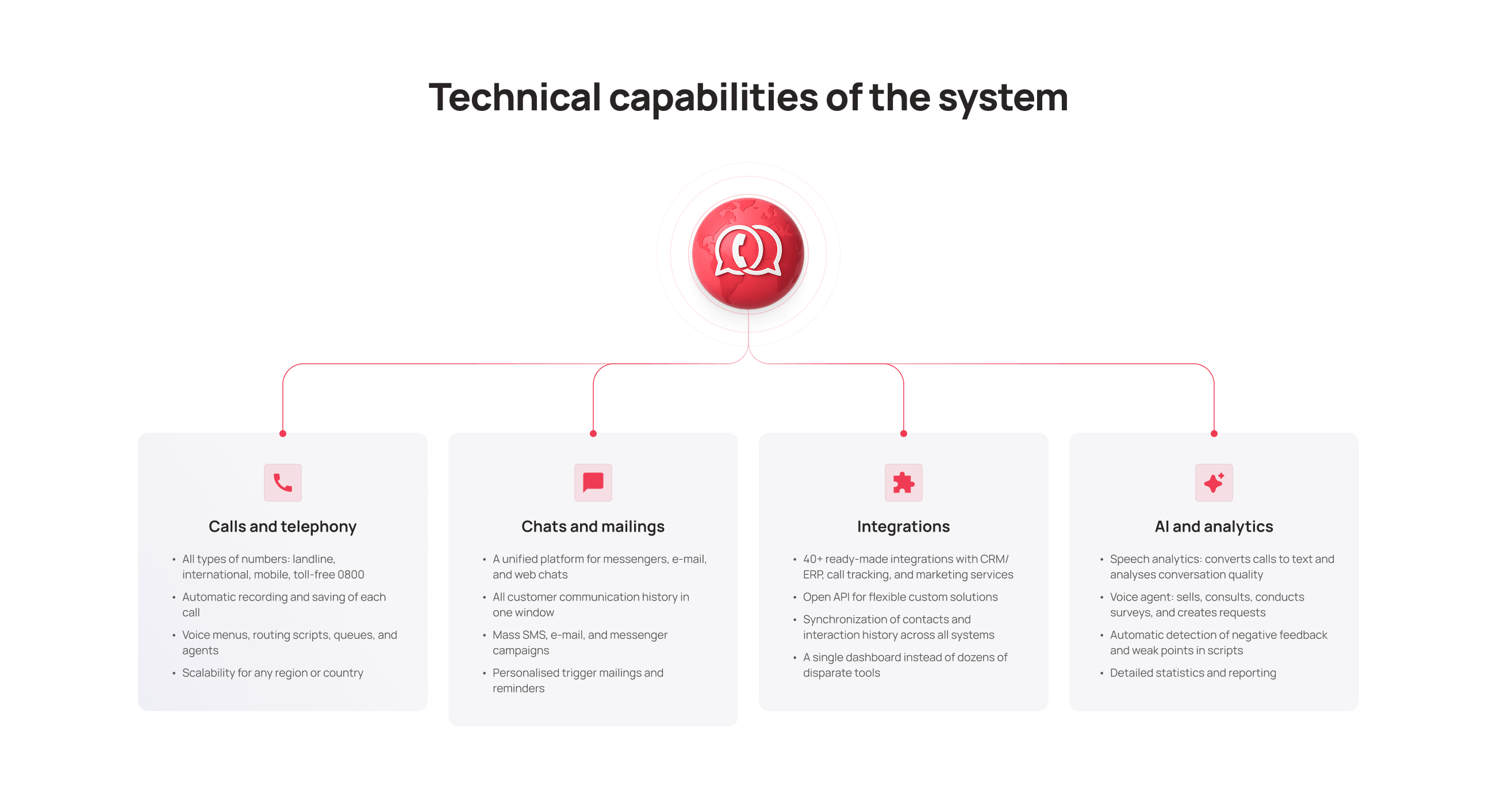
When every channel is connected through UniTalk Omni, a clinic’s front-desk staff can see a customer’s Instagram messages and previous calls in a single record, even if a different employee handled them before, and managers get a dashboard covering every channel at once instead of switching between separate programs. UniTalk Omni is a single solution for managing customer communication: calls, online chats on Telegram, Viber, and Instagram, SMS, and analytics all run in one environment and plug into your CRM and your team’s day-to-day workflow through a single interface. In practice, that means one workspace instead of five different tools, no servers or technical staff needed to set it up, and a platform that works just as well for a five-person team as it does for a 5,000-seat contact center.
Common Implementation Mistakes
- Connecting channels without unifying the data. The result isn’t one system, it’s several separate programs sitting side by side.
- Not assigning anyone to own the communication strategy. Without a clear owner, every department keeps doing things its own way.
- Ignoring messengers and social media. This often means sticking to a single channel, Viber, say, while a meaningful share of the audience has already moved to Telegram, leaving those inquiries outside the system entirely.
- Moving data between systems by hand. It’s slow, increases the error rate, and undercuts the whole point of having one shared customer history.
- Launching every channel at once, with no pilot. It’s better to test the approach on a single department, support or sales, for example, and only then scale it across the whole company.
Conclusion
Omnichannel doesn’t require overhauling every process in the company at once. It’s enough to start with one department, connect two or three key channels, and gradually add the rest based on where your audience actually is. The real payoff of this shift isn’t the number of channels you’ve connected, it’s that customers stop getting lost between them, and the business gets a complete picture of every inquiry.
UniTalk: Manage communications. Drive results. If you’d like to see how this works in practice, you can request a demo of UniTalk Omni.
Omnichannel means every channel you use to talk to customers, calls, chats, social media, and email, works as one system with a shared history, instead of a set of separate, disconnected touchpoints.
Most often, businesses combine phone calls, website chat, messengers (Telegram, Viber, WhatsApp), Instagram Direct, email, SMS campaigns, and offline sales or support locations.
The basics: a CRM or CDP system to hold a unified customer profile, a platform for calls and chats with the right integrations, analytics and call-tracking tools, and routing logic for inquiries across channels. UniTalk Omni already brings calls, chats, analytics, call tracking, and routing together in one solution, while your CRM stays a separate system that Omni syncs with.
Yes. A small business doesn’t need to build a complex setup from day one: connecting calls and the main messengers into one interface and linking a CRM is enough to start. In Ukraine, marketplaces and social media remain the most popular sales channels for small businesses, so it’s usually easiest to start by bringing social media, messengers, and calls together rather than investing in an expensive enterprise system. You can expand the platform later as you grow.
The most common ones are LTV (customer lifetime value), retention rate (CRR), conversion at each stage of the customer journey, average order value (AOV), and customer satisfaction (CSAT or NPS).
It cuts down on lost inquiries, speeds up response times, and makes offers more relevant thanks to a customer’s history. Altogether, that adds up to a higher average order value, longer customer relationships, and a noticeably better retention rate compared to running channels separately.