AmoCRM alternatives: best CRM options for your business
We recently covered Bitrix24 alternatives, and today we’re presenting the best amoCRM alternatives. If you’re still using this system but planning to switch to a Ukrainian or Western product — now is the right time.
Why businesses are Looking for amoCRM alternatives
A simple pipeline and intuitive interface kept amoCRM on the list of top systems for small and medium-sized businesses for a long time. But within just one year of the full-scale invasion, this system — like Bitrix — lost a significant share of its Ukrainian customers. The main reason is its Russian origin: amoCRM (now rebranded as Kommo) was created and is still actively used within that jurisdiction. As a result, Ukrainian and some European companies abandoned it not only for ethical reasons, but also due to operational risks.
AmoCRM had other issues that drove businesses to look for alternatives.
- Limited feature set. Task management, service workflows, and full-featured analytics were either unsupported or implemented at a very basic level. It wasn’t a good fit for companies looking for a unified platform covering sales, marketing, and support.
- No free tier. AmoCRM had no free plans, and the starter plan capped the contact database. As teams grew quickly, costs scaled disproportionately — pushing businesses to look for alternatives with more transparent pricing.
- Weak native telephony. As phone calls became the primary sales channel for many companies, amoCRM’s native telephony lagged behind Ukrainian systems where it can be set up in five minutes.
Most Ukrainian and Western amoCRM alternatives integrate easily with the UniTalk Virtual PBX. Once connected, every call is logged in the customer card, and conversations can be recorded, transcribed, and analyzed with AI.
Best amoCRM alternatives
Let’s start with Ukrainian alternatives — no language barrier for the team, and several systems offer out-of-the-box integrations with the most popular local marketplaces, delivery services, and IP telephony systems.
KeyCRM
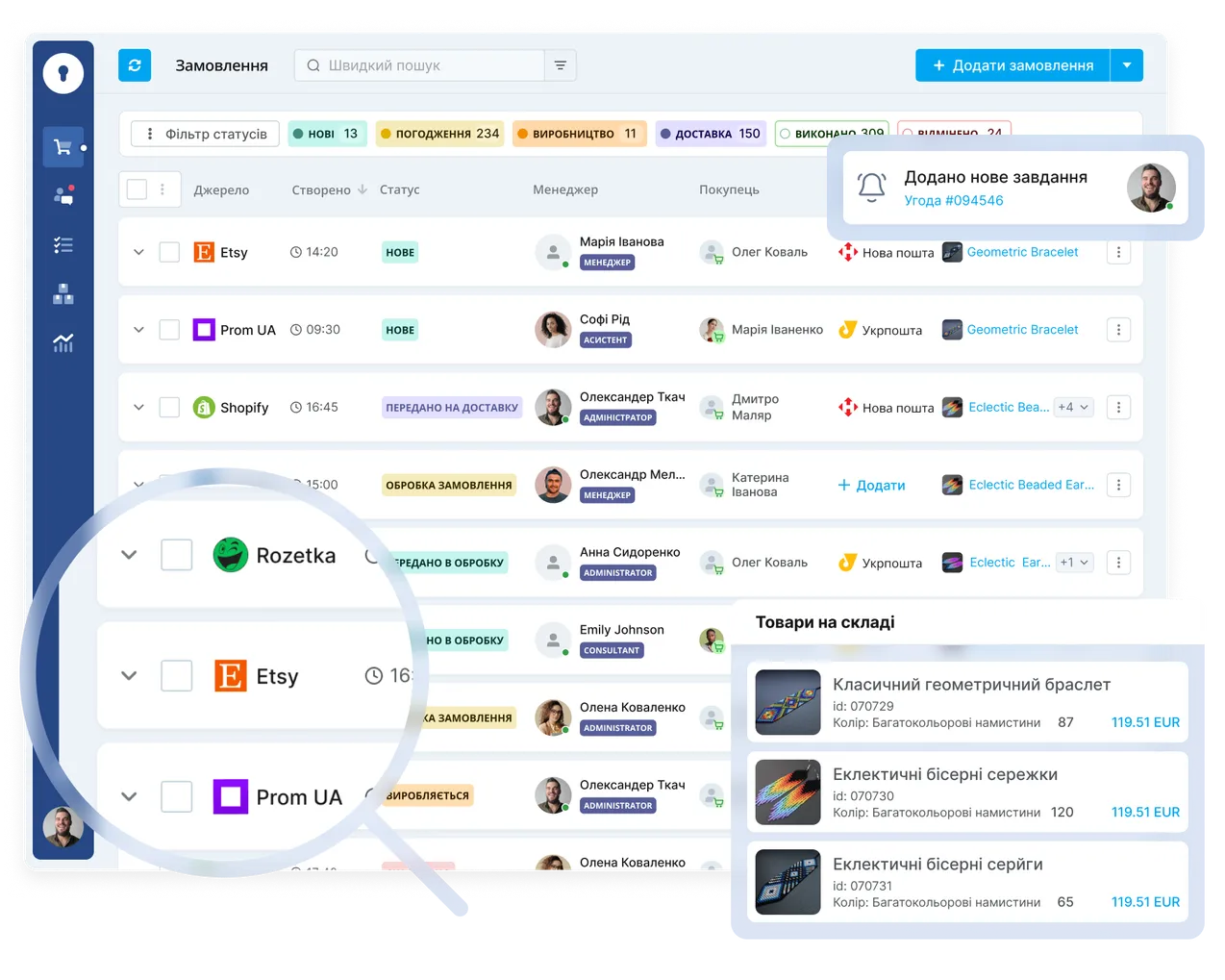
This system unifies and automates core business processes: lead handling, customer communication, sales management, and team oversight. Out of the box — no extra modules or custom development needed — it connects with Nova Poshta, Ukrposhta, WayForPay, Monobank, Rozetka, Prom.ua, and many other business-essential services. This makes KeyCRM one of the most practical amoCRM alternatives on the Ukrainian market.
Advantages:
- Native integration with Ukrainian delivery services, payment systems, and marketplaces.
- Sales pipelines + order and inventory management in one window.
- Order collection from all messengers (Viber, Telegram, Instagram, Facebook).
Best for: online stores, marketplaces, as well as B2B companies and service businesses.
Limitations:
- email marketing is less developed than in comparable tools;
- only basic analytics available;
- fewer ready-made integrations with Western services.
Pricing
- Single plan — $19/month: 200 orders, 2,000 leads, 20,000 chat messages + all features.
- Additional — $9/month: each next pool of orders, leads, and messages (200/2,000/20,000).
- Add-on — $19/month: auto-sync from external sites (Amazon, Etsy, eBay, Shopify, Prom, Rozetka).
30-day free trial. Pay-as-you-go, no prepayment required.
NetHunt CRM
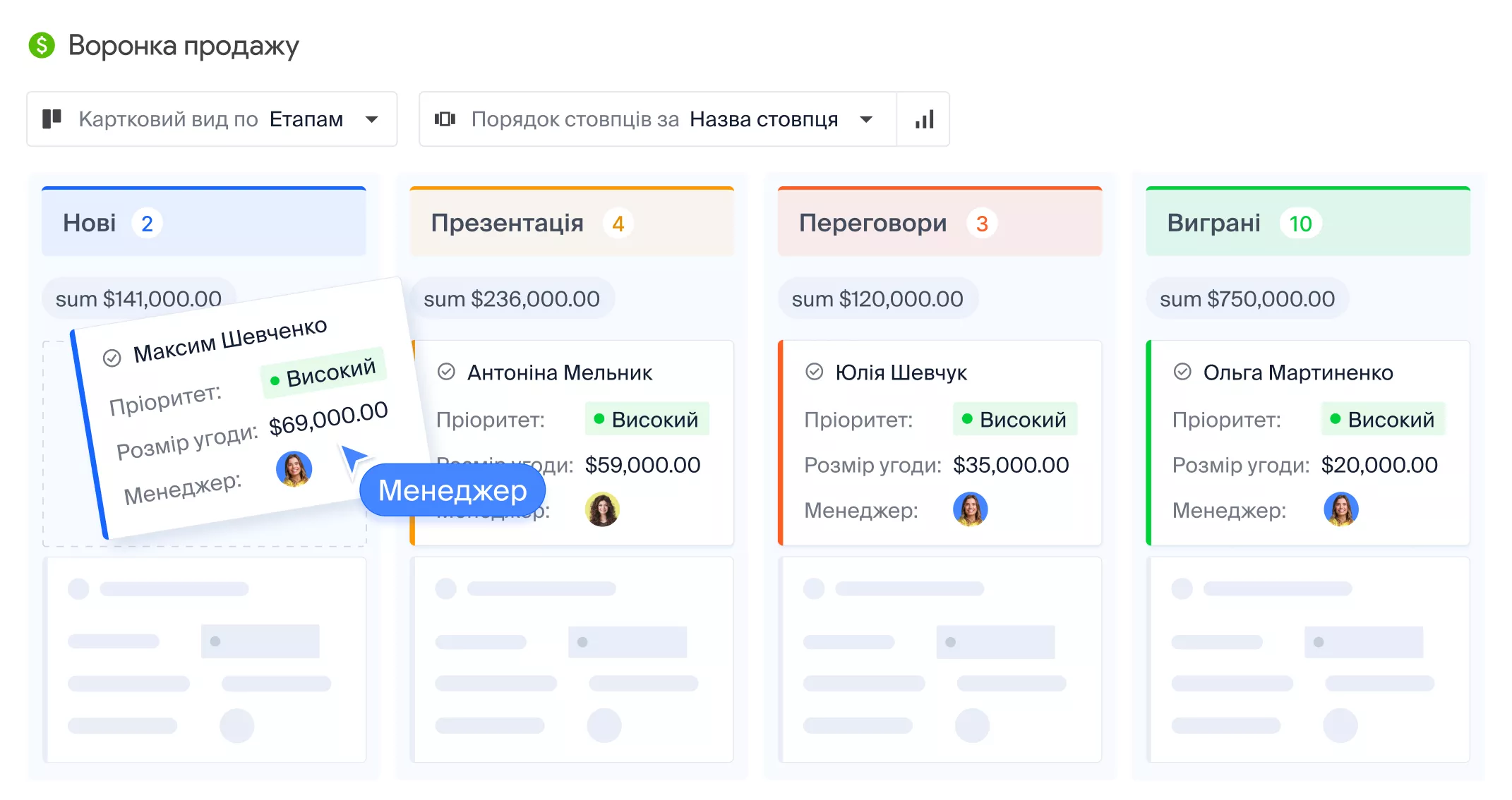
Another Ukrainian CRM, this time deeply integrated with Gmail and other Google products. In NetHunt, all work with deals, contacts, and tasks stays within the email interface: emails are automatically linked to customer cards, which can be created directly from incoming messages.
Advantages:
- Flexible automation: from report generation to sales sequences.
- Automatic email-to-deal card linking.
- Ready-made integrations with Telegram, Viber, Instagram, UniTalk, Slack, Looker Studio (Google Data Studio), WayForPay, and more.
- Data stored in the EU + GDPR compliance for working with European clients.
- Transparent pricing with no hidden charges for core features.
- Full-featured iOS and Android app.
Best for: B2B companies of any size that work primarily in Gmail, as well as agencies, startups, and service businesses with active email correspondence.
Limitations:
- strong dependency on the Google ecosystem;
- basic project management capabilities;
- not suitable for inventory management or manufacturing companies.
Pricing
- Basic — €10/month: core tools for small teams.
- Basic Plus — €14/month: expanded capabilities for growing companies.
- Business — €20/month: multichannel sales and automation.
- Business Plus — €28/month: full automation and advanced analytics.
Prices listed per user. 14-day free trial available.
KeepinCRM
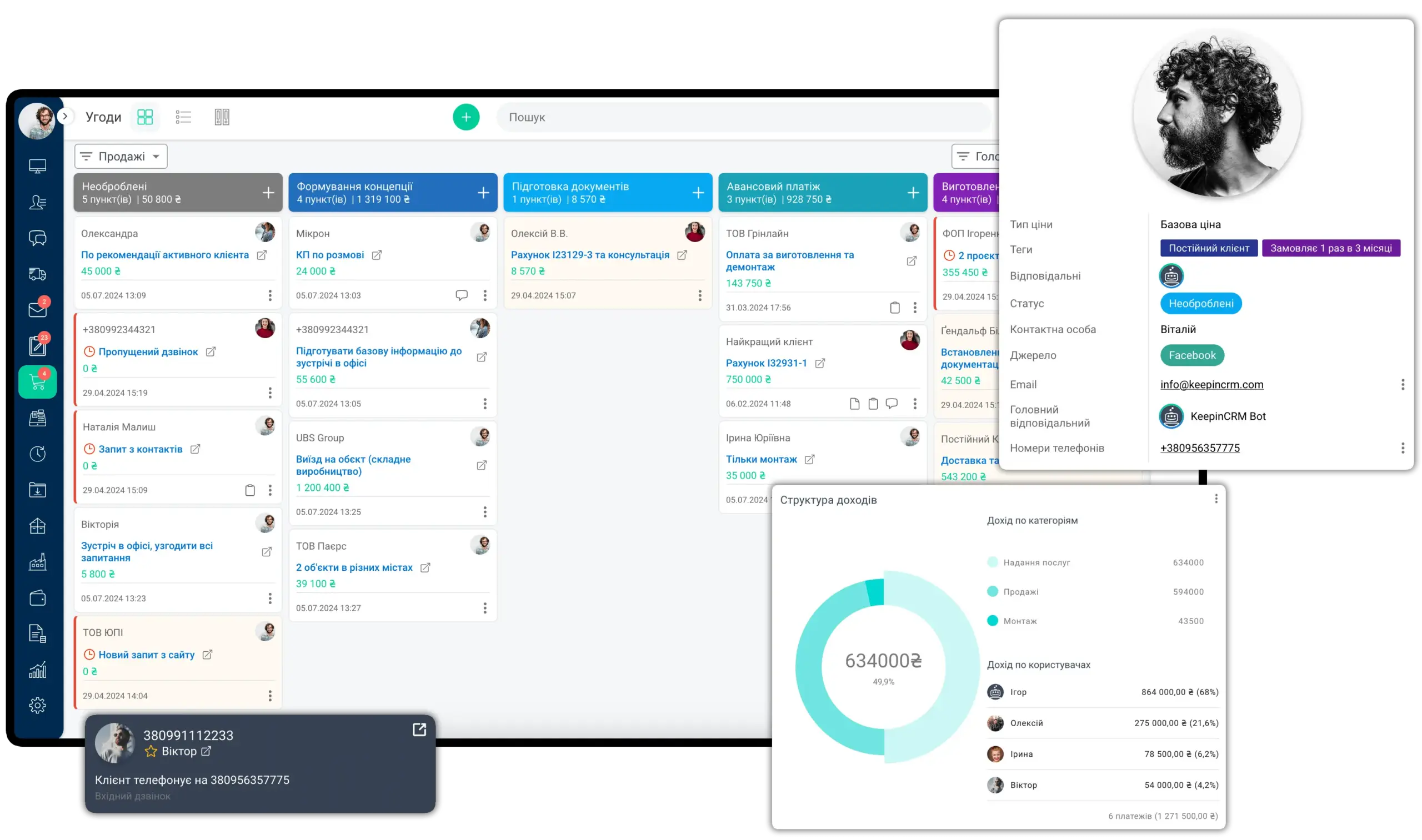
The most affordable Ukrainian amoCRM alternative for sales teams. KeepinCRM features a lightweight, clutter-free interface with hundreds of functions for managing orders, inventory, and document workflows in one place. Any module can be enabled or disabled depending on current business needs.
Advantages:
- Intuitive workspace with flexible settings.
- Ready-made integrations with Ukrainian marketplaces, messengers, and IP telephony.
- Routine automation (generating waybills, sending SMS, document generation).
- Ukrainian-language interface and support.
- One of the most affordable solutions on the Ukrainian market.
Best for: small and mid-sized product businesses, micro-manufacturers, and service companies.
Limitations:
- basic automation capabilities;
- interface can be challenging for beginners;
- not all features available in the mobile version.
Pricing
- Free plan — core features, unlimited time, 1 user.
- Extended — UAH 349/month per user (all features).
Pricing scales down as your team grows:
- 6–15 users — UAH 300/month each;
- 31–99 users — UAH 200/month each;
- 300+ users — UAH 80/month each.
Annual billing — up to 10% discount.
Monday CRM
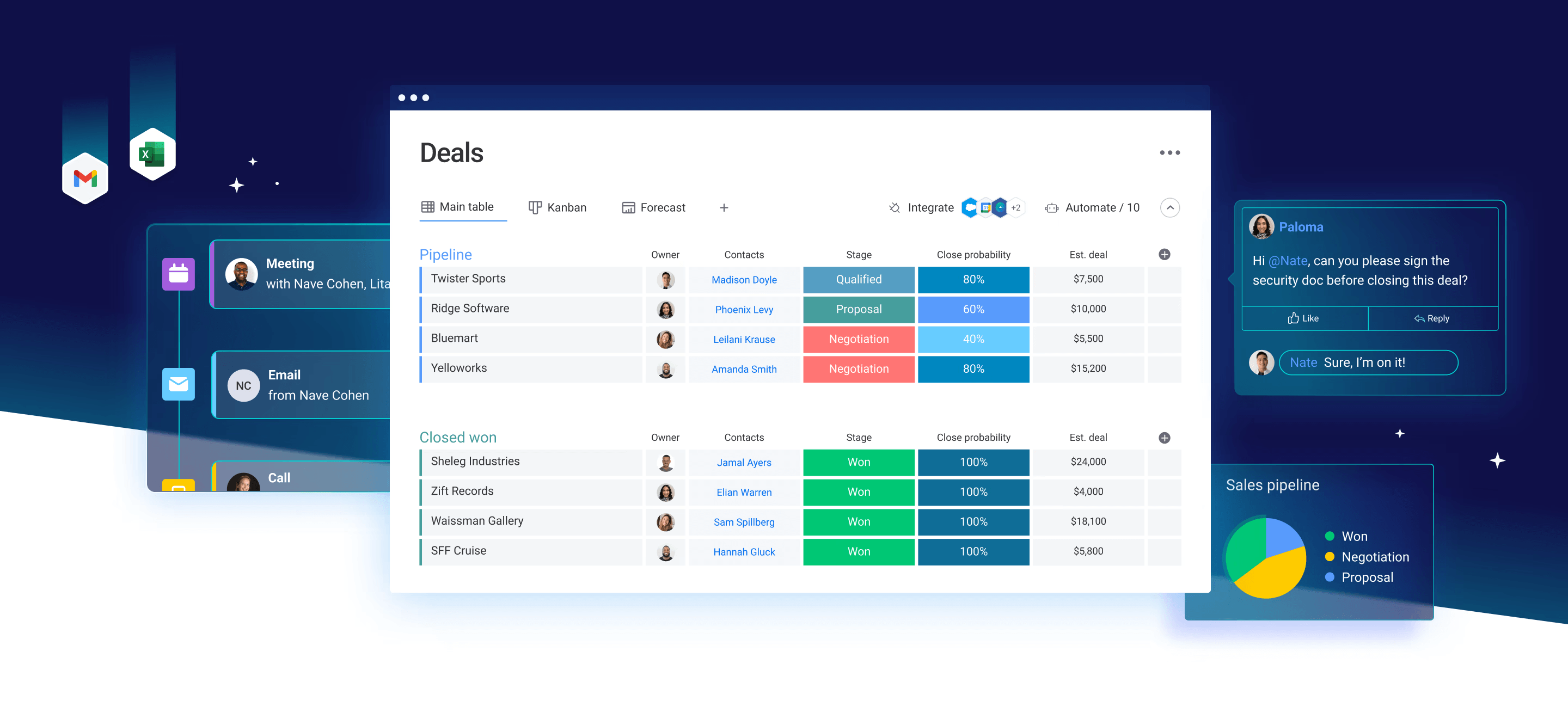
The developers describe Monday as an operating system for business, where CRM is just one of many modules within a larger platform. Monday CRM can be tailored to any sales cycle by connecting various apps and extensions. The built-in AI assistant records and transcribes calls, fills in card fields from calls and emails, highlights what matters most in the communication history, and suggests drafts for outgoing emails. Autonomous CRM agents can also qualify leads and assign them to managers automatically.
Advantages:
- Flexible customization for any process — no coding required.
- Unifies CRM, tasks, projects, and communications.
- Visual automation and trigger builder.
- 200+ ready-made templates for a quick start.
- Full-featured mobile app for iOS and Android.
Best for: agencies, small IT companies, and teams looking to replace amoCRM while combining sales and project management in one workspace.
Limitations:
- telephony integration only via third-party widget;
- not suitable for large enterprises needing a universal CRM;
- costs scale disproportionately as the team grows.
Pricing
- Basic — $18/month: up to 1,000 contacts and deals, 1 dashboard, basic pipelines and templates.
- Standard — $25/month: up to 10,000 contacts, Gmail and Outlook integration, AI Sidekick, automations.
- Pro — $41/month: unlimited contacts, sales forecasting, email tracking, templates and bulk emails, advanced analytics, 25,000 automations/month
- Ultimate — price on request: AI Sidekick Plus, lead scoring, enterprise automations, HIPAA compliance.
Prices listed per user. 14-day free trial. Annual billing — 33% discount.
LP-CRM
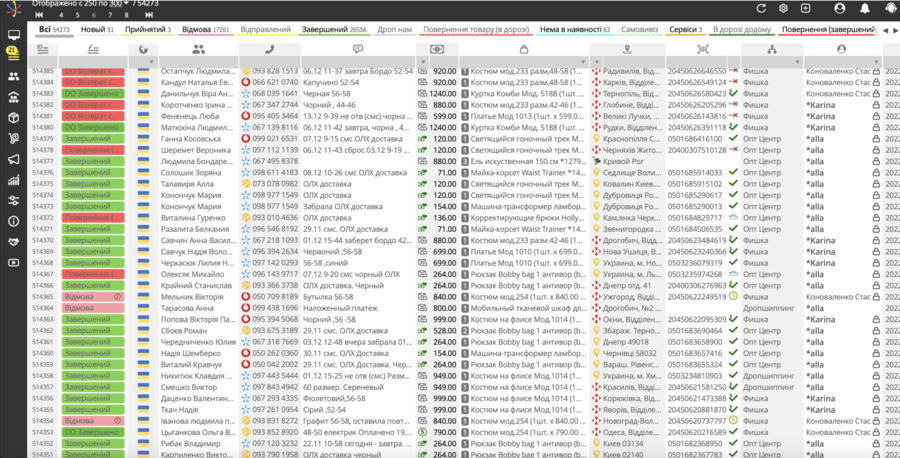
LP-CRM is a Ukrainian system built for the exact same tasks amoCRM was known for: fast processing of inbound leads from ads and landing pages. A lead from a landing page automatically enters the pipeline, and the manager instantly sees the source, status, and contact history. For teams where paid traffic is the primary customer acquisition channel, this is one of the best amoCRM alternatives available.
Advantages:
- Native integration with Facebook Leads, Google Ads, and landing pages.
- Automatic deal creation from incoming leads.
- Pipelines, customer cards, interaction history.
- Messenger and delivery service integrations.
Best for: small and mid-sized product businesses, online stores, and marketplaces that actively drive traffic from paid ads (Facebook Ads, Google Ads, landing pages).
Limitations:
- designed exclusively for product-based businesses;
- not suitable for companies with large data volumes or complex B2B sales cycles.
Pricing
- Free — up to 50 orders/month, 3 users, limited features.
- Start — $9/month: 2 users, basic pipelines, order tracking.
- Office — $25/month: 3 users, delivery, and marketplace integrations.
- Company — $45/month: 6 users, advanced analytics, inventory management.
Business — $95/month: up to 50 users, full feature set, priority support.
SalesDrive
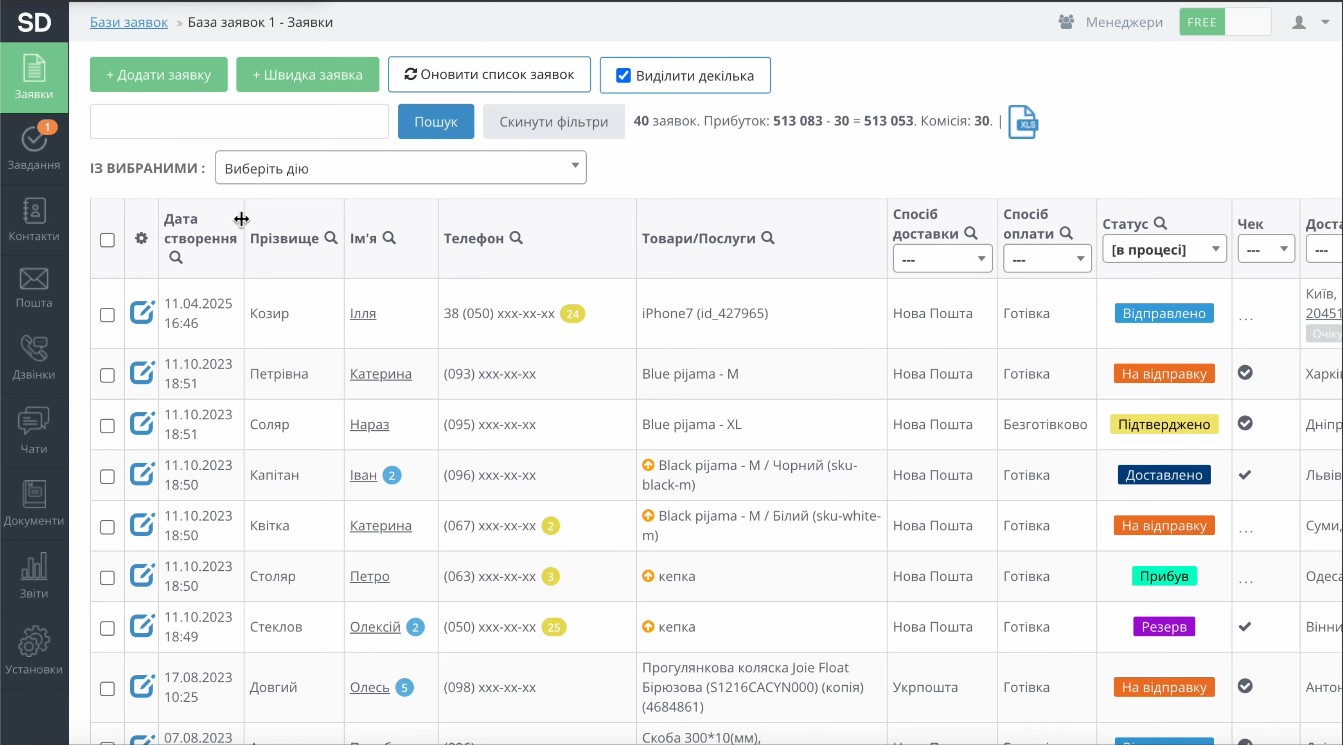
SalesDrive is a Ukrainian CRM focused on lead processing, sales, and manager performance tracking. It’s one of the few systems where IP telephony, messenger, and ad platform integrations work out of the box without complex configuration. It has proven especially effective for e-commerce sales automation.
Advantages:
- Native integrations with CMS platforms, marketplaces, and logistics services.
- Full inventory management with automatic site data synchronization.
- Create waybills in one click and send the tracking number via SMS.
- All communication channels — messengers, chatbots, IP telephony — in one window.
- Full-featured mobile app.
Best for: online stores of any scale and dropshippers.
Limitations:
- limited fine-tuning of business processes;
- optimized exclusively for product-based businesses.
Pricing
Plans scale with team size:
- 1–2 users — UAH 917/month.
- Up to 15 users — UAH 4,190/month.
- Up to 50 users — UAH 7,680/month.
- Up to 100 users — UAH 10,200/month.
14-day free trial. Annual billing — 20% discount.
HubSpot CRM
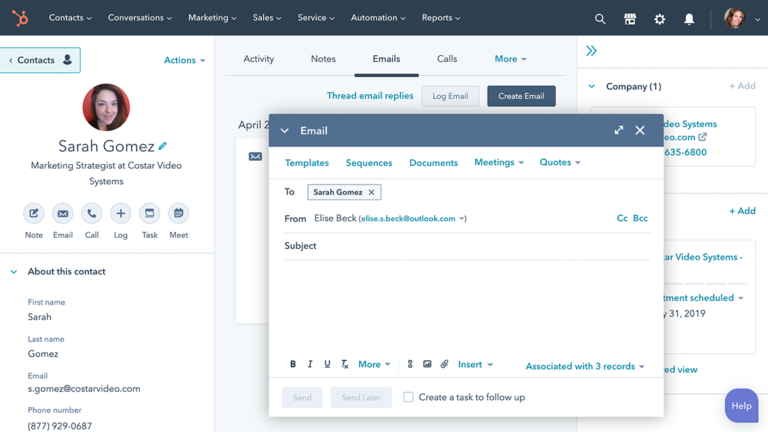
HubSpot CRM is one of the largest CRM platforms in the world, steadily gaining traction in the Ukrainian market as well. It can be used for free with no limits on the number of users — but automation capabilities will be significantly restricted, and that’s exactly what most businesses switching from amoCRM need.
Advantages:
- Free CRM plan with no user limits.
- Unified platform for sales, marketing, and customer support.
- AI assistant for routine task automation.
- 1,500+ integrations, including IP telephony.
- Option to choose EU-based data storage.
Best for: small and mid-sized businesses, marketing agencies, and SaaS companies.
Limitations:
- automation only available on paid plans;
- feature set may be excessive for small businesses;
- deep customization requires technical expertise or a certified partner.
Pricing
- Free — no time limit: basic CRM, contacts, deals, tasks, analytics.
- Starter — from €15/month: expanded capabilities.
Price listed per user. Annual billing — 40% discount.
Pipedrive
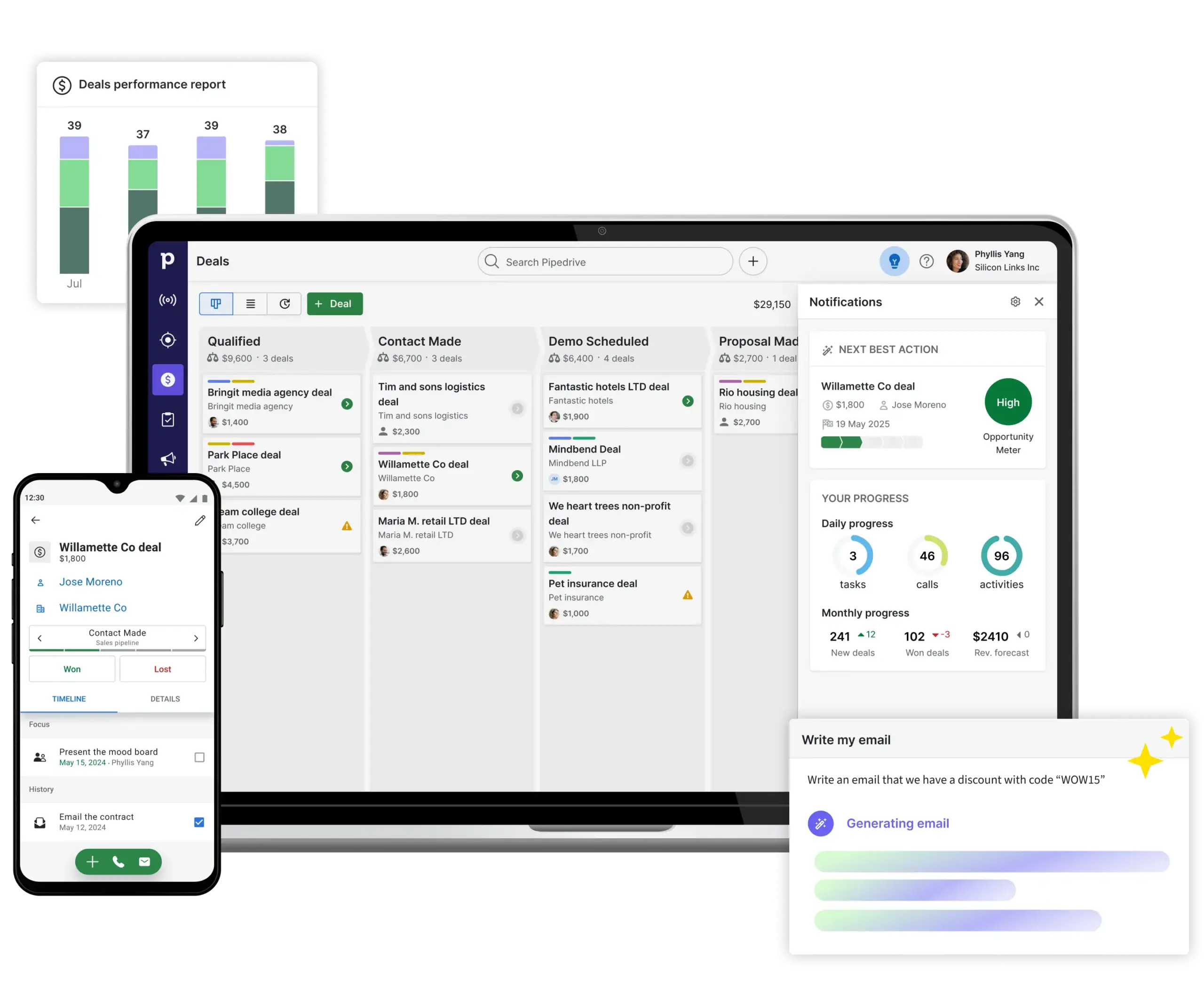
Pipedrive is arguably the closest Western alternative to amoCRM. It features the same visual pipeline and card-based deal logic, with a focus on the manager’s actions rather than high-level reporting. If your team is used to amoCRM’s interface, the transition to Pipedrive will be seamless. A built-in AI assistant for sales forecasting, reminder automation, and pipeline analysis is an added bonus. Pipedrive integration with IP telephony is configured via API or ready-made connectors, including UniTalk.
Advantages:
- Drag-and-drop deal management, just like amoCRM.
- AI features for conversion forecasting and task automation.
- Built-in meeting scheduler.
- 500+ ready-made integrations in the marketplace.
- Predictable pricing as the team scales.
Best for: small and mid-sized companies, B2B businesses with active sales teams.
Limitations:
- no free plan available;
- basic marketing toolset;
- limited access permissions on entry-level plans.
Pricing
- Lite — €19/month: core pipeline management.
- Growth — €34/month: email and contact automation.
- Premium — €64/month: full deal cycle with AI.
- Ultimate — €89/month: maximum tools and support.
Prices listed per user. Annual billing — up to 26% discount. 14-day free trial available.
How to choose an amoCRM alternative
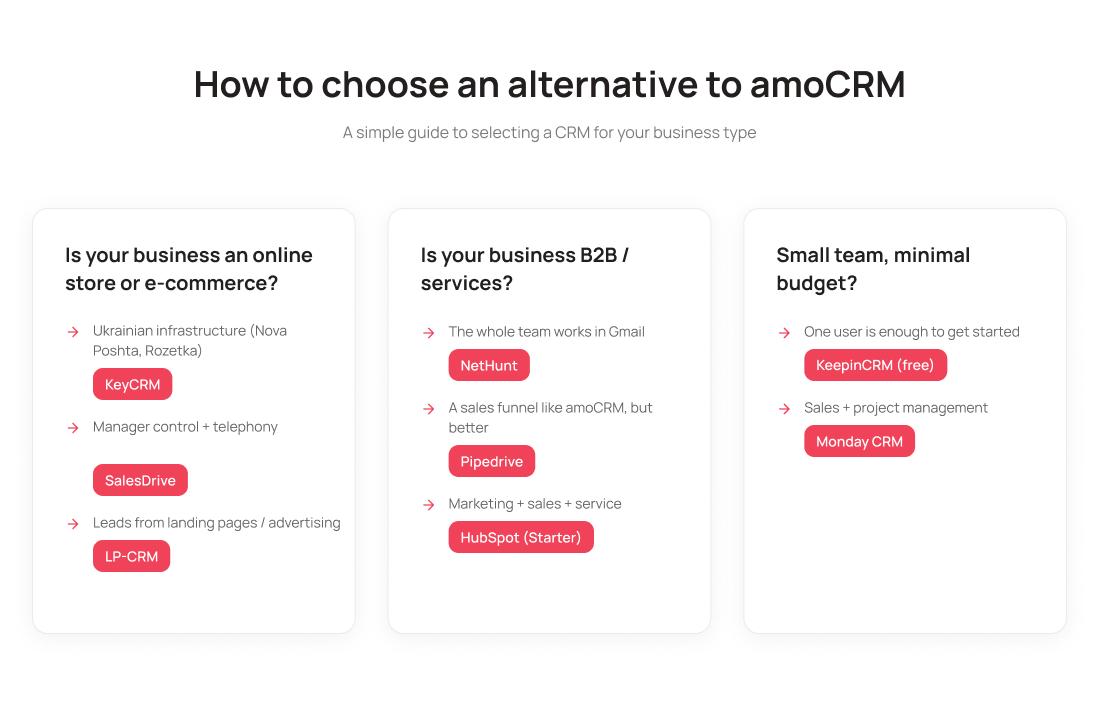
Before committing to a specific system, match your business needs against the CRM’s actual capabilities — the right product sits at the intersection of the two.
- Business scale and type. For a team of two to five managers, KeepinCRM and LP-CRM are solid choices. For e-commerce, KeyCRM or SalesDrive are the better fit. In B2B with long deal cycles, Pipedrive or NetHunt stand out. For agencies and IT teams where sales and project management overlap — Monday CRM.
- Telephony integration. If calls are your primary sales channel, choose a CRM with native or API-level virtual PBX integration.
- Localization and jurisdiction. For local businesses, a Ukrainian-language interface matters, along with data storage in Ukraine or the EU and support for local services (marketplaces, delivery providers). From this standpoint, the best choices are KeyCRM, NetHunt, KeepinCRM, LP-CRM, and SalesDrive.
- Real automation capabilities. Think ahead about what you plan to automate: trigger-based tasks, email sequences, or complex business workflows. The system you select must support those scenarios.
- Cost at scale. Factor in pricing not just at launch, but after your team grows — some systems become disproportionately expensive as the contact base or number of users increases.
How to prepare for migration from amoCRM
To minimize downtime and make the transition smooth for your team, work through the process step by step.
Step 1: Clean up your database before migration — remove duplicates, closed deals, and outdated contacts.
Step 2: Export all contacts, deals, tasks, tags, and communication history from amoCRM (e.g., in CSV format).
Step 3: Reconfigure pipelines, custom fields, and user roles to match the logic of the new system.
Step 4: Set up connections to email, messengers, and telephony, then test everything. For example, make sure incoming calls open the customer card and conversations are recorded and linked to deals.
Step 5: Team training. Run training sessions at least one to two weeks before the planned switch. Assign a dedicated manager to support colleagues during the initial period.
Step 6: Parallel operation. Work in both systems simultaneously for the first few weeks. This protects you from losing critical data during the transition.
Conclusion
The amoCRM alternatives in this review cover the vast majority of Ukrainian business needs, but the feature sets, integrations, and specializations vary significantly from one solution to the next. To make the right choice, don’t look for the most popular system — look for the one that fits your team’s actual workflow: selling through an online store or Instagram, handling B2B clients via email, processing leads from landing pages. If you sell heavily by phone, choose a new CRM with a proven telephony integration.
Among Ukrainian amoCRM alternatives: KeyCRM (great for e-commerce and B2B), NetHunt (deeply integrated with Google services), KeepinCRM (free for 1 user), LP-CRM (ideal for processing leads from paid ads), and SalesDrive (for product sales with native telephony). All of them store data on servers in the EU or Ukraine and offer a Ukrainian-language interface.
Yes — HubSpot CRM has a free plan with no user limits, but advanced automation features are only available on paid tiers. KeepinCRM also offers a free, time-unlimited plan, but only for one user. Both are viable options for replacing amoCRM when starting out.
Yes, via CSV export of contacts and deals. Most modern CRMs — including HubSpot, Pipedrive, KeyCRM, SalesDrive, and LP-CRM — support step-by-step CSV import. However, if you need to migrate custom fields with complex structures, you may need the help of an integration specialist.
For e-commerce, KeyCRM is the ideal choice — it makes it easy to set up integrations with Rozetka, OLX, Prom.ua, Nova Poshta, and Ukrainian payment systems. If direct lead management from ad platforms and manager oversight are the priority, consider SalesDrive. And if most customers come from landing pages and Facebook Ads — LP-CRM.
Most modern CRMs support IP telephony integration via API or ready-made connectors. HubSpot, Pipedrive, KeyCRM, NetHunt, SalesDrive, and LP-CRM are all compatible with virtual PBX systems. UniTalk offers ready-made integrations with the most popular CRM platforms: when a call comes in, the customer card opens automatically, and the conversation is recorded and linked to the deal — no manual input from the manager required. You can view the full list of UniTalk integrations here.